Back From the Brink

Posted by

Back From the Brink

  • Artist
    Fiona Smith
  • Dates
    4 Jun—5 Jul 2026
  • Catalogue
    Download now

The story behind this exhibition is a positive one — a shaft of sunlight cutting through the noise and shadow of world events that can seem beyond our control. Back From The Brink is a reminder that, with enough goodwill, good science, and community effort, we can pull back from the edge — and that this is worth celebrating.

Fiona Smith’s paintings honour the work of conservationists and communities who have fought to rescue bird species from extinction. She is painting birds that almost weren’t here.

Every species in this exhibition was, at some point, heading towards oblivion — reduced to dozens of individuals, their habitats destroyed, their futures a ticking timebomb. But thanks to the global conservation movement, here they are: surviving, sometimes thriving, and depicted among a fiesta of flowers.

Among them, Brazil’s Lear’s Macaw — that vivid blue jewel of the caatinga cliff faces — was down to just 60 individuals in the early 1980s. Today, there are more than 2,500. The majestic Trumpeter Swan, hunted almost to extinction across North America, now fills the skies of the great northern wetlands in its thousands. In New Zealand, whole islands have been cleared of introduced predators so that birds found nowhere else on Earth have somewhere safe to raise their young.

Since 2000, 25 bird species have stepped back from the Critically Endangered list. Of course, this is a drop in the ocean compared to the ongoing loss of species worldwide — but what these stories deliver is proof of something vital: that humans have the ability to repair some of the damage we have caused. That we are better off saving this planet — the only one we have — than ditching it to hitch a ride on Elon Musk’s SpaceX rocketship to Mars.

This collection is determinedly joyful and playful. It focuses on beauty and wonder. Each painting carries a name that translates as “hope” in a different language.

“Those who contemplate the beauty of the earth find reserves of strength that will endure as long as life lasts. There is symbolic as well as actual beauty in the migration of the birds, the ebb and flow of the tides, the folded bud ready for spring. There is something infinitely healing in the repeated refrains of nature — the reassurance that dawn comes after night, and spring after winter.”

— Rachel Carson, The Sense of Wonder (1965). Carson, a marine biologist and naturalist, is best known for her 1962 book Silent Spring, which documented the devastating environmental effects of pesticide use — particularly DDT — on birds and ecosystems, and helped ignite the modern conservation movement.

‘Placeheld’

Posted by

‘Placeheld’

  • Artist
    Anh Nguyen, Anthea Stead, Cate Maddy, Kate Vella, Libby Wakefield, Meg Walters, Sam Wilkinson, Suzie Riley, Tara Price, Zoe Grey
  • Dates
    16 Apr—17 May 2026

Showing this month at Michael Reid Southern Highlands, Placeheld gathers ten painters working within the landscape, each bringing a distinct sensibility to the question of place. Together, the exhibition offers a timely survey of some of the most compelling voices shaping landscape painting in Australia today. Placeheld features new work by Anh Nguyen, Anthea Stead, Cate Maddy, Kate Vella, Libby Wakefield, Meg Walters, Sam Wilkinson, Suzie Riley, Tara Price and Zoe Grey.

Offcuts

Posted by

Offcuts

Anh Nguyen’s Offcuts brings together a suite of small-scale paintings that turn a close, attentive eye to what is nearest at hand. Working across still life and interiors, Nguyen begins, as she notes, “with what might otherwise be discarded: offcuts, leftover marks, fleeting glimpses.” A vase of freesias loosens into gesture; a figure half-held within a thicket of green; a child bent over a page, absorbed; a beach or roadside scene glimpsed in passing -each work feels caught mid-thought, as if the image has only just arrived and might just as easily dissolve again.

After the Flood

Posted by

After the Flood

  • Artist
    Drew Truslove
  • Dates
    21 May—21 Jun 2026
  • Catalogue
    Download now

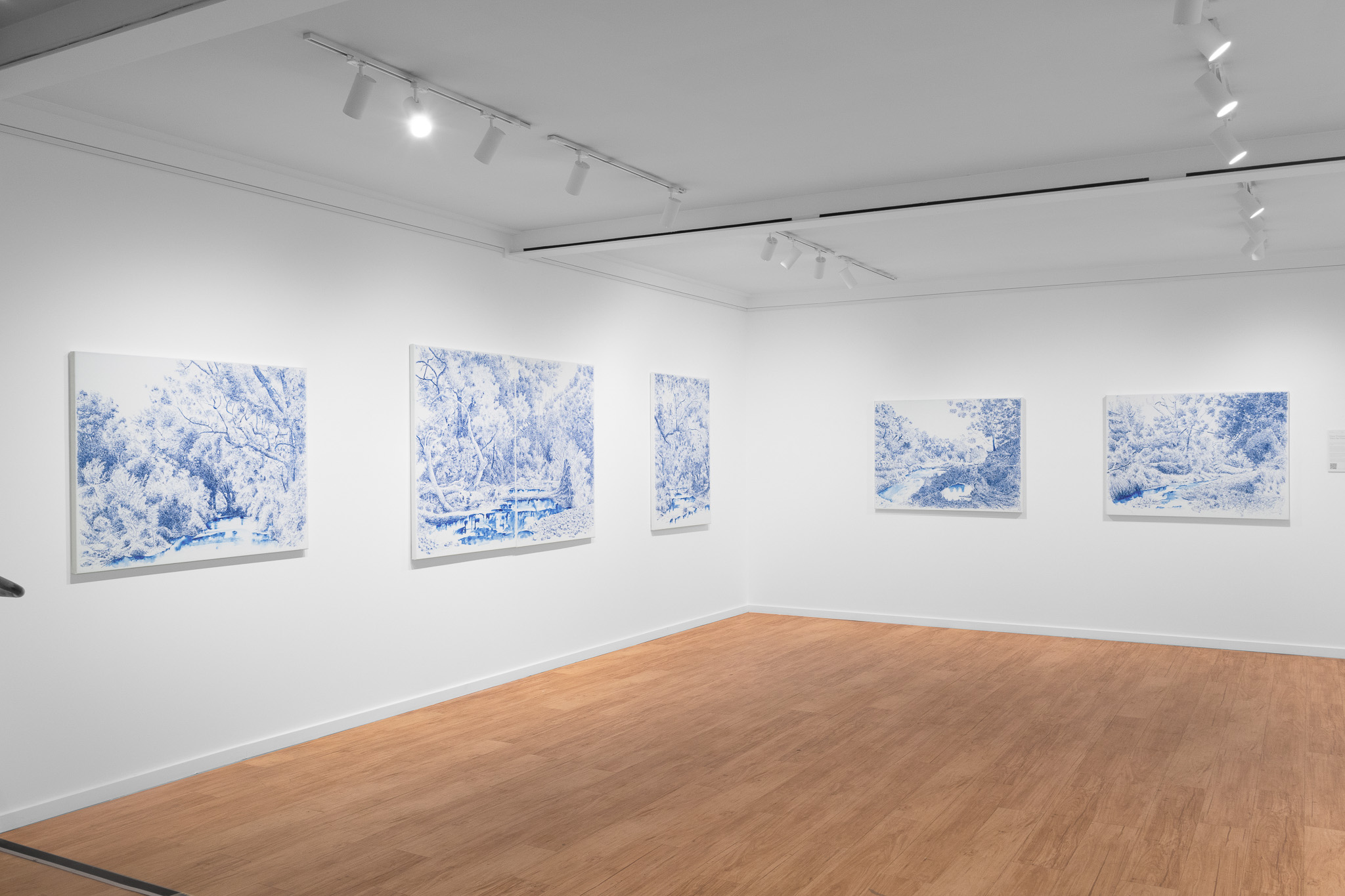
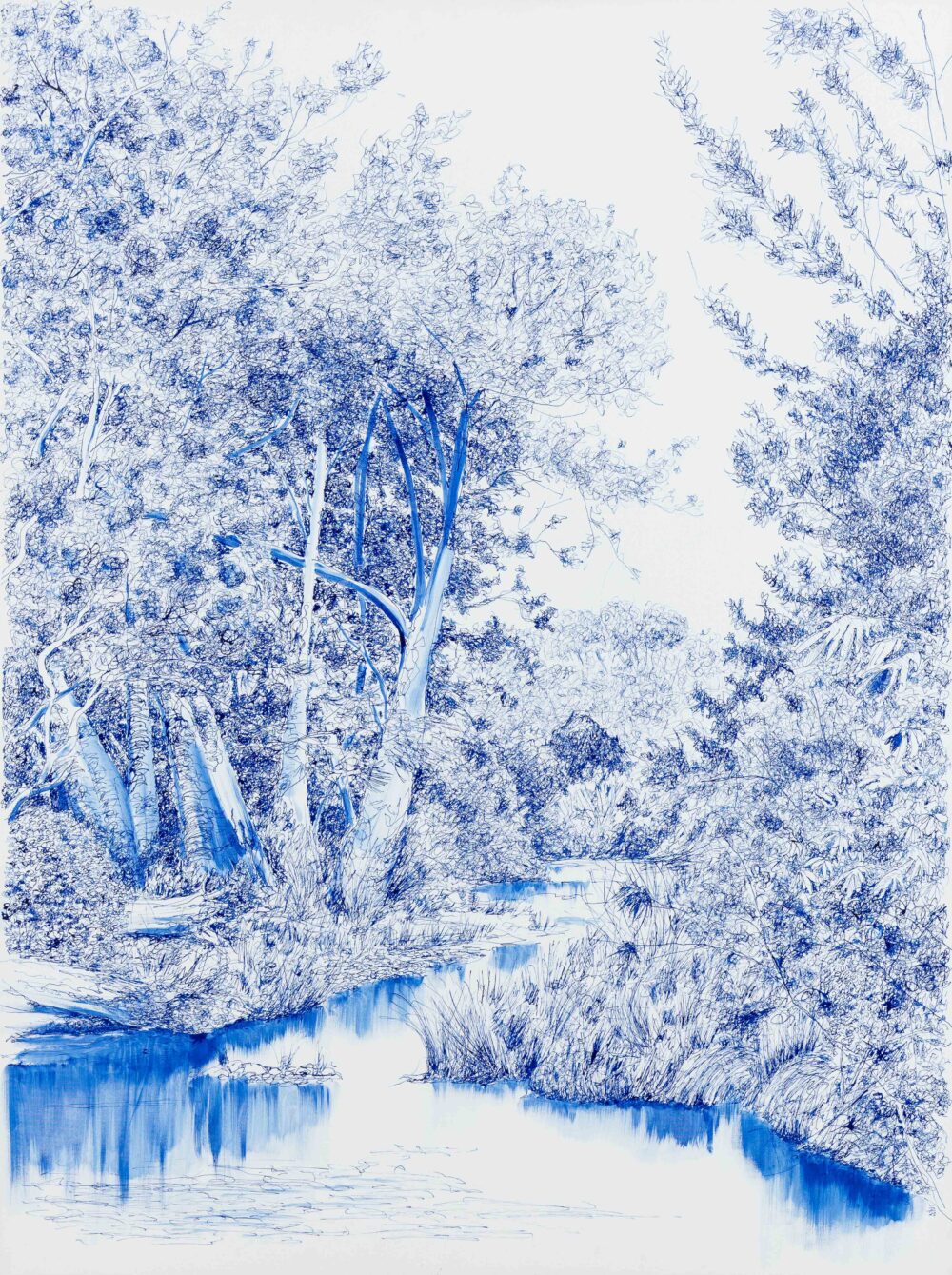
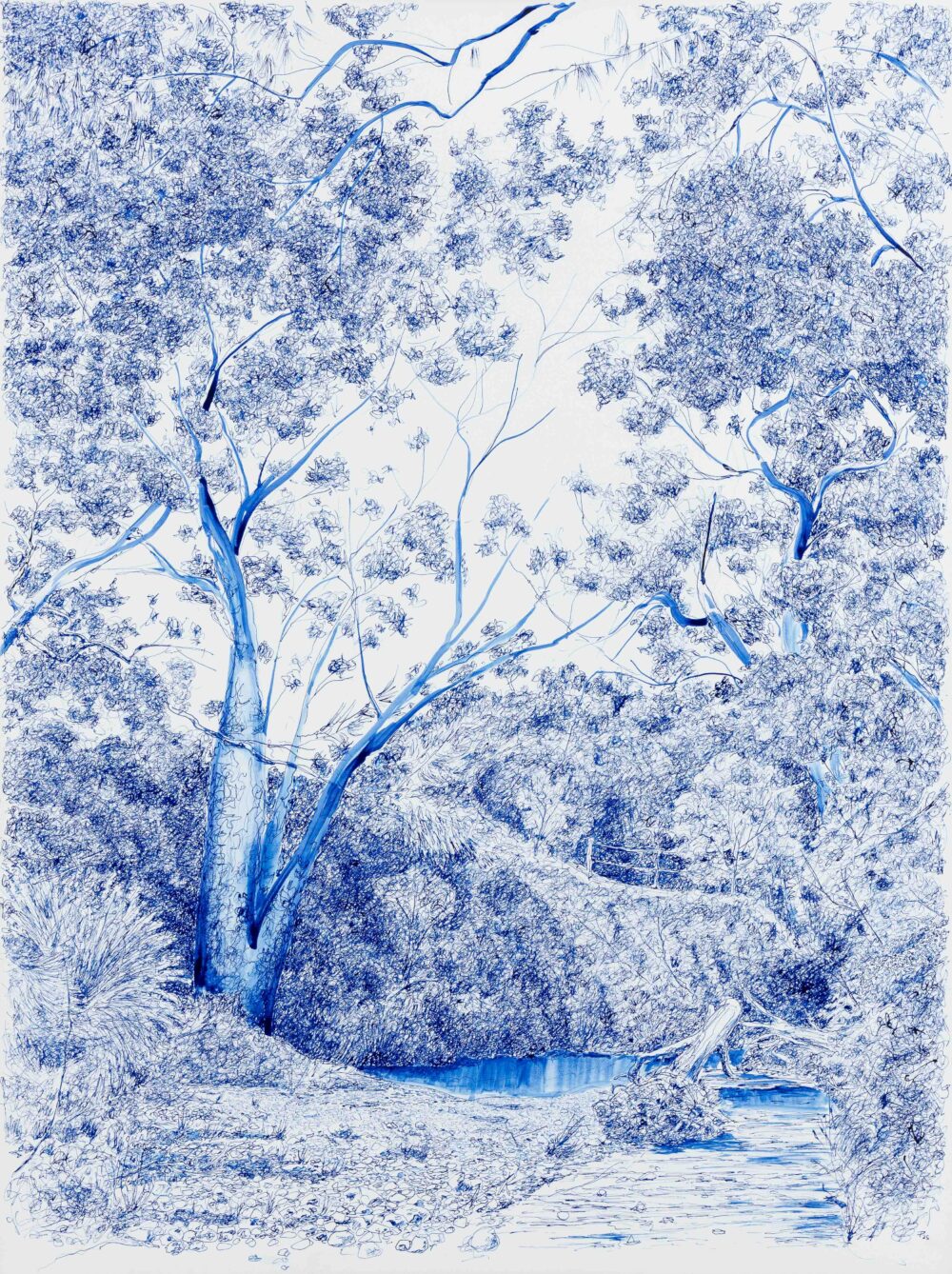
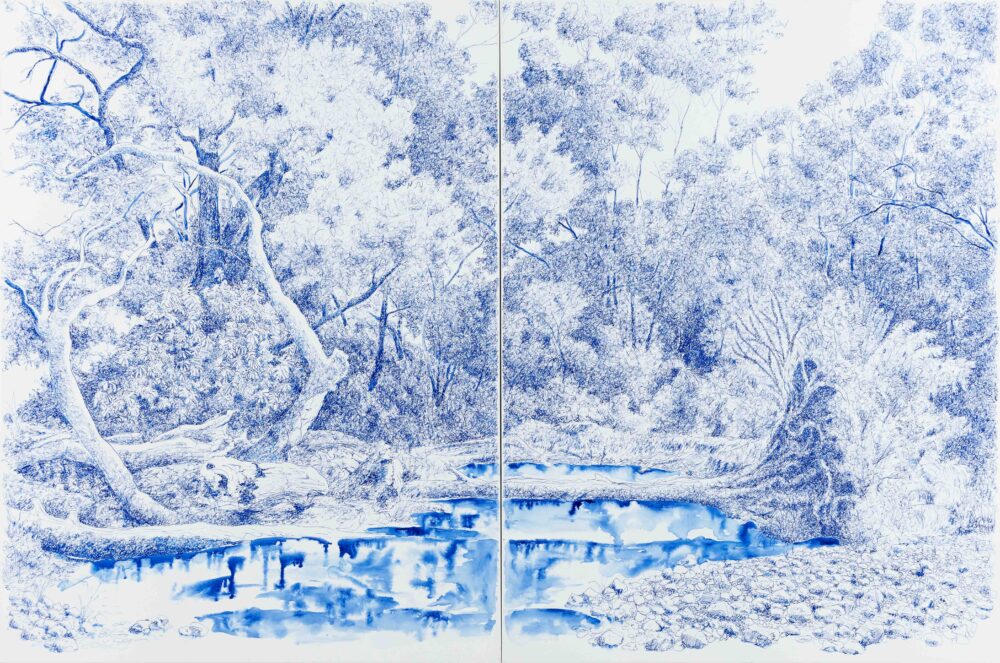
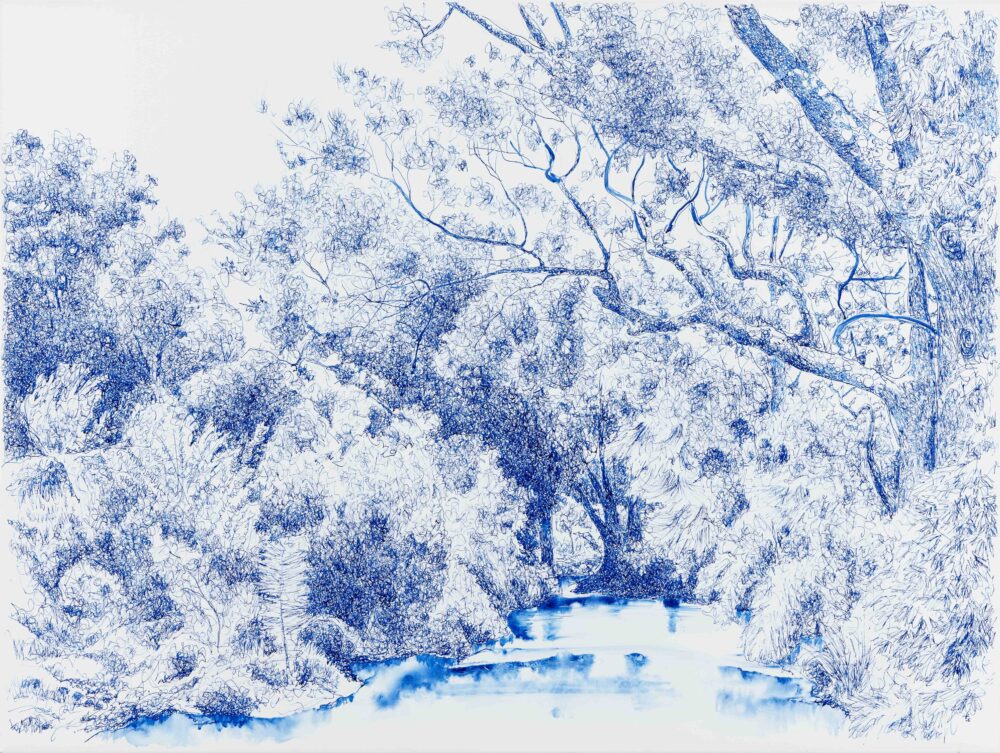
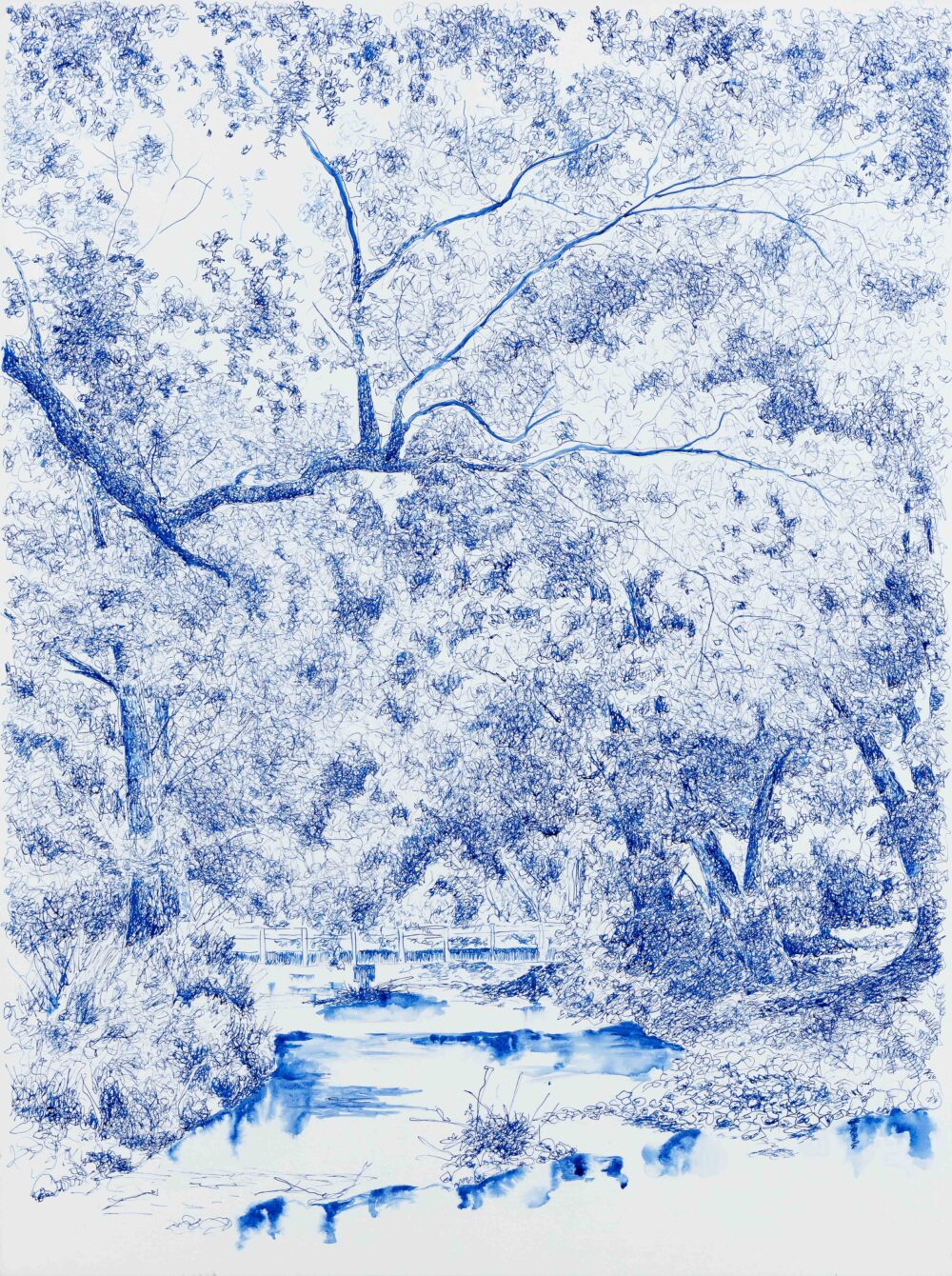
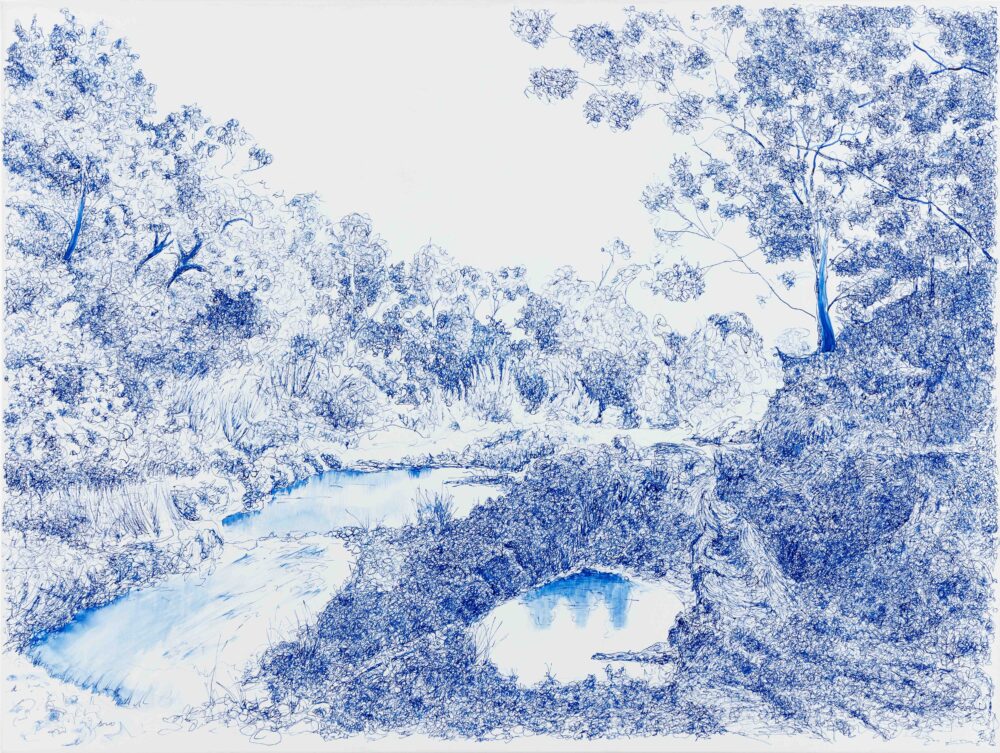
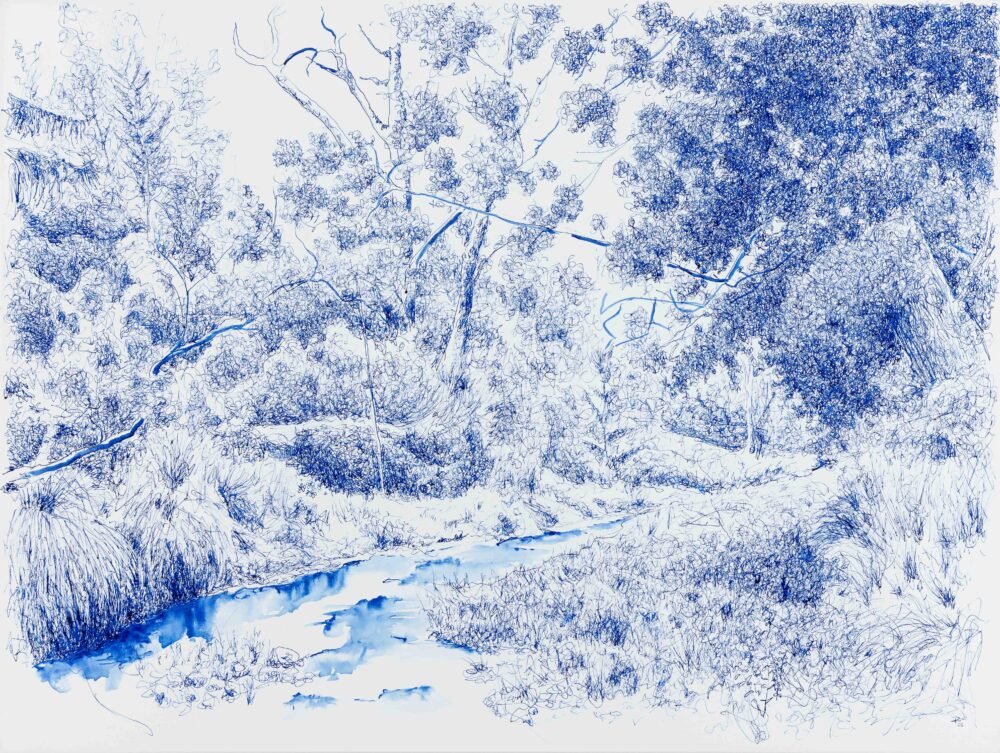
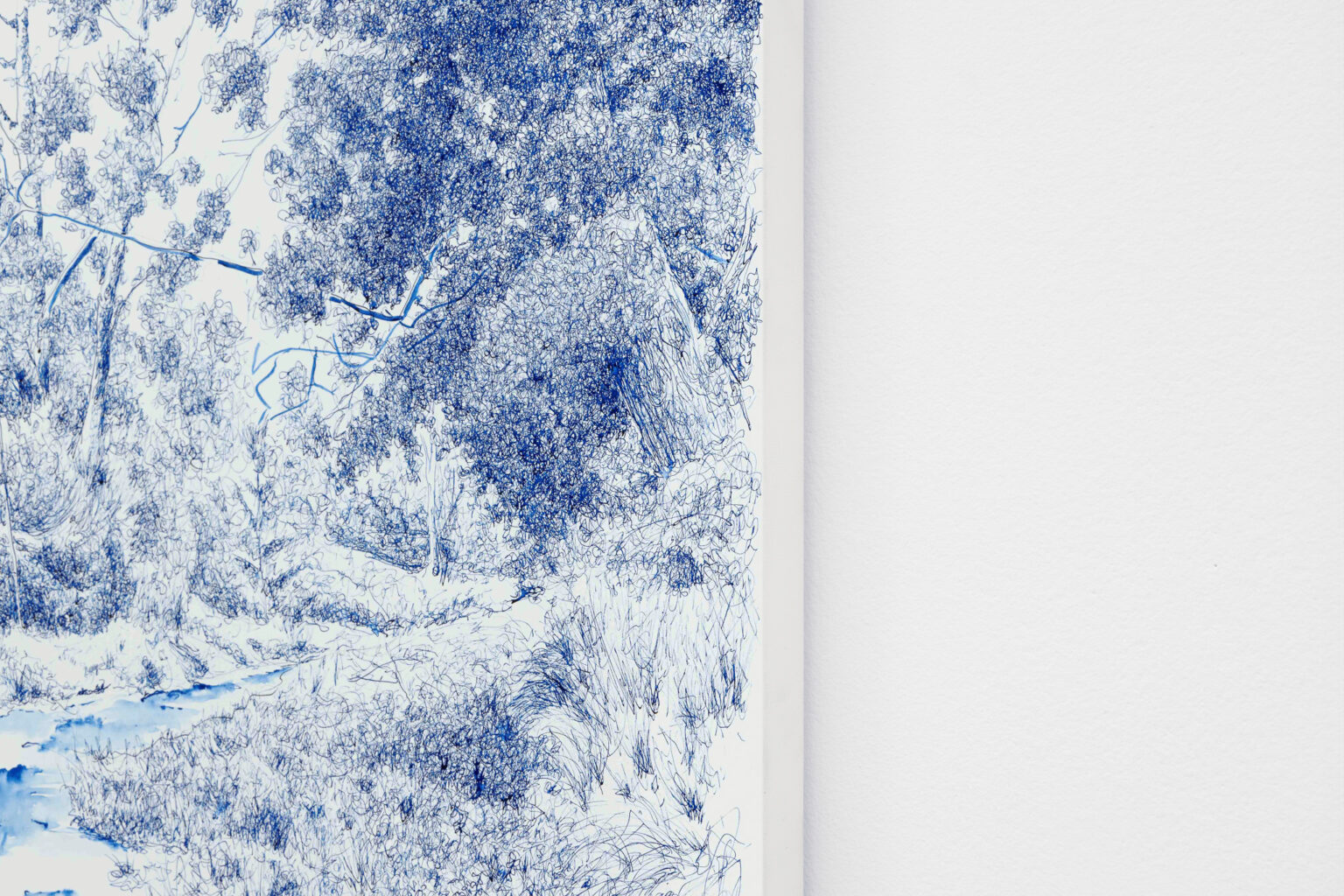
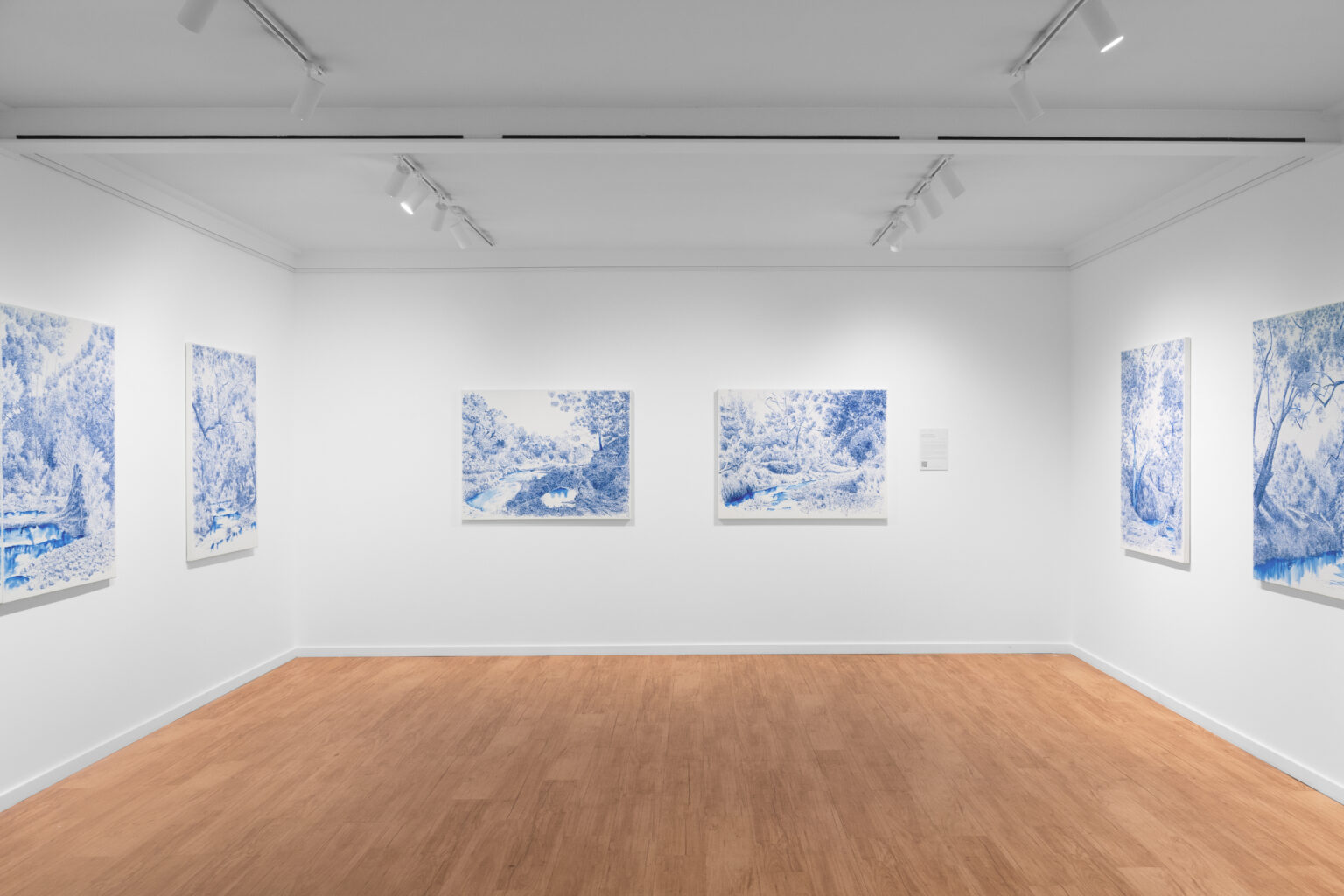
In After the Flood, Eora/Sydney-based artist, Drew Truslove turns his attention again to the Minnamurra River and its surrounding bushland, tracing the tangled beauty and abundance of this river country.

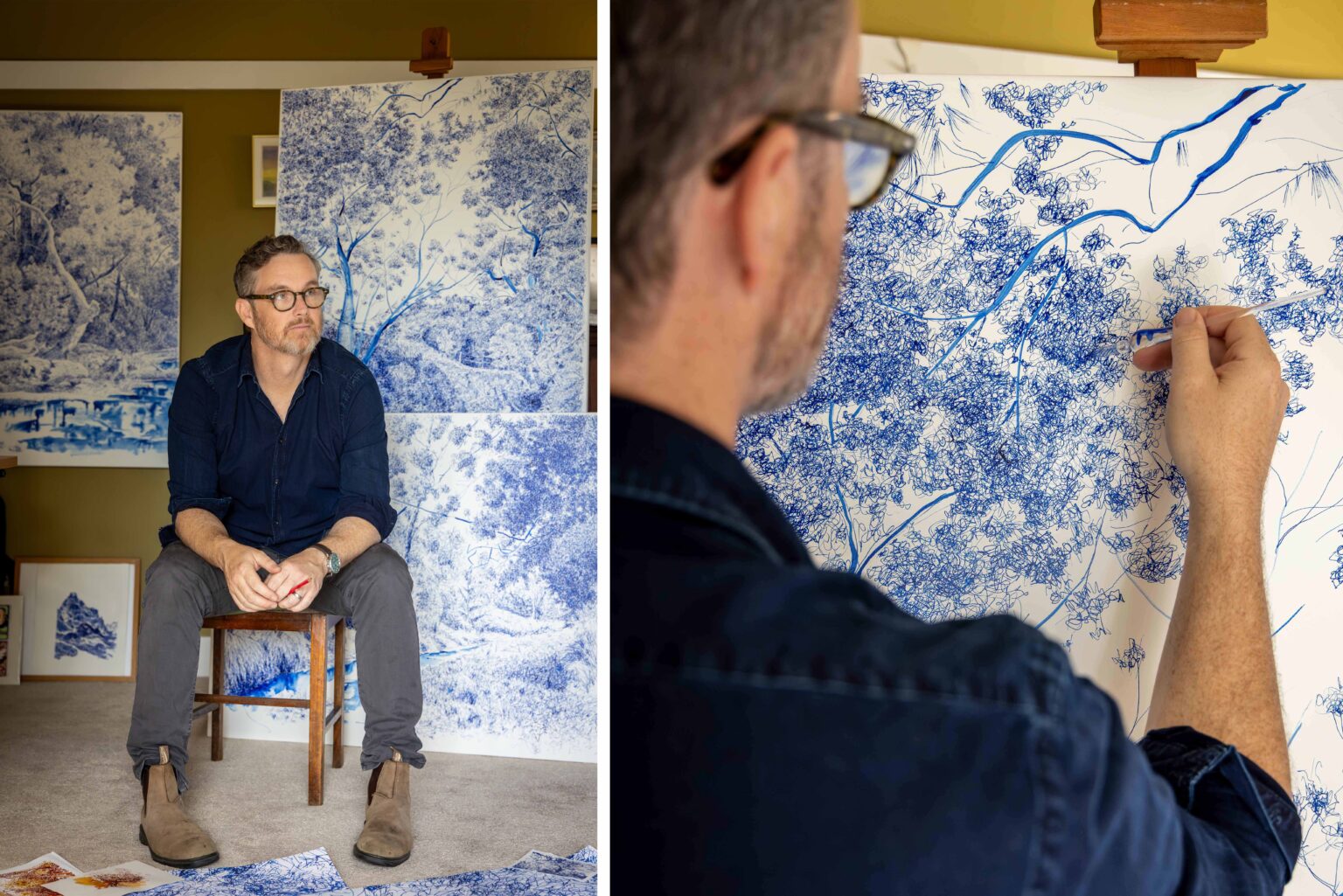
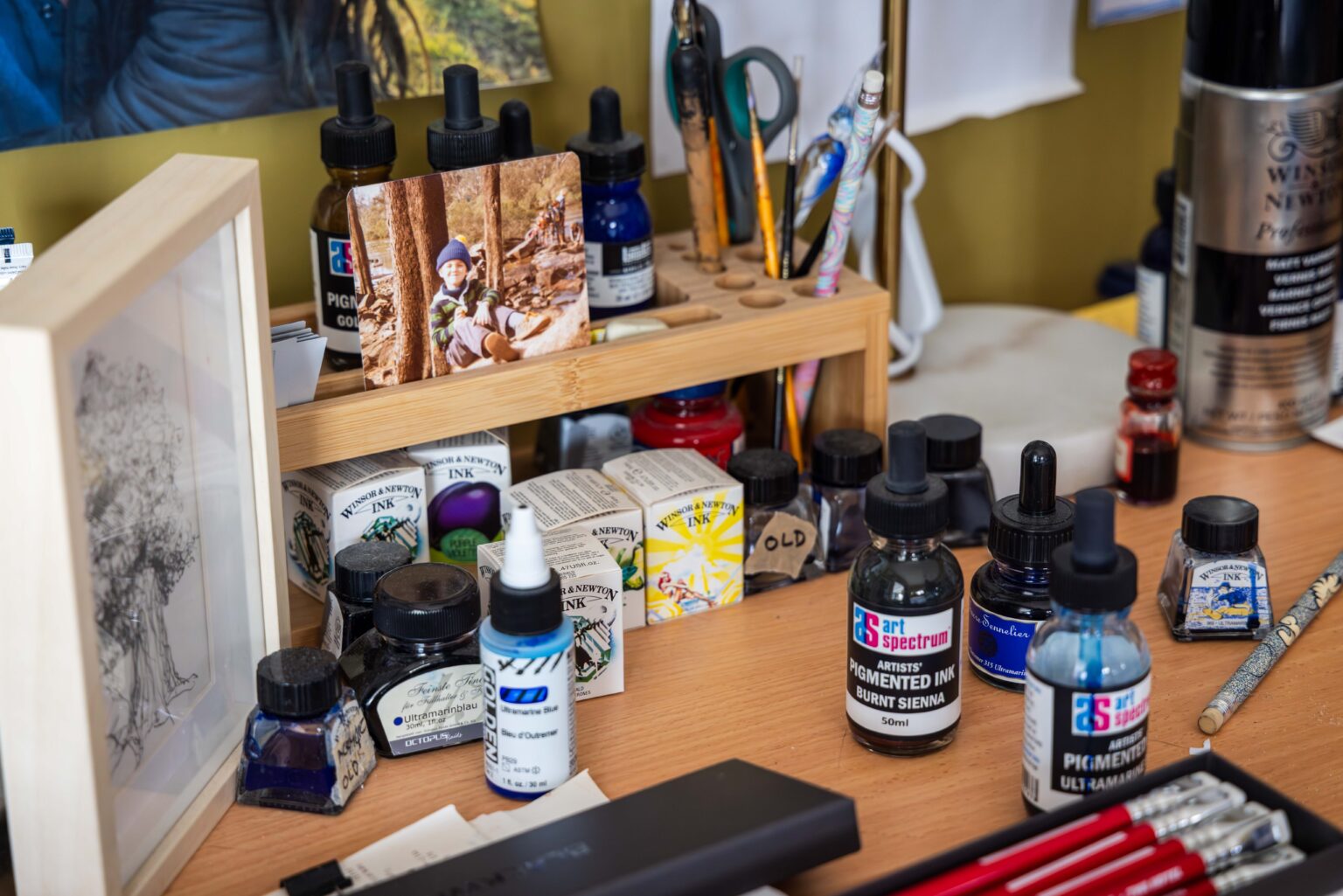
Working with a single colour—a luminous, mineral blue – Truslove’s landscape are drawn in near-continuous fields of marks, looping, searching and restless. His line doubles back, thickens and disperses, at times so fine it seems to hover just above the canvas, then gathering weight along the spine of a trunk, or in the articulation of roots gripping the bank. Ink proves uniquely suited to this task. It follows the slip of a hand without resistance, registering each pause and surge of confidence. 

The effect is of a landscape in the process of assembling itself: the river country as a shifting tangle of elements and relations, continually being rewritten.

In After the Flood, Truslove observes the Minnamurra River after a period of inundation. Flooded banks have been reshaped, trees displaced and channels re-routed. There is an underlying awareness of force, of what the river is capable of when it exceeds its usual bounds. “I was curious about how the pieces would turn out.” says the artist. “Would they be paintings of destruction and mess or would they show something else. In the end the scenes I focused on show both damage and growth in harmony together.”

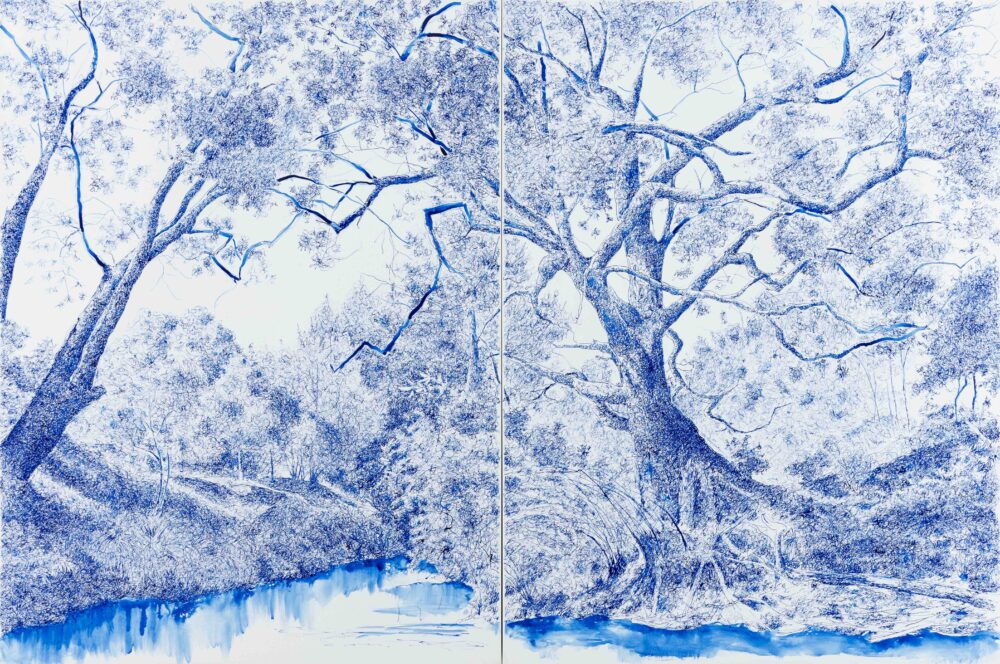
Earlier attentions to lightly marked fox paths—seen in Truslove’s first collection with Michael Reid Southern Highlands (Fox Paths – Minnamurra River, December 2024 to Feb 2025) —finds an echo in these reworked grounds. Here, however, traces of movement are more forcefully inscribed. The introduction of diptychs extends this thinking outward: the seam between panels becomes another line within the work, a hinge across which the landscape unfolds.

“The diptychs have allowed me to explore larger, more dramatic representations of this landscape.” says the artist. “I’ve been slowly escalating the size of these pieces in recent years to try and replicate the intensity, scale and immersive nature of the scenes. It’s allowed me to play around with composition in a different way, looking at scenes that ‘work’ individually and combined.”

What Drew Truslove ultimately proposes is a different way of seeing landscape. In choosing ink as the final medium, he makes a decisive claim: that a line and a single colour – drawn with clarity, patience, and an acute responsiveness to the world – can hold the vastness, force, and subtlety of a landscape.

Named Runner-Up in the 2024 National Emerging Art Prize, and recipient of the Award of Excellence in the Morgans Financial Prize for an Emerging Painter for ‘Flat Rock, River Crossing, 7th Angle’, Truslove is an artist of growing stature. After the Flood is his third solo collection with Michael Reid – with his prior two collections selling out in their entirety.

To speak with a Michael Reid representative about Drew Truslove’s work, press the Register Interest tile.

The Edge of Autumn

Posted by

The Edge of Autumn

  • Artist
    Zoë Fitzherbert
  • Dates
    8—20 May 2026
  • Catalogue
    Download now

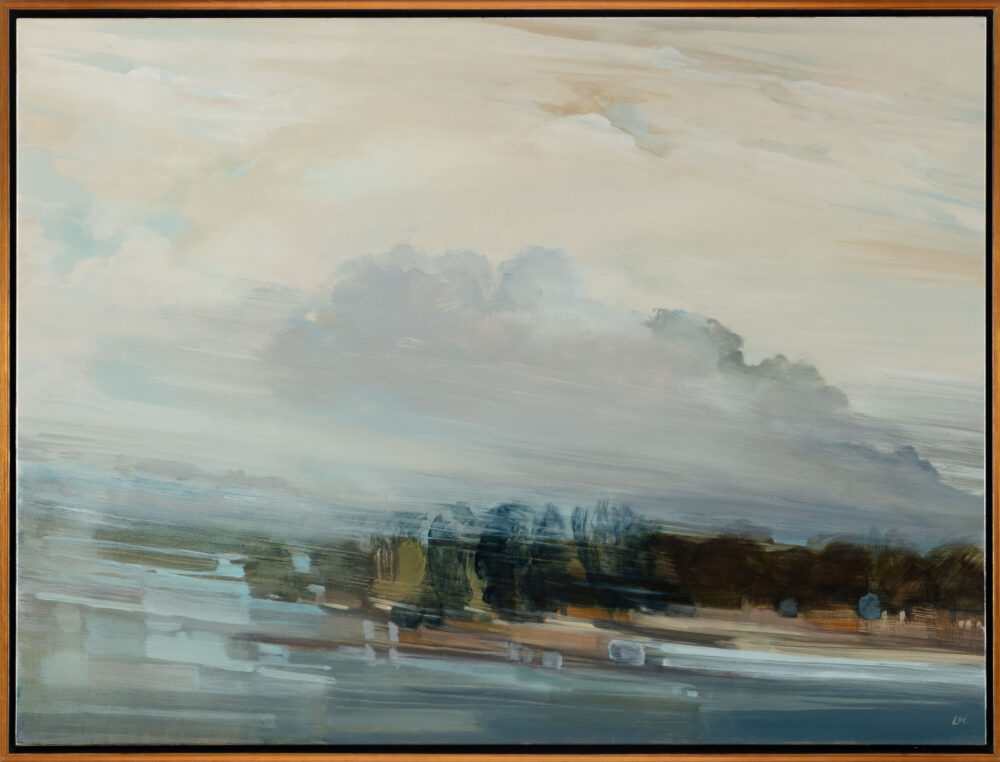
Winner of the Henry Jones Art Prize for 2025, Zoë Fitzherbert paints abstract landscapes that carry reflections of place, atmosphere and memory. Her layered compositions trace the changing weather, colour and contours that shape how a landscape is felt and remembered, rather than seen. 

A former architect, Zoë’s practice brings together instinct and precision: swathes of shifting, emotive colour layered with fine, map-like linework inspired by the cartographic conventions of her great-grandfather. 

Raised in the misted hills of the Southern Highlands of New South Wales, Zoë now paints from her studio overlooking nipaluna/Hobart.

“Driving home from Cradle Mountain in late spring, my route twisted down the steep slopes in a wash of colour.  Shockingly beautiful glimpses of the ranges came and went, receding in crags of blue and brown;  the foreground held a deep, inky green.  Even the sky felt full of colour.

Back in the studio, I started sketching and mixing from memory, guided only by the impressions that remained.  Cethana I and Cethana II are the result of this journey.

Alongside these works, I developed a large autumnal diptych, capturing the view from my studio.  When the Air Turns reflects a landscape I am fortunate to encounter daily, and yet it is never the same.  At this time of year, looking out over the hills, I can smell the seasonal shift in the air before I even step outside.  There is a melancholy beauty to this season;  a quiet stirring that revives memories of all autumns that have come before.”

Further Downstream

Posted by

Further Downstream

  • Artist
    Edwina Edwards
  • Dates
    26 Mar—26 Apr 2026

‘Further Downstream’ is a new body of work by Albury-based painter Edwina Edwards—her first exhibition with Michael Reid in more than four years.

The collection was formed following time spent at Wendy McDonald’s Glencoe Farm, around Thule Lagoon, and in the wetlands of Murray Valley National Park. This is not a landscape of ascent or outlook, but of spread: reedbeds, flooded edges, low grasses and distant treelines held in long horizontal passages.

Edwards understands that this country is best caught obliquely. Rather than fixing a single view, she lets the image gather through accumulations of marks—blue canopies pressed against pale skies, mauves and pinks breaking across the scrub line, water opening in cool bands through the foreground.

“Though geographically distinct from my daily surroundings, this landscape is not separate from it,” says the artist. “The Murray River forms a living thread between my home in the Albury hills and these downstream wetlands. Water carries stories, sediments, and memory. In moving downstream, I am not leaving my own landscape behind, but tracing its extension—following its flow into broader, quieter country.”

Erin Murphy

Posted by

Erin Murphy

  • Artist
    Erin Murphy
  • Dates
    30 Apr—31 May 2026

The walls of Erin Murphy’s painting studio read like a picture dictionary sprung to life, with farmyard animals and familiar objects unfolding like fragmentary entries in a tender taxonomy of a happy-go-lucky world. Drawing on a personal library of visual references – eclectic and idiosyncratic images gleaned from scientific volumes and vintage encyclopaedias, nature illustrations and children’s books, open-source archives and the annals of art history – Erin reimagines her collected curiosities in a distinctive painterly style that blends warmly nostalgic storybook whimsy with a dash of pathos and deadpan wit.

“It’s the dry and straightforward nature of these pictures that I find interesting,” says the artist, who has recently completed her master’s at NAS. “The cold indifference is not something we associate with painting, which we expect to be expressive or poetic. By bringing that matter-of-fact imagery into art, a kind of funny awkwardness can arise, and I like that.” Animated by expressive flecks of pointillist, sketched-out brushwork and energetic bursts of warm, lightly faded colour, her playful and big-hearted paintings delight in the strange and quirky humour that emerges from seemingly banal, supposedly objective source material. In playing up this strangeness, Erin taps into a gentle undercurrent of melancholy and other emotional depths belied by her subjects’ outward simplicity.

Whether it stems from the wistfulness of her picture-book style, the folly of our efforts to classify and comprehend the natural world, or the kitsch conventions of animal portraiture – a genre that lays bare our human foibles and sentimental excesses by projecting emotion onto creatures with unknowable inner lives – a quiet poignancy often peeks through her otherwise bright and ebullient scenes.

This bittersweetness is evident even in one of her most lighthearted works, Snowman, which was shortlisted for the Sir John Sulman Prize at the Art Gallery of New South Wales. “It uses an encyclopaedic image that I thought would make a very funny painting,” says Erin, whose Sulman nod is the latest in a string of career triumphs since her star turn as a National Emerging Art Prize (NEAP) finalist. “It’s important to have a sense of humour so I don’t get stuck in my head when I’m painting. I can imagine a kids’ alphabet chart saying: S is for Snowman. It’s like a snowman is a character we’ve all just accepted, rather than a temporary sculpture people make. So, the snowman would be a component of my picture dictionary of the world. I think I’ll paint an igloo for him soon.”

-Harry Roberts for Belle Magazine

Place and Perspective

Posted by

Place and Perspective

  • Artist
    David Griffith
  • Dates
    7—31 May 2026
  • Catalogue
    Download now

Moving between landscape and still life, David Griffith’s paintings are grounded in the discipline of looking: landscapes begin as drawings made on site before being reimagined in the studio, while still-life compositions are painted directly from life. Across both modes, observation becomes a point of departure for something more expansive—where memory, sensation and the possibilities of paint reshape what is seen into something newly felt.

Griffith’s still lifes possess a hushed magnetism: bowls, bottles, fruit and familiar domestic objects arranged with measured grace, then rendered in dusty jewel tones, softened light and precise shadow. In these works, humble forms take on a contemplative dignity, recalling the great still-life tradition while remaining distinctly contemporary in their sensitivity and restraint. Elsewhere, his landscapes translate lived encounters with place into painterly meditations on atmosphere, structure and space.

For Griffith, painting is as much subject as process. Each canvas becomes a site of enquiry—testing colour against form, depth against flatness, illusion against surface. Objects shift in relation to one another, space opens and compresses, and the rectangle of the picture plane is treated as an arena for play and invention.

Last year, David Griffith was named a finalist in both the The Lester Prize and the A.M.E Bale Art Prize, following his debut appearance at Michael Reid Northern Beaches in 2024, ‘Still Life’.

Tali Ngura Wiru – Beautiful Sandhill Country

Posted by

Tali Ngura Wiru – Beautiful Sandhill Country

  • Artist
    Trisha Singer
  • Dates
    18 Feb—22 Mar 2026

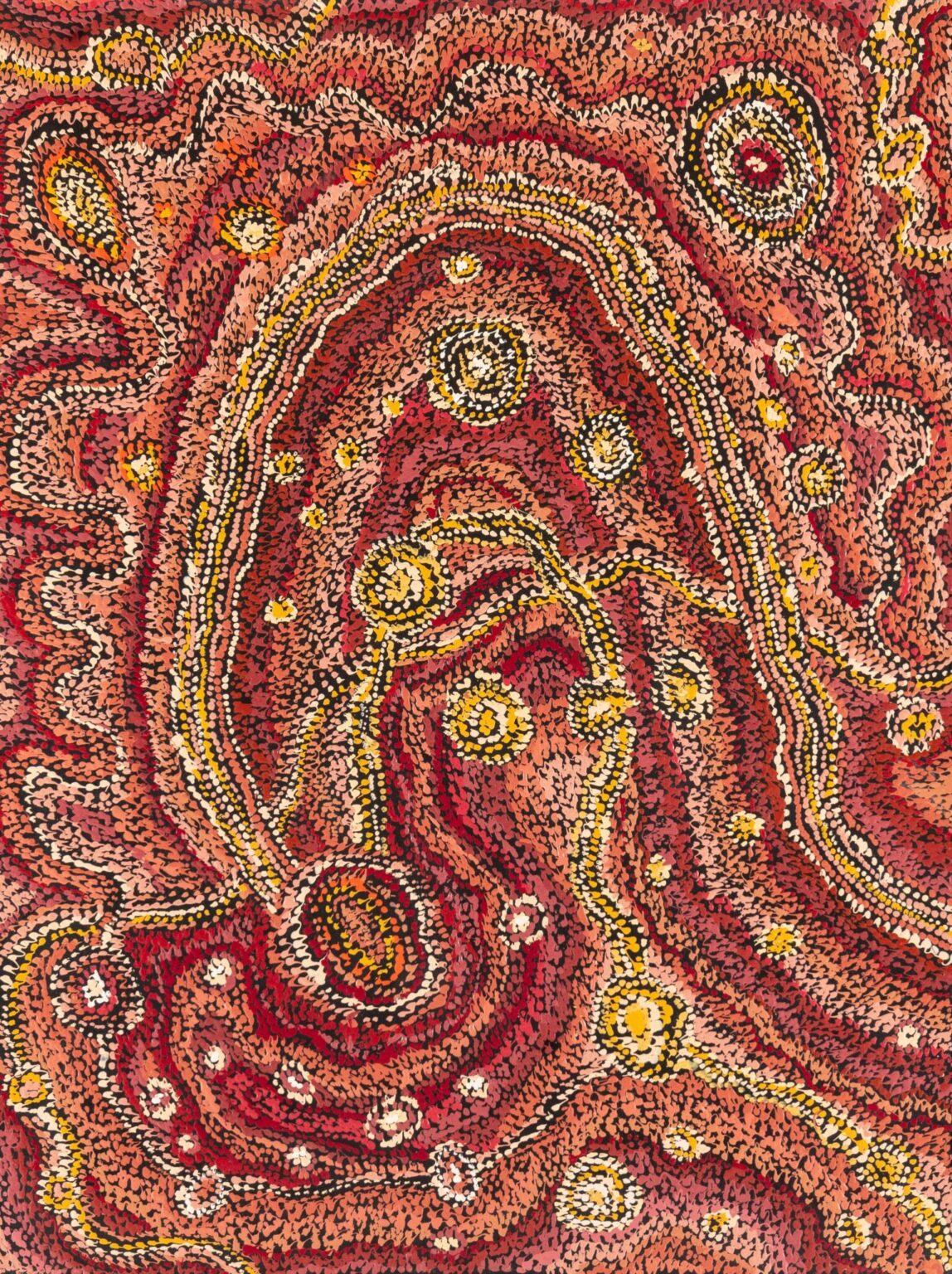
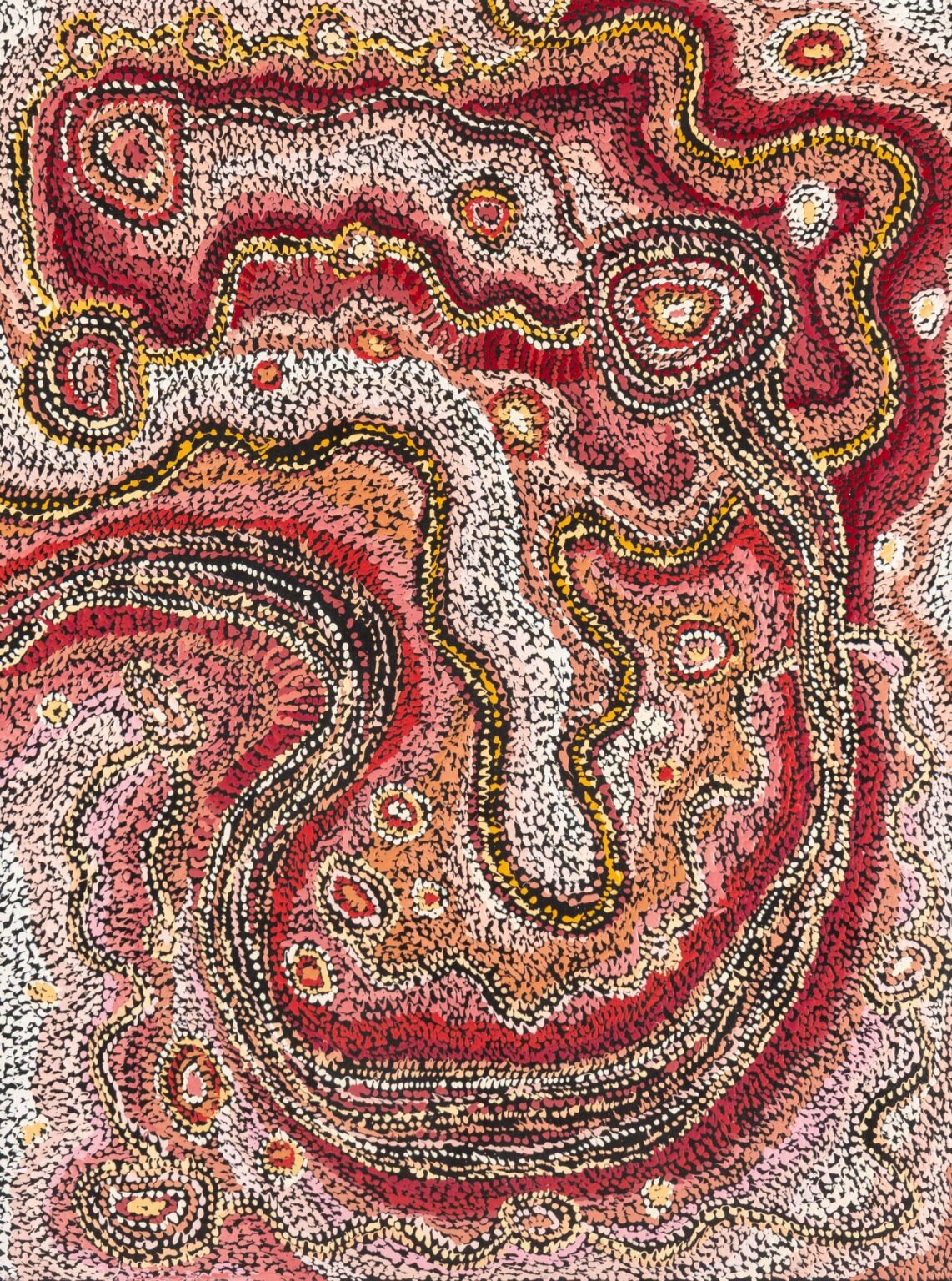
A leading voice within the dynamic school of contemporary painters at Iwantja Arts – co-founded in the 1980s by her late mother, revered artist and advocate Kunmanara (Sadie) Singer – Trisha Singer’s solo show commences while her joint exhibition with PRISCILLA SINGER – her sister and fellow luminary of Iwantja Arts – continues its run at Michael Reid Sydney.

Our Berrima and Eora/Sydney galleries’ concurrent presentations of the Singer Sisters’ new suite of paintings – titled ‘Tali Ngura Wiru – Beautiful Sandhill Country’ as a tribute to the rocky desert country of Indulkana, where Iwantja is sited – celebrate the cross-generational sharing of cultural knowledge, stories and practices grounded in Country and kinship that is the animating force in their art-making.

“I’ve been making art since I was a young girl,” says Singer, whose work channels the vivid desert reds and earth tones of Yankunytjatjara Country through sweeping gestures crested by meandering, sand-coloured striations. “You can see sandhills in the colours I use… desert colours, with dusty reds and oranges.”

Singer’s practice honours personal and cultural connections to place, carrying forward stories and lessons passed down through family and community. “There’s a lot of my mum in my work – what she liked and what she taught me,” says the artist. “I like looking at different flowers and going on Country, getting the knowledge of the land and the story passed on from grandparents … When you travel, you see the changes in the land. It comes alive.”

Singer previously presented her work at Michael Reid Southern Highlands alongside her sister and other Iwantja peers in the group exhibition ‘Ngura Pilunpa – Peaceful Country’. With her practice now being celebrated in Sydney, we are thrilled to welcome her back to Berrima for the Southern Highlands contingent of ‘Tali Ngura Wiru’.

Recipe Box

Posted by

Recipe Box

  • Artist
    Lilli Strömland
  • Dates
    26 Mar—26 Apr 2026

Lilli Strömland’s paintings linger over the theatre of domestic preparation, where kitchen and studio collapse into a shared site of cultivation. Fruits and vegetables are scattered across tables, their forms tilting upward across spatially ambiguous planes. Corn husks flare open, apples gather around tangled cords, while vessels and striped kitchen towels frame these organic protagonists. ‘Recipe Box’ follows Strömland’s recent recognition as winner of the Emerging Artist Prize at the Ravenswood Australian Women’s Art Prize (2025).

Her subjects sit on the verge of transformation — ingredients poised between raw state and recipe. Here, the construction of a recipe becomes inseparable from the construction of an image: gestures of slicing, measuring and assembling echo in the layering of pigment and mark.

Recalling Janet Dawson’s later work following her move to ‘Scribble Rock’ in Binalong — where daily engagement with organic farming drew her from abstraction toward an intimate realism of onions, cabbages and cauliflowers — Strömland hones her observation of the world into a deeply attentive encounter with material existence.

Where traditional vanitas paintings meditate on abundance as a symbol of decay and the passing of time, Strömland quietly inverts the form. Her profusions of fruit, vegetables and domestic objects signal not decline but imminent transformation — items destined to be chopped, sautéed, baked and shared.

Strömland has been a finalist in the Portia Geach Memorial Award (2019, 2025), the Brett Whiteley Travelling Art Scholarship (2020), the Waverley Art Prize (2018, 2025), the Fisher’s Ghost Art Award (2024, 2025), the National Emerging Art Prize (2025), and the Evelyn Chapman Art Award (2018), as well as being a semi-finalist in the Douglas Moran Portrait Prize (2014) and receiving the Chroma Prize for Excellence at the National Art School (2015).

Join our mailing list
Interests(Required)
This site is protected by reCAPTCHA and the Google Privacy Policy and Terms of Service apply.
REGISTER YOUR INTEREST: Recipe Box