Archive for the ‘Scrutineer’ Category

Honey Thief

Posted by

Words: Michael Sharp. Photography: Ashley Mackevicius.

The bees around Bowral love the blooms of the Brown Barrel eucalypts that grow abundantly on the slopes of Mount Gibraltar.

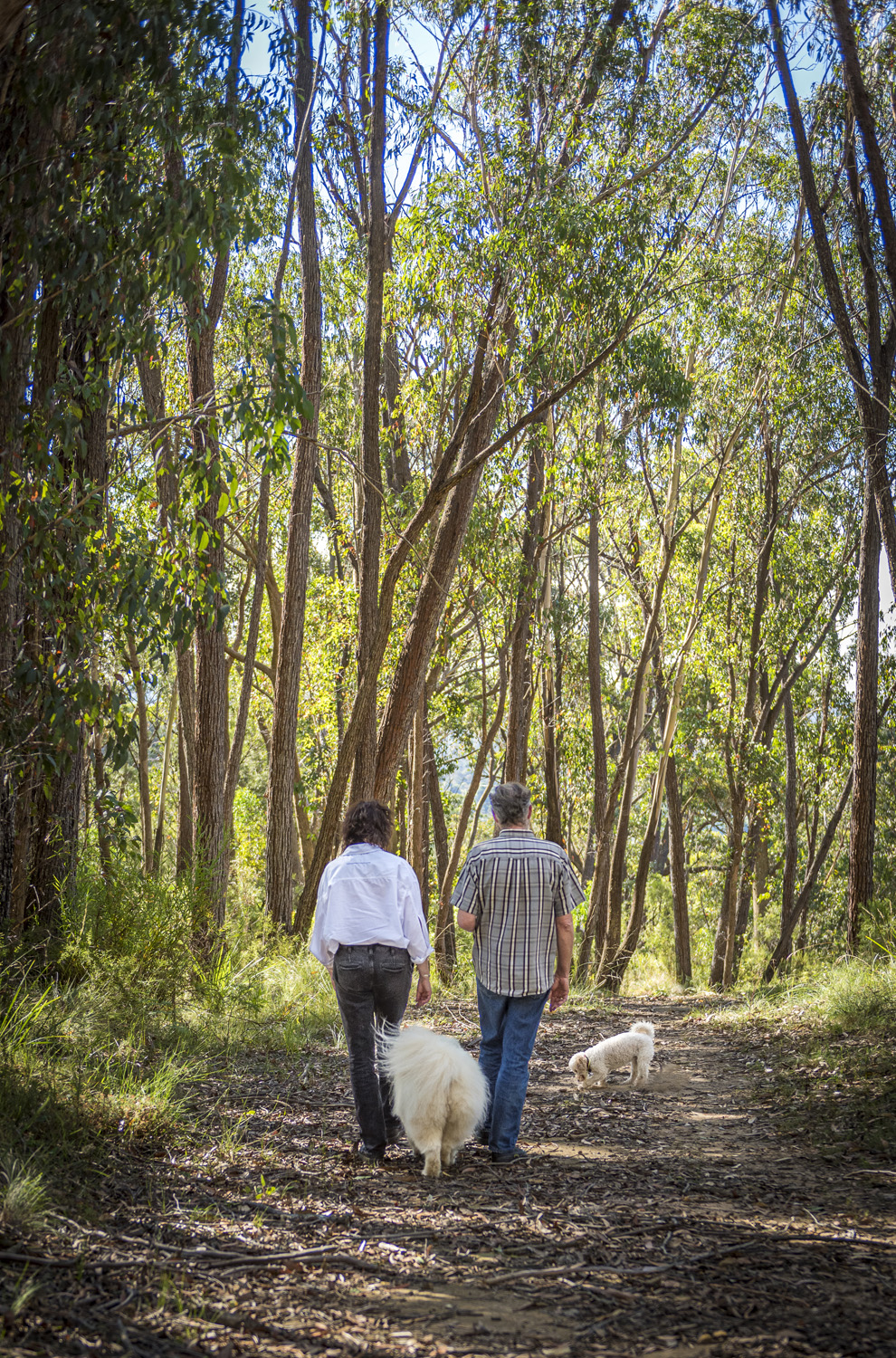
One of the great joys of the life that Deb and Greg McLaughlin have built for their family in The Southern Highlands is to sit on a hill on a summer afternoon and watch their bees return to their hives.


“When you are in their presence, you are totally present,” says Deb. “Just sitting quietly near them and listening to their hum and their vibration. It is just beautiful.”

Deb and Greg met at St Vincent’s Hospital, where Deb was working in the corporate office and Greg was a consultant in the implementation of radiation and oncology facilities. A dozen years ago they were living in inner-Sydney Newtown with two young children. 

“We watched way too many episodes of River Cottage and were inspired by the idea of a self-sufficient lifestyle,” Deb recalls. “We started visiting friends in The Southern Highlands on weekends – and we just didn’t want to go home.”

Their original plan was to own a small farm while still living in the city, but the conversation quickly evolved to “let’s just move”.

“Our children were only one and two at the time,” says Greg, “and we thought if we don’t do it now, it will be 20 years before we can. So we did it.”

They found a three hectare property near Mount Gibraltar and moved there in the winter of 2011. They named it Bulwarra, which was the name of the street where Deb grew up in Sydney and is an Aboriginal word meaning “view from lofty height”. Bulwarra soon boasted vegetable patches, a few sheep, a dozen alpacas, 20 hens and a vineyard with 200 chardonnay vines and 200 pinot noir vines.

Deb and Greg wanted to also keep bees to promote pollination, however a local permaculture consultant told them The Southern Highlands was too cold for bees. Despite this advice, they decided to try a couple of hives. Greg did a beekeeping course in Sydney and they enjoyed their first honey harvest in 2012.
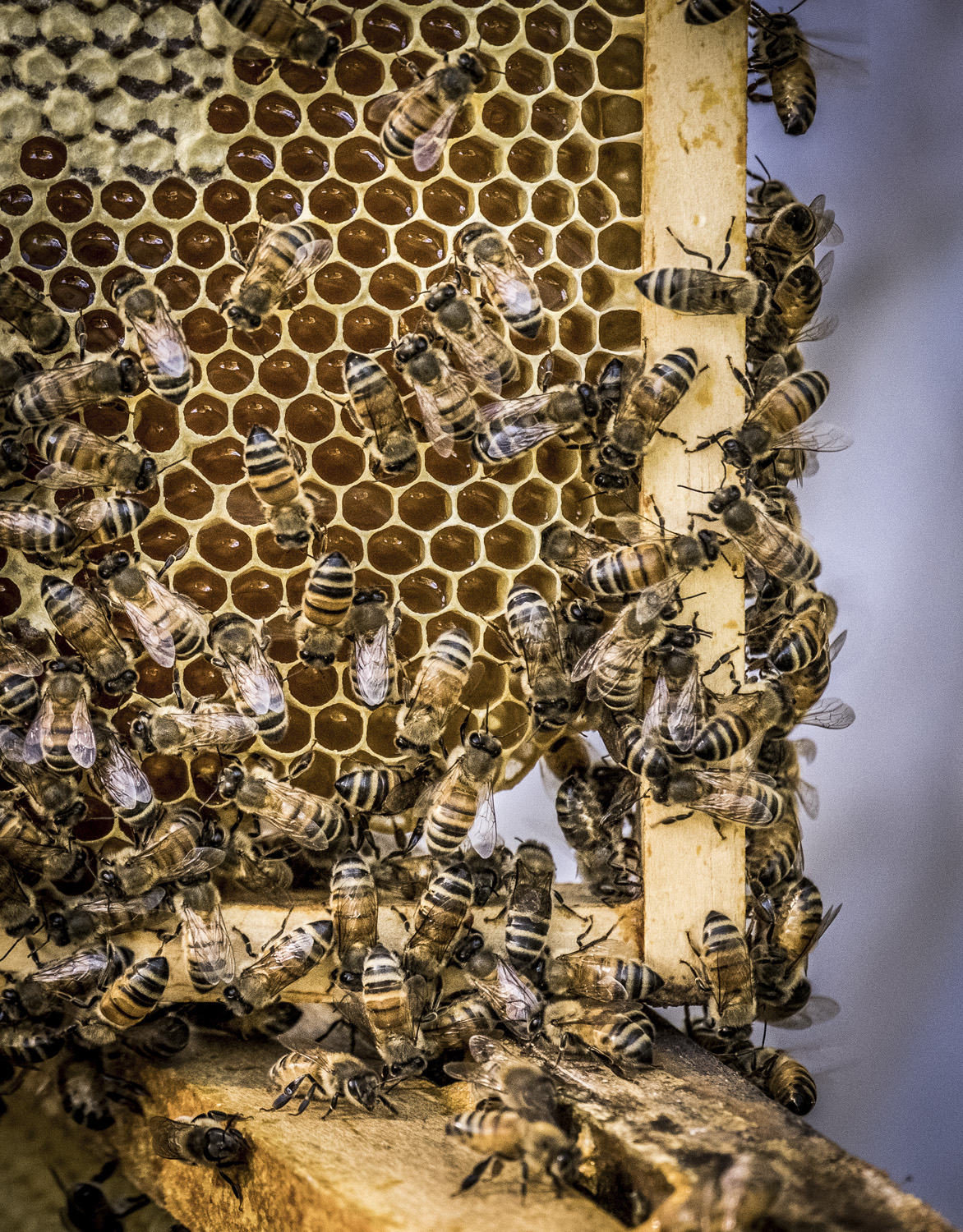
“The conditions were excellent that year and we produced about 40 kilograms of honey from each hive. Greg was really excited and said: ‘You have to taste this honey, it’s amazing.’ My experience until then was only with store-bought honey which was always amber in colour and tasted pretty much the same. But this honey was dark and velvety in texture and it had the most gorgeous taste – like fruitcake.”

Greg thought they should enter some local competitions and they were delighted to immediately win awards for best dark honey.

In 2015, only three years after their first harvest, they entered the National Honey Show at the Sydney Royal Easter Show. Astonishingly, they placed first in the Dark category and second in Amber.

Their success in competitions, and the fact they were producing substantially more honey than the family could consume, led to the decision to start selling their honey at local markets under the brand Bulwarra Bees. They enjoyed success from the outset and then began exploring “the honey alchemy side of things”.

“I would love to take credit for this,” says Deb, “but it was actually Greg’s idea originally. He suggested we should try mixing cinnamon with the honey. Well, it would just sell out at the markets every month. This inspired me to think what else we could do and we next tried mixing chocolate with honey for Easter. That went well and I started experimenting further and now we sell 13 different flavours of honey – with another three flavours coming out soon.”

All the preparation – infusing, stirring, pouring, labelling – is done by hand and all their containers are made of glass, not plastic. 

With sales at local markets going well for over five years, the McLaughlins decided to open a shop in Bowral. The first day of trading was scheduled for July 2021 – the week that The Southern Highlands went into a COVID-induced lockdown. They weren’t able to open their doors until October.

They had called the shop The Honey Thief.

“I was speaking to my mother on the phone one day and she asked me how Greg was and what he was up to,” explains Deb. “I said: ‘He’s robbing the hives, he’s a honey thief!’ We thought that would be a good name for our shop.”

The name reveals that Deb and Greg understand and respect where their honey comes from.

“Our first four years of honey production were absolutely amazing, but the past four years have been very challenging,” says Deb. “First there was drought. The plants were stressed and the eucalypts were just not blooming. When there is no rain, there are no flowers and when there are no flowers, there is no honey. In addition, our dams dried up – and each hive needs a litre of water a day. We lost a third of our hives during that time.

“For the past two years there has been too much rain. This means the nectar is very wet and the bees have to work extra hard to get the moisture out in order to produce honey.

“Bee keeping is a fast-growing hobby in Australia, including in The Southern Highlands, and it’s all about flow hives and being able to readily access honey. But I want to encourage kinder bee keeping, which is more about what’s best for the bees and less about what you can take from them. Kinder bee keeping means opening the hives as little as possible and having minimal intervention. It means providing the best environment for the bees rather than focusing on what they can do for us. It’s more about them.”

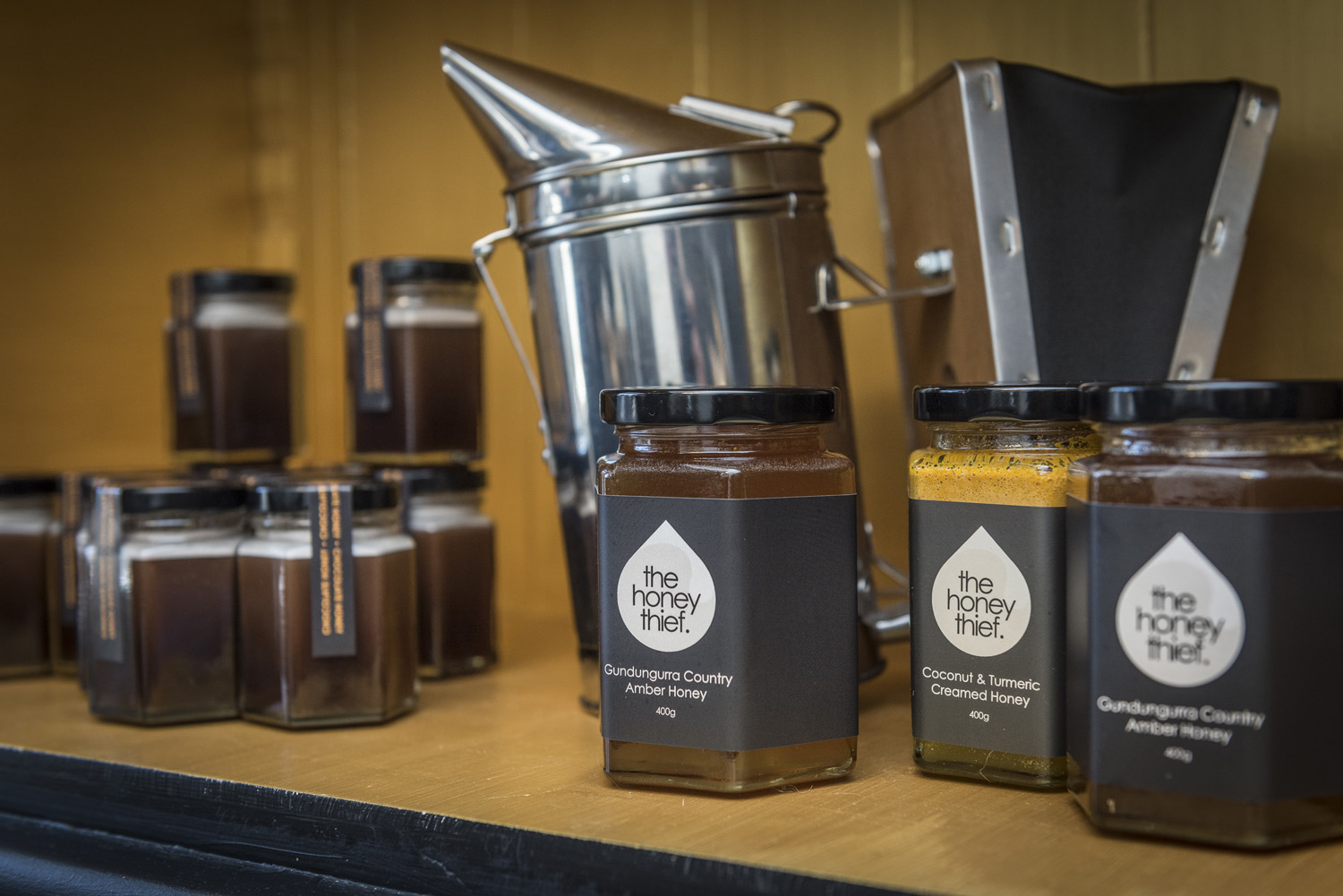
This is why The Honey Thief currently uses honey from other hives in the area and its labels state the honey is sourced “from Gundungurra country”, which stretches from Picton in the north to Goulburn in the south and west to the Blue Mountains.

Deb notes that one easy thing people can do to support bees, especially during difficult times, is to plant purple flowering varieties. Bees see in black and white when they are flying, but when they begin their descent they start seeing colour – first green and then ultraviolet.

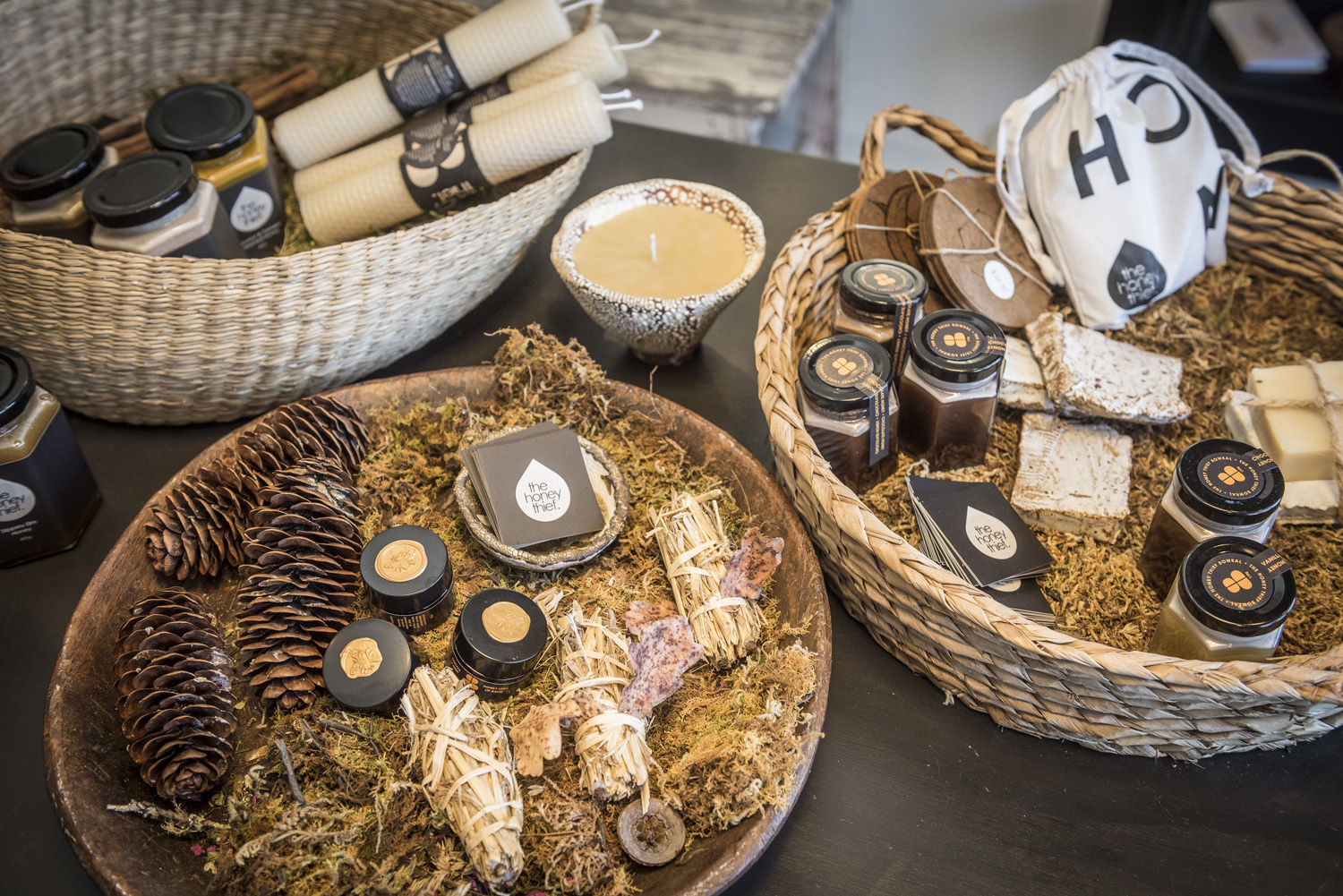
The Honey Thief offers over a dozen types of honey as well as a range of other products. This includes a cough serum made from raw honey with organic lemons, ginger, garlic and onions. This elixir and chai honey are The Honey Thief’s best sellers. They also sell beeswax candles, lip balms and bath products.

The McLaughlins’ original aim was to live a more self-sufficient lifestyle. Apiary was initially just part of their story, but it has grown to become central to their life. Their honey has received numerous prizes, their business has received a Local Business Award for Environmental Sustainability and Deb was selected as a finalist in the 2022 Australian Women’s Small Business Awards.

“We’ve come a long way,” Deb says, “but the biggest challenge is the environment, which we have no control over. Bees are vitally important because they are responsible for the pollination of a third of our crops. They are the pillars of our food chain and we are totally dependent on them. That’s why there needs to be a shift to kinder bee keeping and conservation.”


For more information visit: www.thehoneythief.com.au

David Ball

Posted by

Words: Michael Sharp. Photography: Ashley Mackevicius.

The bees around Bowral love the blooms of the Brown Barrel eucalypts that grow abundantly on the slopes of Mount Gibraltar.

One of the great joys of the life that Deb and Greg McLaughlin have built for their family in The Southern Highlands is to sit on a hill on a summer afternoon and watch their bees return to their hives.


“When you are in their presence, you are totally present,” says Deb. “Just sitting quietly near them and listening to their hum and their vibration. It is just beautiful.”

Deb and Greg met at St Vincent’s Hospital, where Deb was working in the corporate office and Greg was a consultant in the implementation of radiation and oncology facilities. A dozen years ago they were living in inner-Sydney Newtown with two young children. 

“We watched way too many episodes of River Cottage and were inspired by the idea of a self-sufficient lifestyle,” Deb recalls. “We started visiting friends in The Southern Highlands on weekends – and we just didn’t want to go home.”

Their original plan was to own a small farm while still living in the city, but the conversation quickly evolved to “let’s just move”.

“Our children were only one and two at the time,” says Greg, “and we thought if we don’t do it now, it will be 20 years before we can. So we did it.”

They found a three hectare property near Mount Gibraltar and moved there in the winter of 2011. They named it Bulwarra, which was the name of the street where Deb grew up in Sydney and is an Aboriginal word meaning “view from lofty height”. Bulwarra soon boasted vegetable patches, a few sheep, a dozen alpacas, 20 hens and a vineyard with 200 chardonnay vines and 200 pinot noir vines.

Deb and Greg wanted to also keep bees to promote pollination, however a local permaculture consultant told them The Southern Highlands was too cold for bees. Despite this advice, they decided to try a couple of hives. Greg did a beekeeping course in Sydney and they enjoyed their first honey harvest in 2012.
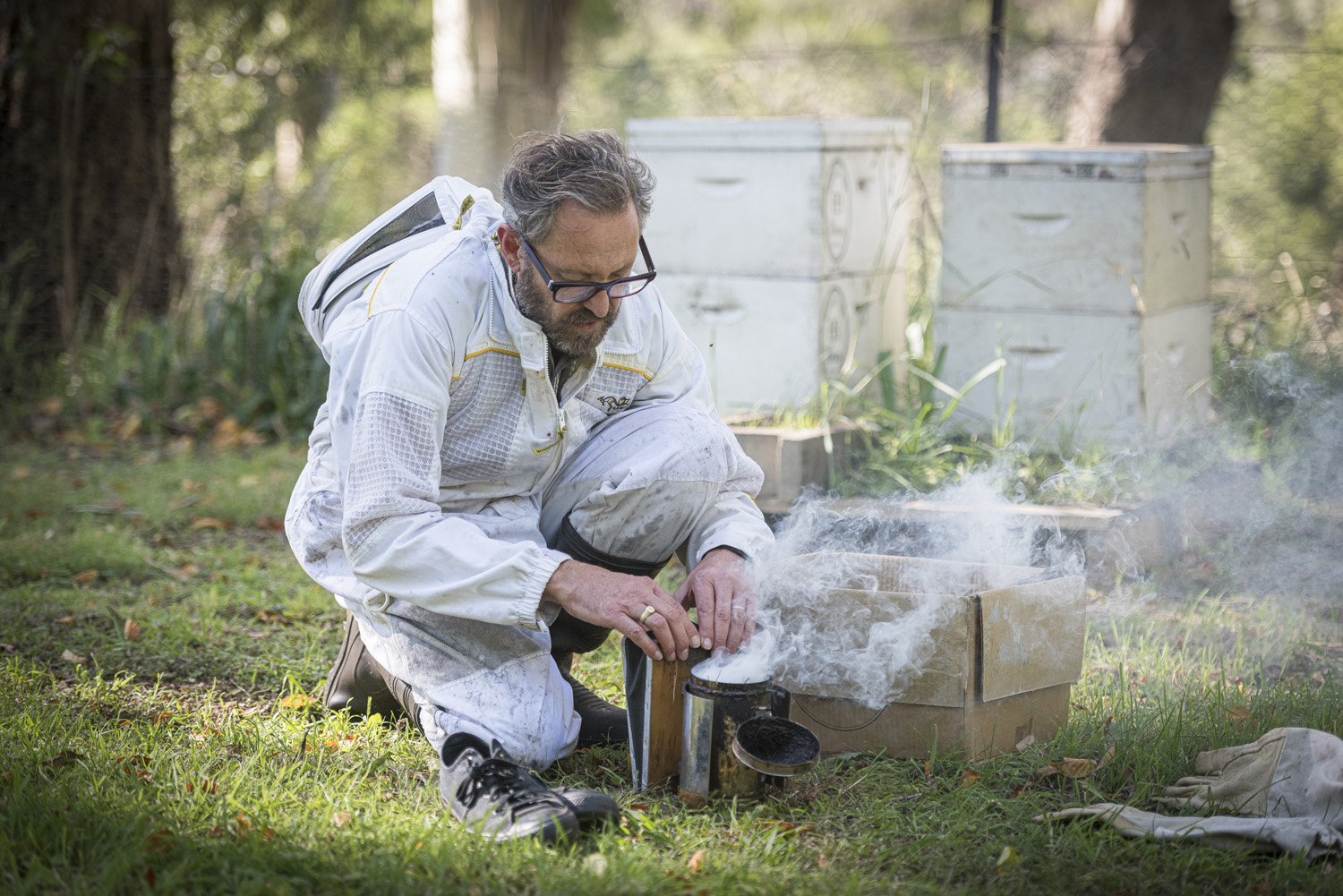
“The conditions were excellent that year and we produced about 40 kilograms of honey from each hive. Greg was really excited and said: ‘You have to taste this honey, it’s amazing.’ My experience until then was only with store-bought honey which was always amber in colour and tasted pretty much the same. But this honey was dark and velvety in texture and it had the most gorgeous taste – like fruitcake.”

Greg thought they should enter some local competitions and they were delighted to immediately win awards for best dark honey.

In 2015, only three years after their first harvest, they entered the National Honey Show at the Sydney Royal Easter Show. Astonishingly, they placed first in the Dark category and second in Amber.

Their success in competitions, and the fact they were producing substantially more honey than the family could consume, led to the decision to start selling their honey at local markets under the brand Bulwarra Bees. They enjoyed success from the outset and then began exploring “the honey alchemy side of things”.

“I would love to take credit for this,” says Deb, “but it was actually Greg’s idea originally. He suggested we should try mixing cinnamon with the honey. Well, it would just sell out at the markets every month. This inspired me to think what else we could do and we next tried mixing chocolate with honey for Easter. That went well and I started experimenting further and now we sell 13 different flavours of honey – with another three flavours coming out soon.”

All the preparation – infusing, stirring, pouring, labelling – is done by hand and all their containers are made of glass, not plastic. 

With sales at local markets going well for over five years, the McLaughlins decided to open a shop in Bowral. The first day of trading was scheduled for July 2021 – the week that The Southern Highlands went into a COVID-induced lockdown. They weren’t able to open their doors until October.

They had called the shop The Honey Thief.

“I was speaking to my mother on the phone one day and she asked me how Greg was and what he was up to,” explains Deb. “I said: ‘He’s robbing the hives, he’s a honey thief!’ We thought that would be a good name for our shop.”

The name reveals that Deb and Greg understand and respect where their honey comes from.

“Our first four years of honey production were absolutely amazing, but the past four years have been very challenging,” says Deb. “First there was drought. The plants were stressed and the eucalypts were just not blooming. When there is no rain, there are no flowers and when there are no flowers, there is no honey. In addition, our dams dried up – and each hive needs a litre of water a day. We lost a third of our hives during that time.

“For the past two years there has been too much rain. This means the nectar is very wet and the bees have to work extra hard to get the moisture out in order to produce honey.

“Bee keeping is a fast-growing hobby in Australia, including in The Southern Highlands, and it’s all about flow hives and being able to readily access honey. But I want to encourage kinder bee keeping, which is more about what’s best for the bees and less about what you can take from them. Kinder bee keeping means opening the hives as little as possible and having minimal intervention. It means providing the best environment for the bees rather than focusing on what they can do for us. It’s more about them.”

This is why The Honey Thief currently uses honey from other hives in the area and its labels state the honey is sourced “from Gundungurra country”, which stretches from Picton in the north to Goulburn in the south and west to the Blue Mountains.

Deb notes that one easy thing people can do to support bees, especially during difficult times, is to plant purple flowering varieties. Bees see in black and white when they are flying, but when they begin their descent they start seeing colour – first green and then ultraviolet.

The Honey Thief offers over a dozen types of honey as well as a range of other products. This includes a cough serum made from raw honey with organic lemons, ginger, garlic and onions. This elixir and chai honey are The Honey Thief’s best sellers. They also sell beeswax candles, lip balms and bath products.

The McLaughlins’ original aim was to live a more self-sufficient lifestyle. Apiary was initially just part of their story, but it has grown to become central to their life. Their honey has received numerous prizes, their business has received a Local Business Award for Environmental Sustainability and Deb was selected as a finalist in the 2022 Australian Women’s Small Business Awards.

“We’ve come a long way,” Deb says, “but the biggest challenge is the environment, which we have no control over. Bees are vitally important because they are responsible for the pollination of a third of our crops. They are the pillars of our food chain and we are totally dependent on them. That’s why there needs to be a shift to kinder bee keeping and conservation.”


For more information visit: www.thehoneythief.com.au

Kate Vella

Posted by

Words: Michael Sharp. Photography: Ashley Mackevicius.

The bees around Bowral love the blooms of the Brown Barrel eucalypts that grow abundantly on the slopes of Mount Gibraltar.

One of the great joys of the life that Deb and Greg McLaughlin have built for their family in The Southern Highlands is to sit on a hill on a summer afternoon and watch their bees return to their hives.


“When you are in their presence, you are totally present,” says Deb. “Just sitting quietly near them and listening to their hum and their vibration. It is just beautiful.”

Deb and Greg met at St Vincent’s Hospital, where Deb was working in the corporate office and Greg was a consultant in the implementation of radiation and oncology facilities. A dozen years ago they were living in inner-Sydney Newtown with two young children. 

“We watched way too many episodes of River Cottage and were inspired by the idea of a self-sufficient lifestyle,” Deb recalls. “We started visiting friends in The Southern Highlands on weekends – and we just didn’t want to go home.”

Their original plan was to own a small farm while still living in the city, but the conversation quickly evolved to “let’s just move”.

“Our children were only one and two at the time,” says Greg, “and we thought if we don’t do it now, it will be 20 years before we can. So we did it.”

They found a three hectare property near Mount Gibraltar and moved there in the winter of 2011. They named it Bulwarra, which was the name of the street where Deb grew up in Sydney and is an Aboriginal word meaning “view from lofty height”. Bulwarra soon boasted vegetable patches, a few sheep, a dozen alpacas, 20 hens and a vineyard with 200 chardonnay vines and 200 pinot noir vines.

Deb and Greg wanted to also keep bees to promote pollination, however a local permaculture consultant told them The Southern Highlands was too cold for bees. Despite this advice, they decided to try a couple of hives. Greg did a beekeeping course in Sydney and they enjoyed their first honey harvest in 2012.
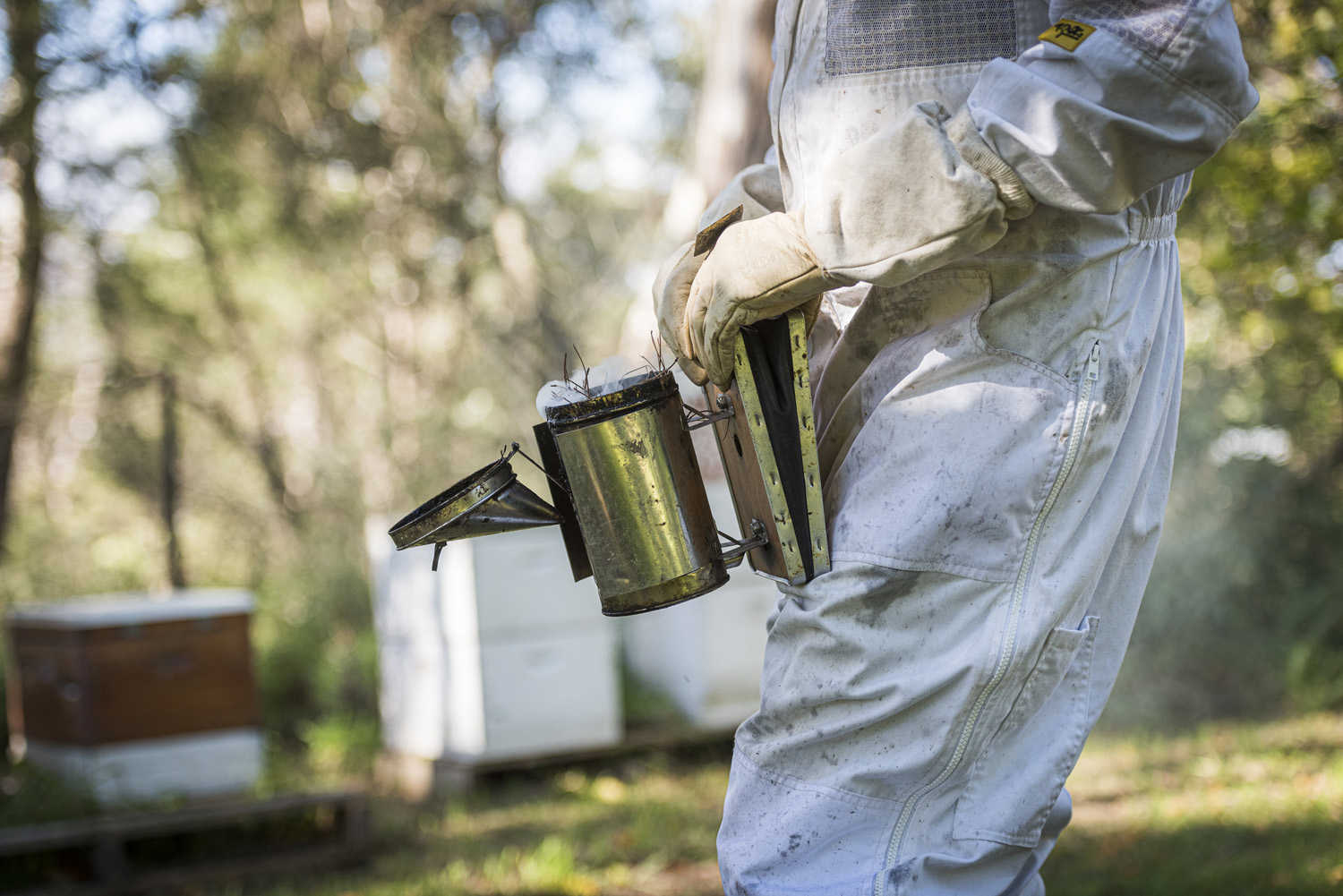
“The conditions were excellent that year and we produced about 40 kilograms of honey from each hive. Greg was really excited and said: ‘You have to taste this honey, it’s amazing.’ My experience until then was only with store-bought honey which was always amber in colour and tasted pretty much the same. But this honey was dark and velvety in texture and it had the most gorgeous taste – like fruitcake.”

Greg thought they should enter some local competitions and they were delighted to immediately win awards for best dark honey.

In 2015, only three years after their first harvest, they entered the National Honey Show at the Sydney Royal Easter Show. Astonishingly, they placed first in the Dark category and second in Amber.

Their success in competitions, and the fact they were producing substantially more honey than the family could consume, led to the decision to start selling their honey at local markets under the brand Bulwarra Bees. They enjoyed success from the outset and then began exploring “the honey alchemy side of things”.

“I would love to take credit for this,” says Deb, “but it was actually Greg’s idea originally. He suggested we should try mixing cinnamon with the honey. Well, it would just sell out at the markets every month. This inspired me to think what else we could do and we next tried mixing chocolate with honey for Easter. That went well and I started experimenting further and now we sell 13 different flavours of honey – with another three flavours coming out soon.”

All the preparation – infusing, stirring, pouring, labelling – is done by hand and all their containers are made of glass, not plastic. 

With sales at local markets going well for over five years, the McLaughlins decided to open a shop in Bowral. The first day of trading was scheduled for July 2021 – the week that The Southern Highlands went into a COVID-induced lockdown. They weren’t able to open their doors until October.

They had called the shop The Honey Thief.

“I was speaking to my mother on the phone one day and she asked me how Greg was and what he was up to,” explains Deb. “I said: ‘He’s robbing the hives, he’s a honey thief!’ We thought that would be a good name for our shop.”

The name reveals that Deb and Greg understand and respect where their honey comes from.

“Our first four years of honey production were absolutely amazing, but the past four years have been very challenging,” says Deb. “First there was drought. The plants were stressed and the eucalypts were just not blooming. When there is no rain, there are no flowers and when there are no flowers, there is no honey. In addition, our dams dried up – and each hive needs a litre of water a day. We lost a third of our hives during that time.

“For the past two years there has been too much rain. This means the nectar is very wet and the bees have to work extra hard to get the moisture out in order to produce honey.

“Bee keeping is a fast-growing hobby in Australia, including in The Southern Highlands, and it’s all about flow hives and being able to readily access honey. But I want to encourage kinder bee keeping, which is more about what’s best for the bees and less about what you can take from them. Kinder bee keeping means opening the hives as little as possible and having minimal intervention. It means providing the best environment for the bees rather than focusing on what they can do for us. It’s more about them.”

This is why The Honey Thief currently uses honey from other hives in the area and its labels state the honey is sourced “from Gundungurra country”, which stretches from Picton in the north to Goulburn in the south and west to the Blue Mountains.

Deb notes that one easy thing people can do to support bees, especially during difficult times, is to plant purple flowering varieties. Bees see in black and white when they are flying, but when they begin their descent they start seeing colour – first green and then ultraviolet.

The Honey Thief offers over a dozen types of honey as well as a range of other products. This includes a cough serum made from raw honey with organic lemons, ginger, garlic and onions. This elixir and chai honey are The Honey Thief’s best sellers. They also sell beeswax candles, lip balms and bath products.

The McLaughlins’ original aim was to live a more self-sufficient lifestyle. Apiary was initially just part of their story, but it has grown to become central to their life. Their honey has received numerous prizes, their business has received a Local Business Award for Environmental Sustainability and Deb was selected as a finalist in the 2022 Australian Women’s Small Business Awards.

“We’ve come a long way,” Deb says, “but the biggest challenge is the environment, which we have no control over. Bees are vitally important because they are responsible for the pollination of a third of our crops. They are the pillars of our food chain and we are totally dependent on them. That’s why there needs to be a shift to kinder bee keeping and conservation.”


For more information visit: www.thehoneythief.com.au

The Truffle Couple

Posted by

Words: Michael Sharp. Photography: Ashley Mackevicius.

The bees around Bowral love the blooms of the Brown Barrel eucalypts that grow abundantly on the slopes of Mount Gibraltar.

One of the great joys of the life that Deb and Greg McLaughlin have built for their family in The Southern Highlands is to sit on a hill on a summer afternoon and watch their bees return to their hives.


“When you are in their presence, you are totally present,” says Deb. “Just sitting quietly near them and listening to their hum and their vibration. It is just beautiful.”

Deb and Greg met at St Vincent’s Hospital, where Deb was working in the corporate office and Greg was a consultant in the implementation of radiation and oncology facilities. A dozen years ago they were living in inner-Sydney Newtown with two young children. 

“We watched way too many episodes of River Cottage and were inspired by the idea of a self-sufficient lifestyle,” Deb recalls. “We started visiting friends in The Southern Highlands on weekends – and we just didn’t want to go home.”

Their original plan was to own a small farm while still living in the city, but the conversation quickly evolved to “let’s just move”.

“Our children were only one and two at the time,” says Greg, “and we thought if we don’t do it now, it will be 20 years before we can. So we did it.”

They found a three hectare property near Mount Gibraltar and moved there in the winter of 2011. They named it Bulwarra, which was the name of the street where Deb grew up in Sydney and is an Aboriginal word meaning “view from lofty height”. Bulwarra soon boasted vegetable patches, a few sheep, a dozen alpacas, 20 hens and a vineyard with 200 chardonnay vines and 200 pinot noir vines.

Deb and Greg wanted to also keep bees to promote pollination, however a local permaculture consultant told them The Southern Highlands was too cold for bees. Despite this advice, they decided to try a couple of hives. Greg did a beekeeping course in Sydney and they enjoyed their first honey harvest in 2012.
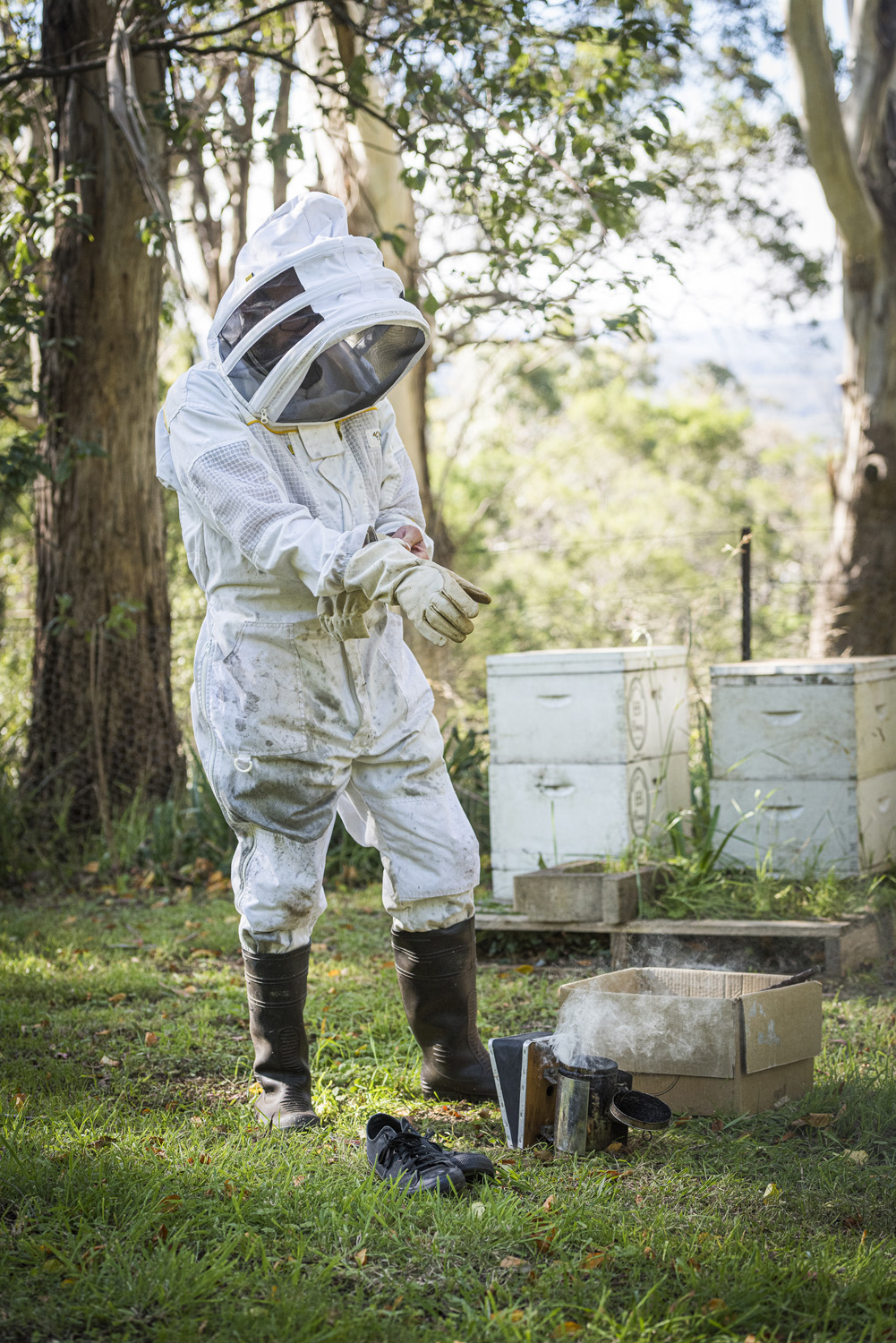
“The conditions were excellent that year and we produced about 40 kilograms of honey from each hive. Greg was really excited and said: ‘You have to taste this honey, it’s amazing.’ My experience until then was only with store-bought honey which was always amber in colour and tasted pretty much the same. But this honey was dark and velvety in texture and it had the most gorgeous taste – like fruitcake.”

Greg thought they should enter some local competitions and they were delighted to immediately win awards for best dark honey.

In 2015, only three years after their first harvest, they entered the National Honey Show at the Sydney Royal Easter Show. Astonishingly, they placed first in the Dark category and second in Amber.

Their success in competitions, and the fact they were producing substantially more honey than the family could consume, led to the decision to start selling their honey at local markets under the brand Bulwarra Bees. They enjoyed success from the outset and then began exploring “the honey alchemy side of things”.

“I would love to take credit for this,” says Deb, “but it was actually Greg’s idea originally. He suggested we should try mixing cinnamon with the honey. Well, it would just sell out at the markets every month. This inspired me to think what else we could do and we next tried mixing chocolate with honey for Easter. That went well and I started experimenting further and now we sell 13 different flavours of honey – with another three flavours coming out soon.”

All the preparation – infusing, stirring, pouring, labelling – is done by hand and all their containers are made of glass, not plastic. 

With sales at local markets going well for over five years, the McLaughlins decided to open a shop in Bowral. The first day of trading was scheduled for July 2021 – the week that The Southern Highlands went into a COVID-induced lockdown. They weren’t able to open their doors until October.

They had called the shop The Honey Thief.

“I was speaking to my mother on the phone one day and she asked me how Greg was and what he was up to,” explains Deb. “I said: ‘He’s robbing the hives, he’s a honey thief!’ We thought that would be a good name for our shop.”

The name reveals that Deb and Greg understand and respect where their honey comes from.

“Our first four years of honey production were absolutely amazing, but the past four years have been very challenging,” says Deb. “First there was drought. The plants were stressed and the eucalypts were just not blooming. When there is no rain, there are no flowers and when there are no flowers, there is no honey. In addition, our dams dried up – and each hive needs a litre of water a day. We lost a third of our hives during that time.

“For the past two years there has been too much rain. This means the nectar is very wet and the bees have to work extra hard to get the moisture out in order to produce honey.

“Bee keeping is a fast-growing hobby in Australia, including in The Southern Highlands, and it’s all about flow hives and being able to readily access honey. But I want to encourage kinder bee keeping, which is more about what’s best for the bees and less about what you can take from them. Kinder bee keeping means opening the hives as little as possible and having minimal intervention. It means providing the best environment for the bees rather than focusing on what they can do for us. It’s more about them.”

This is why The Honey Thief currently uses honey from other hives in the area and its labels state the honey is sourced “from Gundungurra country”, which stretches from Picton in the north to Goulburn in the south and west to the Blue Mountains.

Deb notes that one easy thing people can do to support bees, especially during difficult times, is to plant purple flowering varieties. Bees see in black and white when they are flying, but when they begin their descent they start seeing colour – first green and then ultraviolet.

The Honey Thief offers over a dozen types of honey as well as a range of other products. This includes a cough serum made from raw honey with organic lemons, ginger, garlic and onions. This elixir and chai honey are The Honey Thief’s best sellers. They also sell beeswax candles, lip balms and bath products.

The McLaughlins’ original aim was to live a more self-sufficient lifestyle. Apiary was initially just part of their story, but it has grown to become central to their life. Their honey has received numerous prizes, their business has received a Local Business Award for Environmental Sustainability and Deb was selected as a finalist in the 2022 Australian Women’s Small Business Awards.

“We’ve come a long way,” Deb says, “but the biggest challenge is the environment, which we have no control over. Bees are vitally important because they are responsible for the pollination of a third of our crops. They are the pillars of our food chain and we are totally dependent on them. That’s why there needs to be a shift to kinder bee keeping and conservation.”


For more information visit: www.thehoneythief.com.au

Looking back, Andy says their naivety was a blessing.

“If we knew up front how much hard work was involved and how challenging it would be, we probably wouldn’t have started,” he admits.

Anna adds that all the stonework around the property was built from stones that they picked or dug up by hand from the trufferie plot and then moved with a wheelbarrow. They have calculated there are about 160 tonnes of rock in their Gabion cages. 

“There’s no way you would embark on that process if you knew at the start what you would be doing,” she laughs.

The Truffle Barn produces fresh truffles for three months a year, from June to mid-September, and the rest of the year is spent pruning and maintaining the trufferie. This is vital to the success of the next season. While they have begun to think about diversification in the future, Andy notes they have learned that an agribusiness can become all-consuming.

“One of the reasons we made the tree change was to have more connection to the land and to each other, to enjoy more quality time,” he says. “The trap you can fall into with an agribusiness like this is that you can work seven days a week – more than you did in the corporate world.”

“We know we are producing really good truffles now and that is a really good feeling,” Anna adds. “We are proud of what we have achieved. I think we need to enjoy that for another couple of years before we start to branch out. There is a danger that you don’t pause for long enough and enjoy what you’ve done.”

For the moment then, Anna and Andy are stopping to smell the truffles.

For more information visit thetrufflebarn.com

Wombat Man

Posted by

Words: Michael Sharp. Photography: Ashley Mackevicius.

The bees around Bowral love the blooms of the Brown Barrel eucalypts that grow abundantly on the slopes of Mount Gibraltar.

One of the great joys of the life that Deb and Greg McLaughlin have built for their family in The Southern Highlands is to sit on a hill on a summer afternoon and watch their bees return to their hives.


“When you are in their presence, you are totally present,” says Deb. “Just sitting quietly near them and listening to their hum and their vibration. It is just beautiful.”

Deb and Greg met at St Vincent’s Hospital, where Deb was working in the corporate office and Greg was a consultant in the implementation of radiation and oncology facilities. A dozen years ago they were living in inner-Sydney Newtown with two young children. 

“We watched way too many episodes of River Cottage and were inspired by the idea of a self-sufficient lifestyle,” Deb recalls. “We started visiting friends in The Southern Highlands on weekends – and we just didn’t want to go home.”

Their original plan was to own a small farm while still living in the city, but the conversation quickly evolved to “let’s just move”.

“Our children were only one and two at the time,” says Greg, “and we thought if we don’t do it now, it will be 20 years before we can. So we did it.”

They found a three hectare property near Mount Gibraltar and moved there in the winter of 2011. They named it Bulwarra, which was the name of the street where Deb grew up in Sydney and is an Aboriginal word meaning “view from lofty height”. Bulwarra soon boasted vegetable patches, a few sheep, a dozen alpacas, 20 hens and a vineyard with 200 chardonnay vines and 200 pinot noir vines.

Deb and Greg wanted to also keep bees to promote pollination, however a local permaculture consultant told them The Southern Highlands was too cold for bees. Despite this advice, they decided to try a couple of hives. Greg did a beekeeping course in Sydney and they enjoyed their first honey harvest in 2012.
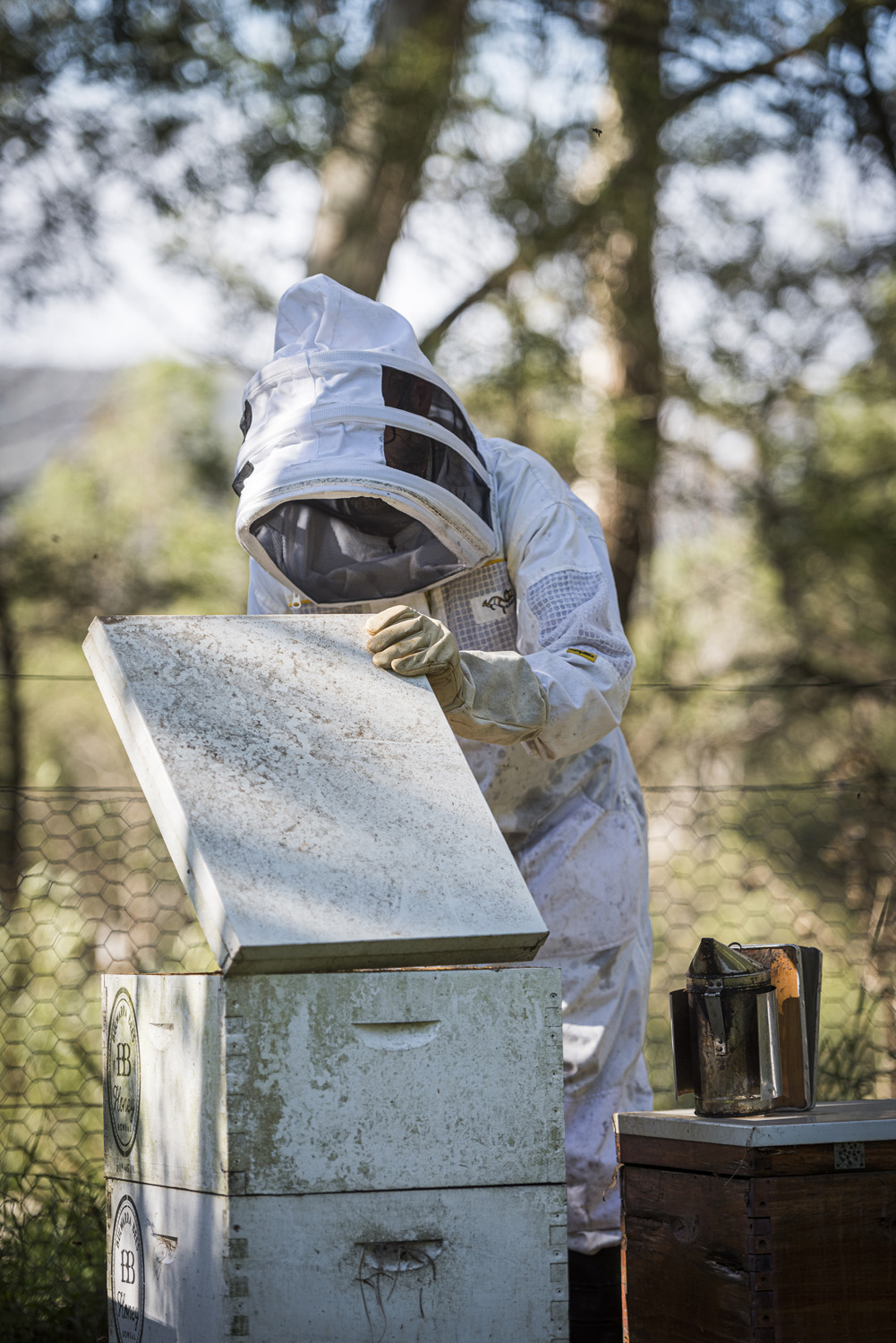
“The conditions were excellent that year and we produced about 40 kilograms of honey from each hive. Greg was really excited and said: ‘You have to taste this honey, it’s amazing.’ My experience until then was only with store-bought honey which was always amber in colour and tasted pretty much the same. But this honey was dark and velvety in texture and it had the most gorgeous taste – like fruitcake.”

Greg thought they should enter some local competitions and they were delighted to immediately win awards for best dark honey.

In 2015, only three years after their first harvest, they entered the National Honey Show at the Sydney Royal Easter Show. Astonishingly, they placed first in the Dark category and second in Amber.

Their success in competitions, and the fact they were producing substantially more honey than the family could consume, led to the decision to start selling their honey at local markets under the brand Bulwarra Bees. They enjoyed success from the outset and then began exploring “the honey alchemy side of things”.

“I would love to take credit for this,” says Deb, “but it was actually Greg’s idea originally. He suggested we should try mixing cinnamon with the honey. Well, it would just sell out at the markets every month. This inspired me to think what else we could do and we next tried mixing chocolate with honey for Easter. That went well and I started experimenting further and now we sell 13 different flavours of honey – with another three flavours coming out soon.”

All the preparation – infusing, stirring, pouring, labelling – is done by hand and all their containers are made of glass, not plastic. 

With sales at local markets going well for over five years, the McLaughlins decided to open a shop in Bowral. The first day of trading was scheduled for July 2021 – the week that The Southern Highlands went into a COVID-induced lockdown. They weren’t able to open their doors until October.

They had called the shop The Honey Thief.
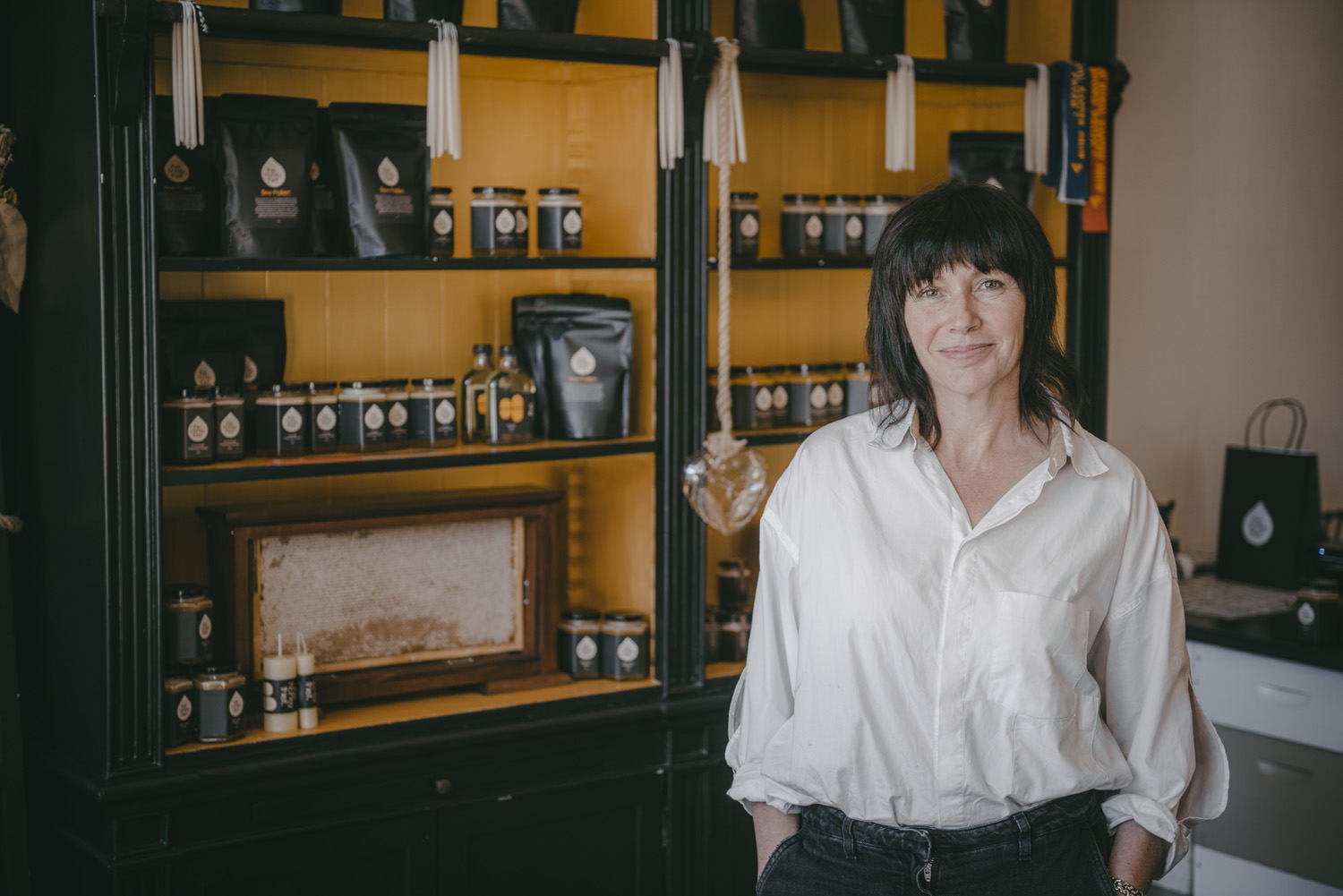
“I was speaking to my mother on the phone one day and she asked me how Greg was and what he was up to,” explains Deb. “I said: ‘He’s robbing the hives, he’s a honey thief!’ We thought that would be a good name for our shop.”

The name reveals that Deb and Greg understand and respect where their honey comes from.

“Our first four years of honey production were absolutely amazing, but the past four years have been very challenging,” says Deb. “First there was drought. The plants were stressed and the eucalypts were just not blooming. When there is no rain, there are no flowers and when there are no flowers, there is no honey. In addition, our dams dried up – and each hive needs a litre of water a day. We lost a third of our hives during that time.

“For the past two years there has been too much rain. This means the nectar is very wet and the bees have to work extra hard to get the moisture out in order to produce honey.

“Bee keeping is a fast-growing hobby in Australia, including in The Southern Highlands, and it’s all about flow hives and being able to readily access honey. But I want to encourage kinder bee keeping, which is more about what’s best for the bees and less about what you can take from them. Kinder bee keeping means opening the hives as little as possible and having minimal intervention. It means providing the best environment for the bees rather than focusing on what they can do for us. It’s more about them.”

This is why The Honey Thief currently uses honey from other hives in the area and its labels state the honey is sourced “from Gundungurra country”, which stretches from Picton in the north to Goulburn in the south and west to the Blue Mountains.

Deb notes that one easy thing people can do to support bees, especially during difficult times, is to plant purple flowering varieties. Bees see in black and white when they are flying, but when they begin their descent they start seeing colour – first green and then ultraviolet.

The Honey Thief offers over a dozen types of honey as well as a range of other products. This includes a cough serum made from raw honey with organic lemons, ginger, garlic and onions. This elixir and chai honey are The Honey Thief’s best sellers. They also sell beeswax candles, lip balms and bath products.

The McLaughlins’ original aim was to live a more self-sufficient lifestyle. Apiary was initially just part of their story, but it has grown to become central to their life. Their honey has received numerous prizes, their business has received a Local Business Award for Environmental Sustainability and Deb was selected as a finalist in the 2022 Australian Women’s Small Business Awards.

“We’ve come a long way,” Deb says, “but the biggest challenge is the environment, which we have no control over. Bees are vitally important because they are responsible for the pollination of a third of our crops. They are the pillars of our food chain and we are totally dependent on them. That’s why there needs to be a shift to kinder bee keeping and conservation.”


For more information visit: www.thehoneythief.com.au

Storybook Alpacas

Posted by

Words: Michael Sharp. Photography: Ashley Mackevicius.

The bees around Bowral love the blooms of the Brown Barrel eucalypts that grow abundantly on the slopes of Mount Gibraltar.

One of the great joys of the life that Deb and Greg McLaughlin have built for their family in The Southern Highlands is to sit on a hill on a summer afternoon and watch their bees return to their hives.


It is no surprise when you meet him to learn that Mick grew up in Inverell where his family had been breeding Fine Merino sheep and Poll Hereford cattle for three generations. He studied commerce and accounting at Charles Sturt University and worked for Toyota after he graduated. His wife Karen completed an MBA at Charles Sturt University and then worked in a variety of corporate roles.

They bought their first farm in 2002, near Bargo where Karen’s family were living, and Mick thought he would follow in his family’s footsteps.

“I had a plan to grow meat sheep with a self-replacing flock and then out of the blue Karen said: ‘I don’t want sheep, I want alpacas.’ I said: ‘Let me tell you a story about alpacas. I saw my first alpacas at The Sydney Royal Easter Show in about 1989. There were just two of them in a pen in the goat and pig pavilion. I knew what they were, but I said to my grandfather: ‘Pa, what are these?’ He said: ‘Son, they’re alpacas. Steer clear of them, they will be the feral goat of the 2000s.’

“I told Karen there was no fibre industry, no meat industry and no return on investment and that only iconic, well to do people could afford to have alpacas for their tax scheme. But despite everything I put forward, she said: ‘I don’t care, that’s what I want to do. They are such interesting and beautiful animals.’ And then she told me she’d done all this research and even spoken to Janie Forrest.”

Janie Forrest was an industry leader, having taken over the administration and management of Coolaroo Alpaca Stud in 1995 and then purchasing that business in 1998.

“We’d recently bought our first car and we thought we were so good because we’d saved up and paid for it in cash,” Mick recalls. “And then we bought our first couple of alpacas – and they cost more than the car.”

It was a very steep learning curve for the Williams.

“The conditions were excellent that year and we produced about 40 kilograms of honey from each hive. Greg was really excited and said: ‘You have to taste this honey, it’s amazing.’ My experience until then was only with store-bought honey which was always amber in colour and tasted pretty much the same. But this honey was dark and velvety in texture and it had the most gorgeous taste – like fruitcake.”

Greg thought they should enter some local competitions and they were delighted to immediately win awards for best dark honey.

In 2015, only three years after their first harvest, they entered the National Honey Show at the Sydney Royal Easter Show. Astonishingly, they placed first in the Dark category and second in Amber.

Their success in competitions, and the fact they were producing substantially more honey than the family could consume, led to the decision to start selling their honey at local markets under the brand Bulwarra Bees. They enjoyed success from the outset and then began exploring “the honey alchemy side of things”.

“I would love to take credit for this,” says Deb, “but it was actually Greg’s idea originally. He suggested we should try mixing cinnamon with the honey. Well, it would just sell out at the markets every month. This inspired me to think what else we could do and we next tried mixing chocolate with honey for Easter. That went well and I started experimenting further and now we sell 13 different flavours of honey – with another three flavours coming out soon.”

All the preparation – infusing, stirring, pouring, labelling – is done by hand and all their containers are made of glass, not plastic. 

With sales at local markets going well for over five years, the McLaughlins decided to open a shop in Bowral. The first day of trading was scheduled for July 2021 – the week that The Southern Highlands went into a COVID-induced lockdown. They weren’t able to open their doors until October.

They had called the shop The Honey Thief.
“I was speaking to my mother on the phone one day and she asked me how Greg was and what he was up to,” explains Deb. “I said: ‘He’s robbing the hives, he’s a honey thief!’ We thought that would be a good name for our shop.”

The name reveals that Deb and Greg understand and respect where their honey comes from.

“Our first four years of honey production were absolutely amazing, but the past four years have been very challenging,” says Deb. “First there was drought. The plants were stressed and the eucalypts were just not blooming. When there is no rain, there are no flowers and when there are no flowers, there is no honey. In addition, our dams dried up – and each hive needs a litre of water a day. We lost a third of our hives during that time.

“For the past two years there has been too much rain. This means the nectar is very wet and the bees have to work extra hard to get the moisture out in order to produce honey.

“Bee keeping is a fast-growing hobby in Australia, including in The Southern Highlands, and it’s all about flow hives and being able to readily access honey. But I want to encourage kinder bee keeping, which is more about what’s best for the bees and less about what you can take from them. Kinder bee keeping means opening the hives as little as possible and having minimal intervention. It means providing the best environment for the bees rather than focusing on what they can do for us. It’s more about them.”

This is why The Honey Thief currently uses honey from other hives in the area and its labels state the honey is sourced “from Gundungurra country”, which stretches from Picton in the north to Goulburn in the south and west to the Blue Mountains.

Deb notes that one easy thing people can do to support bees, especially during difficult times, is to plant purple flowering varieties. Bees see in black and white when they are flying, but when they begin their descent they start seeing colour – first green and then ultraviolet.

The Honey Thief offers over a dozen types of honey as well as a range of other products. This includes a cough serum made from raw honey with organic lemons, ginger, garlic and onions. This elixir and chai honey are The Honey Thief’s best sellers. They also sell beeswax candles, lip balms and bath products.

The McLaughlins’ original aim was to live a more self-sufficient lifestyle. Apiary was initially just part of their story, but it has grown to become central to their life. Their honey has received numerous prizes, their business has received a Local Business Award for Environmental Sustainability and Deb was selected as a finalist in the 2022 Australian Women’s Small Business Awards.

“We’ve come a long way,” Deb says, “but the biggest challenge is the environment, which we have no control over. Bees are vitally important because they are responsible for the pollination of a third of our crops. They are the pillars of our food chain and we are totally dependent on them. That’s why there needs to be a shift to kinder bee keeping and conservation.”


For more information visit: www.thehoneythief.com.au

According to the Australian Alpaca Association, the Australian alpaca industry has over 200,000 registered animals and is the second largest in the world, behind only Peru. Alpacas thrive in Australia, in small and large herds, and their soft footpads cause minimal soil damage compared with other ruminants. There is currently good demand for breeding, siring, fibre and agistment services and there is potential to develop a market for alpaca meat.

“Despite their appearance, they are a very robust livestock,” says Mick, “and they are much more intelligent than sheep, so they are far easier to work with.”

So what attracts a young woman like Rubey Williams to the alpaca industry?

“I grew up around them and they’ve always been part of my life,” she says thoughtfully. “Being around them and working with them is the place I feel most comfortable. The primary attraction is the animals themselves, but the social side is great. Alpaca shows are like a family reunion, it’s such a fun atmosphere and a great environment to be part of. The lifestyle it allows you to lead is something I hold in really high regard.”

Asked if she will definitely lead the next generation for Coolawarra and StoryBook, Rubey replies enthusiastically and without hesitation: “Oh yeah! I’m knee deep in it already.”

Tamara Dean

Posted by

Words: Michael Sharp. Photography: Ashley Mackevicius.

The bees around Bowral love the blooms of the Brown Barrel eucalypts that grow abundantly on the slopes of Mount Gibraltar.

One of the great joys of the life that Deb and Greg McLaughlin have built for their family in The Southern Highlands is to sit on a hill on a summer afternoon and watch their bees return to their hives.


It is no surprise when you meet him to learn that Mick grew up in Inverell where his family had been breeding Fine Merino sheep and Poll Hereford cattle for three generations. He studied commerce and accounting at Charles Sturt University and worked for Toyota after he graduated. His wife Karen completed an MBA at Charles Sturt University and then worked in a variety of corporate roles.

They bought their first farm in 2002, near Bargo where Karen’s family were living, and Mick thought he would follow in his family’s footsteps.

“I had a plan to grow meat sheep with a self-replacing flock and then out of the blue Karen said: ‘I don’t want sheep, I want alpacas.’ I said: ‘Let me tell you a story about alpacas. I saw my first alpacas at The Sydney Royal Easter Show in about 1989. There were just two of them in a pen in the goat and pig pavilion. I knew what they were, but I said to my grandfather: ‘Pa, what are these?’ He said: ‘Son, they’re alpacas. Steer clear of them, they will be the feral goat of the 2000s.’

“I told Karen there was no fibre industry, no meat industry and no return on investment and that only iconic, well to do people could afford to have alpacas for their tax scheme. But despite everything I put forward, she said: ‘I don’t care, that’s what I want to do. They are such interesting and beautiful animals.’ And then she told me she’d done all this research and even spoken to Janie Forrest.”

Janie Forrest was an industry leader, having taken over the administration and management of Coolaroo Alpaca Stud in 1995 and then purchasing that business in 1998.

“We’d recently bought our first car and we thought we were so good because we’d saved up and paid for it in cash,” Mick recalls. “And then we bought our first couple of alpacas – and they cost more than the car.”

It was a very steep learning curve for the Williams.

“The conditions were excellent that year and we produced about 40 kilograms of honey from each hive. Greg was really excited and said: ‘You have to taste this honey, it’s amazing.’ My experience until then was only with store-bought honey which was always amber in colour and tasted pretty much the same. But this honey was dark and velvety in texture and it had the most gorgeous taste – like fruitcake.”

Greg thought they should enter some local competitions and they were delighted to immediately win awards for best dark honey.

In 2015, only three years after their first harvest, they entered the National Honey Show at the Sydney Royal Easter Show. Astonishingly, they placed first in the Dark category and second in Amber.

Their success in competitions, and the fact they were producing substantially more honey than the family could consume, led to the decision to start selling their honey at local markets under the brand Bulwarra Bees. They enjoyed success from the outset and then began exploring “the honey alchemy side of things”.

“I would love to take credit for this,” says Deb, “but it was actually Greg’s idea originally. He suggested we should try mixing cinnamon with the honey. Well, it would just sell out at the markets every month. This inspired me to think what else we could do and we next tried mixing chocolate with honey for Easter. That went well and I started experimenting further and now we sell 13 different flavours of honey – with another three flavours coming out soon.”

All the preparation – infusing, stirring, pouring, labelling – is done by hand and all their containers are made of glass, not plastic. 

With sales at local markets going well for over five years, the McLaughlins decided to open a shop in Bowral. The first day of trading was scheduled for July 2021 – the week that The Southern Highlands went into a COVID-induced lockdown. They weren’t able to open their doors until October.

They had called the shop The Honey Thief.
“I was speaking to my mother on the phone one day and she asked me how Greg was and what he was up to,” explains Deb. “I said: ‘He’s robbing the hives, he’s a honey thief!’ We thought that would be a good name for our shop.”

The name reveals that Deb and Greg understand and respect where their honey comes from.

“Our first four years of honey production were absolutely amazing, but the past four years have been very challenging,” says Deb. “First there was drought. The plants were stressed and the eucalypts were just not blooming. When there is no rain, there are no flowers and when there are no flowers, there is no honey. In addition, our dams dried up – and each hive needs a litre of water a day. We lost a third of our hives during that time.

“For the past two years there has been too much rain. This means the nectar is very wet and the bees have to work extra hard to get the moisture out in order to produce honey.

“Bee keeping is a fast-growing hobby in Australia, including in The Southern Highlands, and it’s all about flow hives and being able to readily access honey. But I want to encourage kinder bee keeping, which is more about what’s best for the bees and less about what you can take from them. Kinder bee keeping means opening the hives as little as possible and having minimal intervention. It means providing the best environment for the bees rather than focusing on what they can do for us. It’s more about them.”

This is why The Honey Thief currently uses honey from other hives in the area and its labels state the honey is sourced “from Gundungurra country”, which stretches from Picton in the north to Goulburn in the south and west to the Blue Mountains.
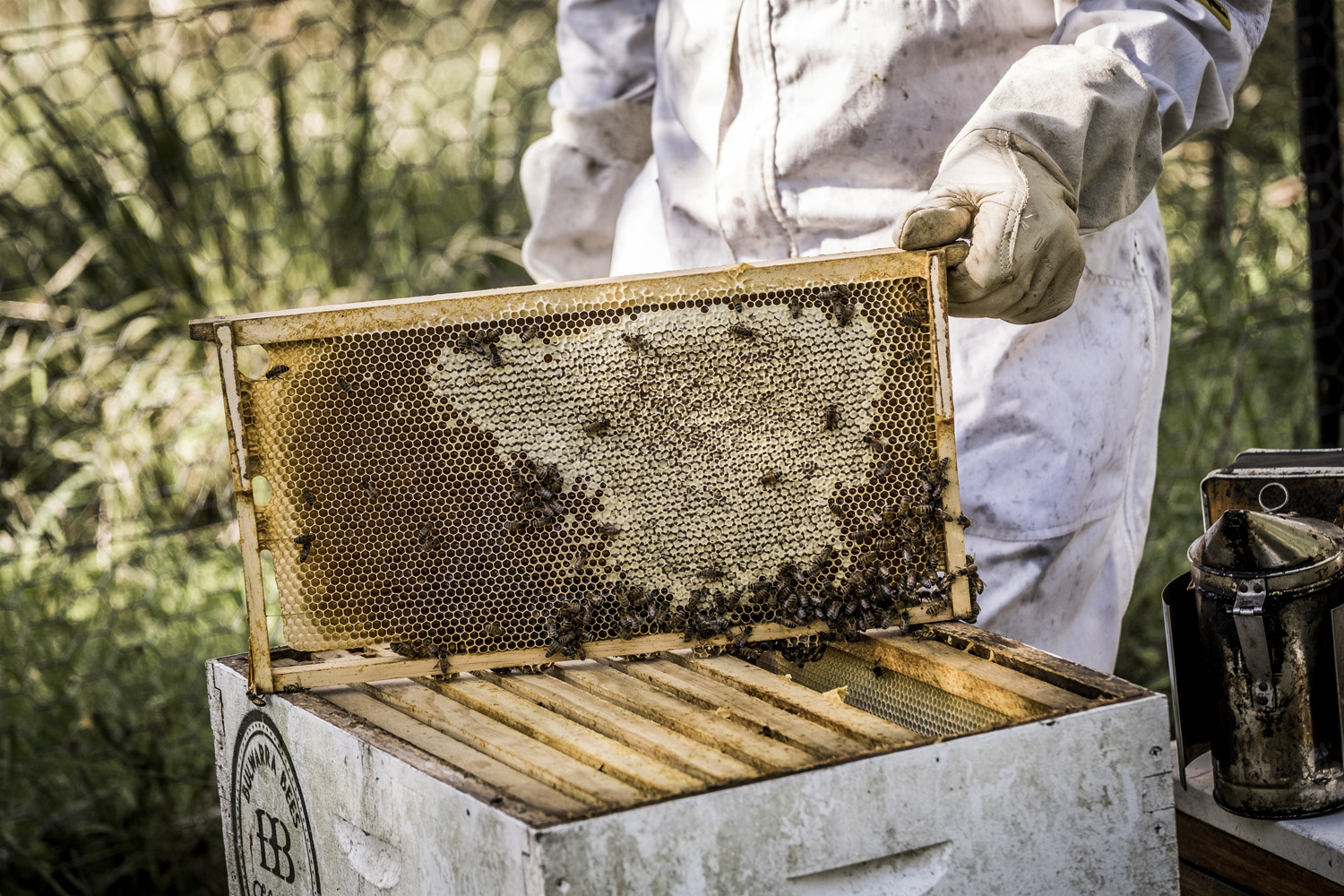
Deb notes that one easy thing people can do to support bees, especially during difficult times, is to plant purple flowering varieties. Bees see in black and white when they are flying, but when they begin their descent they start seeing colour – first green and then ultraviolet.

The Honey Thief offers over a dozen types of honey as well as a range of other products. This includes a cough serum made from raw honey with organic lemons, ginger, garlic and onions. This elixir and chai honey are The Honey Thief’s best sellers. They also sell beeswax candles, lip balms and bath products.

The McLaughlins’ original aim was to live a more self-sufficient lifestyle. Apiary was initially just part of their story, but it has grown to become central to their life. Their honey has received numerous prizes, their business has received a Local Business Award for Environmental Sustainability and Deb was selected as a finalist in the 2022 Australian Women’s Small Business Awards.

“We’ve come a long way,” Deb says, “but the biggest challenge is the environment, which we have no control over. Bees are vitally important because they are responsible for the pollination of a third of our crops. They are the pillars of our food chain and we are totally dependent on them. That’s why there needs to be a shift to kinder bee keeping and conservation.”


For more information visit: www.thehoneythief.com.au
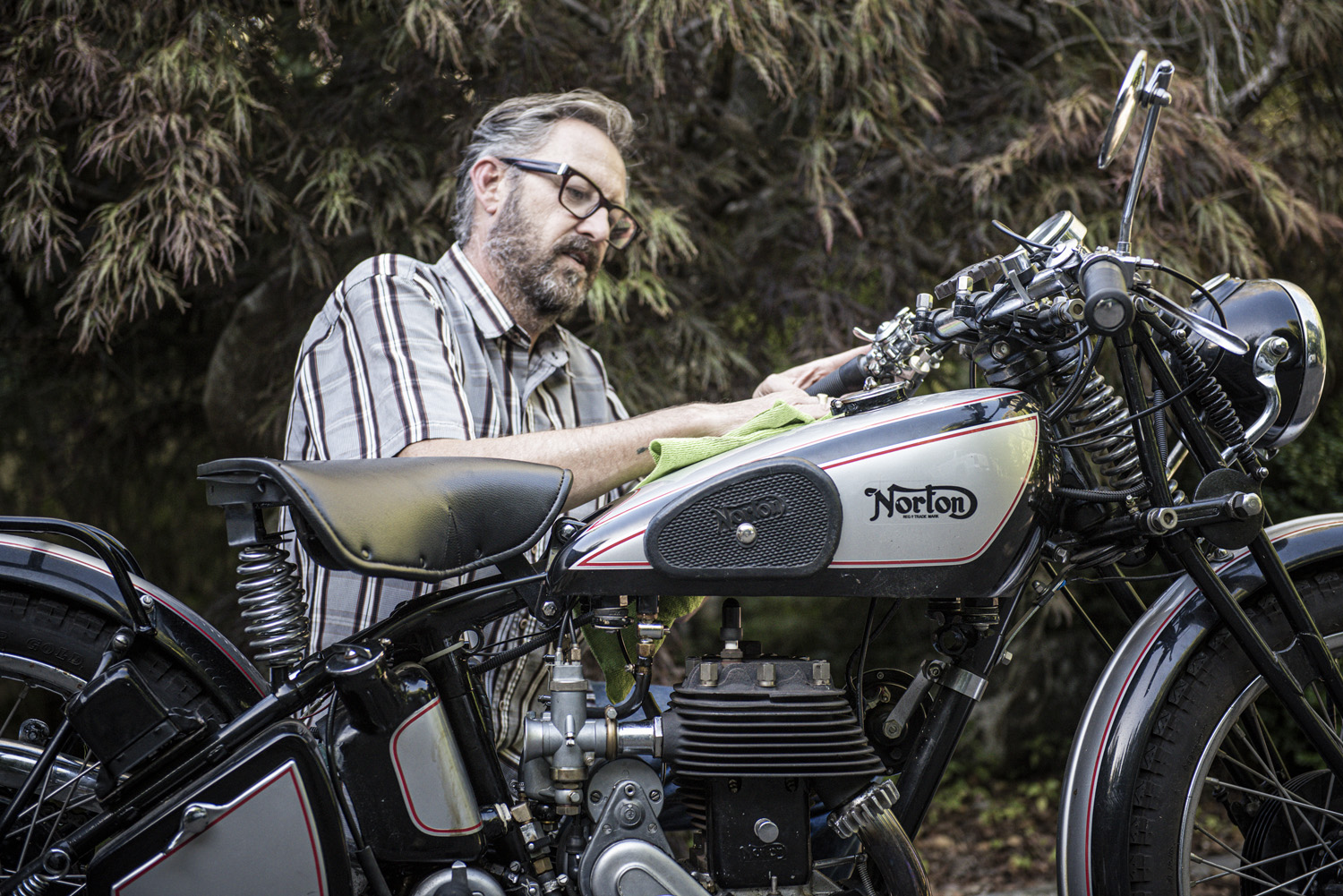
According to the Australian Alpaca Association, the Australian alpaca industry has over 200,000 registered animals and is the second largest in the world, behind only Peru. Alpacas thrive in Australia, in small and large herds, and their soft footpads cause minimal soil damage compared with other ruminants. There is currently good demand for breeding, siring, fibre and agistment services and there is potential to develop a market for alpaca meat.

“Despite their appearance, they are a very robust livestock,” says Mick, “and they are much more intelligent than sheep, so they are far easier to work with.”

So what attracts a young woman like Rubey Williams to the alpaca industry?

“I grew up around them and they’ve always been part of my life,” she says thoughtfully. “Being around them and working with them is the place I feel most comfortable. The primary attraction is the animals themselves, but the social side is great. Alpaca shows are like a family reunion, it’s such a fun atmosphere and a great environment to be part of. The lifestyle it allows you to lead is something I hold in really high regard.”

Asked if she will definitely lead the next generation for Coolawarra and StoryBook, Rubey replies enthusiastically and without hesitation: “Oh yeah! I’m knee deep in it already.”

Palace of Dreams will show at Carriageworks as part of Sydney Contemporary from 8 to 11 September.

Tamara Dean’s career achievements include being commissioned in 2018 to create In Our Nature that was presented at the Museum of Economic Botany (Adelaide Botanic Garden) for the Adelaide Biennale. She has been awarded the Goulburn Art Prize (2020); Moran Contemporary Photographic Prize (2019); Josephine Ulrick & Win Schubert Photography Award (2018); Meroogal Women’s Art Prize (2018); and the Olive Cotton Award (2011). Her work has been acquired by the National Gallery of Australia; Parliament House Art Collection, Canberra; Art Gallery of South Australia; Mordant Family Collection Australia; Artbank Australia; Balnaves Collection Australia; and Francis J Greenburger Collection (New York).

John Sharp

Posted by

It is no surprise when you meet him to learn that Mick grew up in Inverell where his family had been breeding Fine Merino sheep and Poll Hereford cattle for three generations. He studied commerce and accounting at Charles Sturt University and worked for Toyota after he graduated. His wife Karen completed an MBA at Charles Sturt University and then worked in a variety of corporate roles.

They bought their first farm in 2002, near Bargo where Karen’s family were living, and Mick thought he would follow in his family’s footsteps.

“I had a plan to grow meat sheep with a self-replacing flock and then out of the blue Karen said: ‘I don’t want sheep, I want alpacas.’ I said: ‘Let me tell you a story about alpacas. I saw my first alpacas at The Sydney Royal Easter Show in about 1989. There were just two of them in a pen in the goat and pig pavilion. I knew what they were, but I said to my grandfather: ‘Pa, what are these?’ He said: ‘Son, they’re alpacas. Steer clear of them, they will be the feral goat of the 2000s.’

“I told Karen there was no fibre industry, no meat industry and no return on investment and that only iconic, well to do people could afford to have alpacas for their tax scheme. But despite everything I put forward, she said: ‘I don’t care, that’s what I want to do. They are such interesting and beautiful animals.’ And then she told me she’d done all this research and even spoken to Janie Forrest.”

Janie Forrest was an industry leader, having taken over the administration and management of Coolaroo Alpaca Stud in 1995 and then purchasing that business in 1998.

“We’d recently bought our first car and we thought we were so good because we’d saved up and paid for it in cash,” Mick recalls. “And then we bought our first couple of alpacas – and they cost more than the car.”

It was a very steep learning curve for the Williams.

“One of my great assets is ignorance,” Sharp says matter-of-factly while pouring us a cup of Irish Breakfast tea in his well heated kitchen. “I usually go into things completely and utterly unaware of what I’m up for. It’s only when I get halfway through that I realise that if I’d known at the beginning what I was going to end up doing, I wouldn’t have done it at all. But when you get to that point it’s usually too late to turn back.”

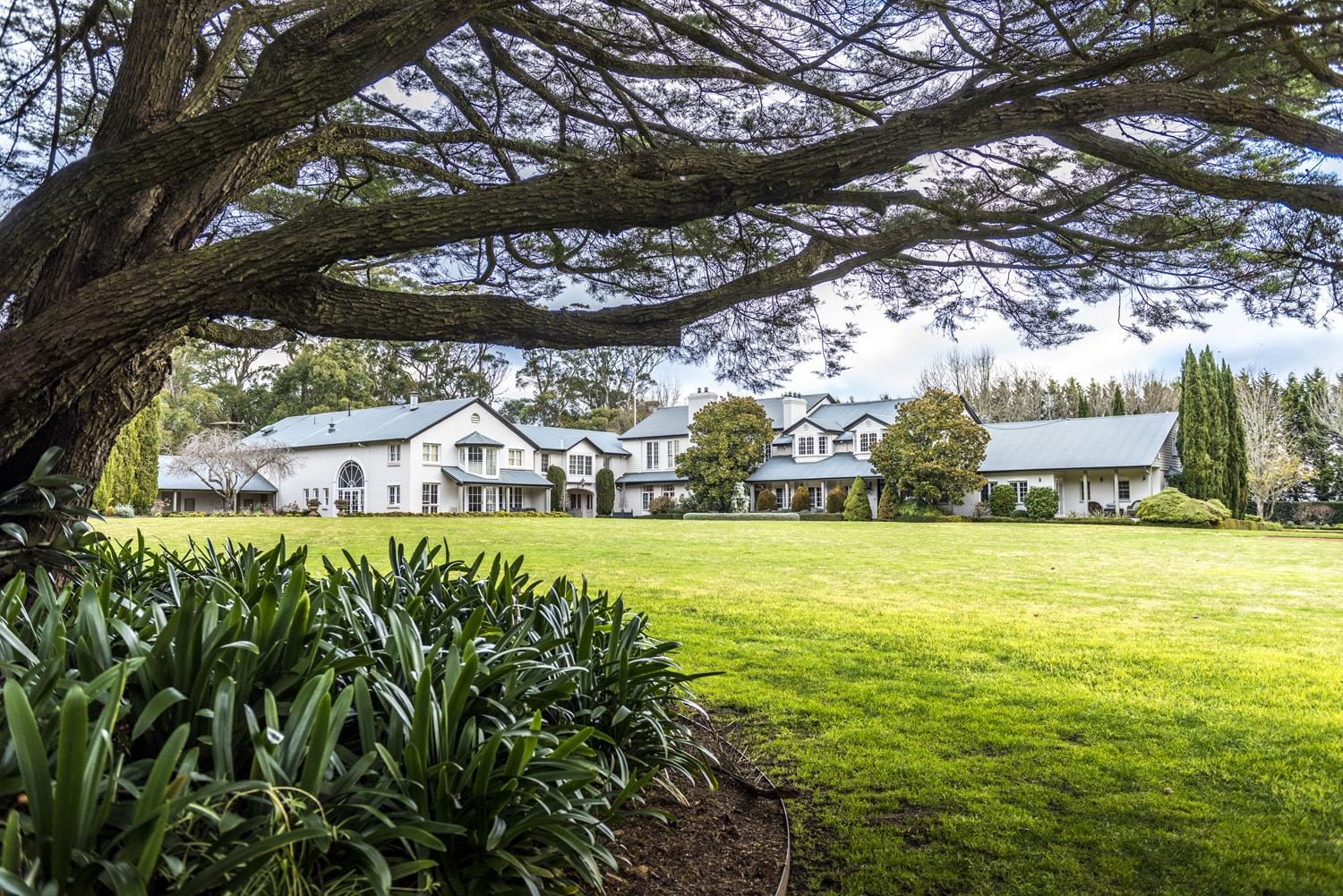
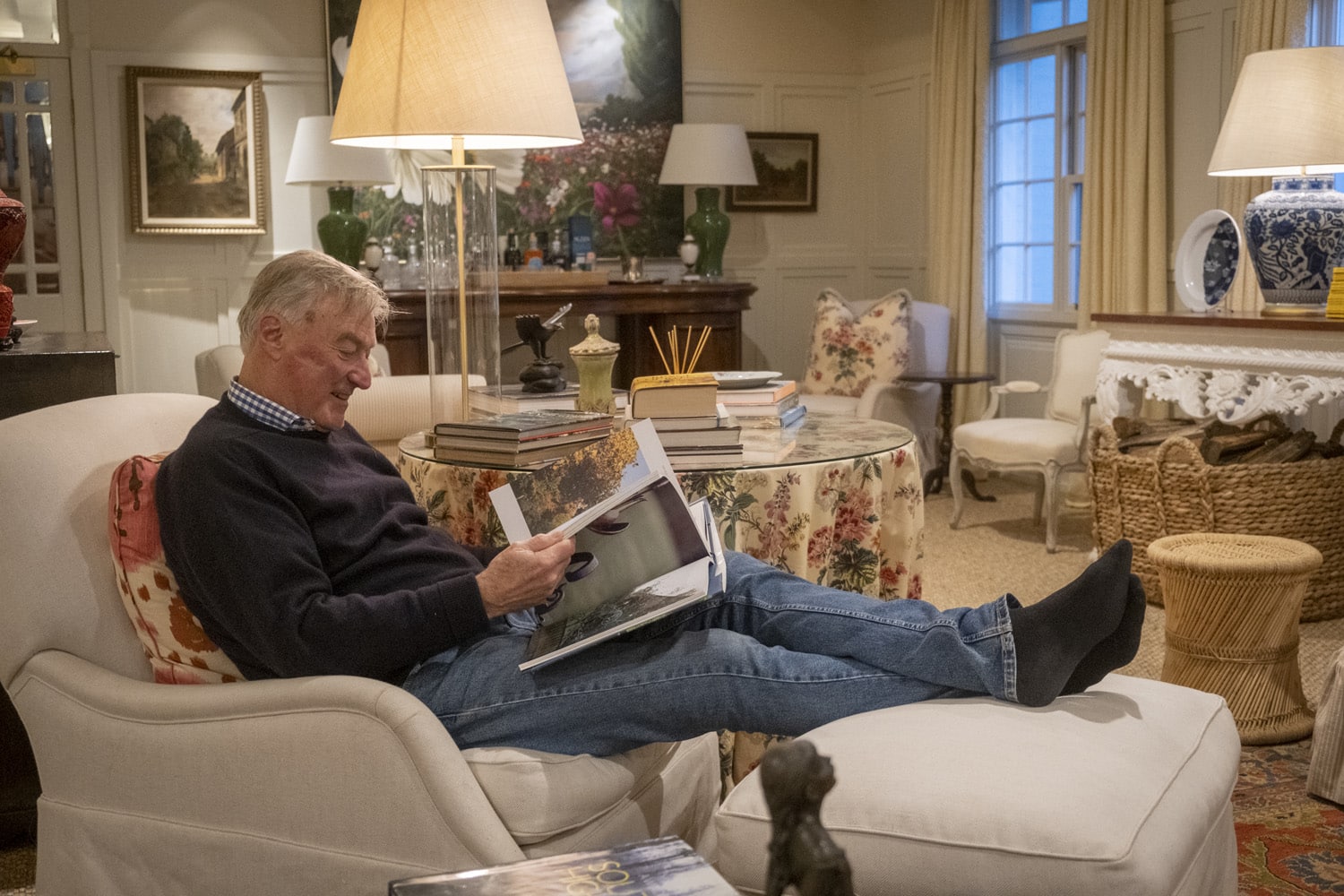
Sharp is certainly not turning back from any of the projects he has taken on since buying a 15 acre property four years ago from David Graham and David Kunde, known as The Two Davids and variously described in media reports as former restaurateurs, eastern suburbs developers and stylmeisters.  Known at the time as Rona Lodge, the property was advertised as a Grand Estate featuring wonderful formal and informal spaces, seven spacious bedrooms, a separate but adjoining two bedroom house, a billiard room, library, indoor swimming pool with spa and gym, tennis court and stables with dressage arena.

Asked if he has made many changes since he bought Rona Lodge four years ago, Sharp pauses for a moment before saying: “Like all these things, you start out thinking we’ll just make a little tweak here and a little tweak there – and before you know it you are doing lots of work and small jobs become enormous jobs.”

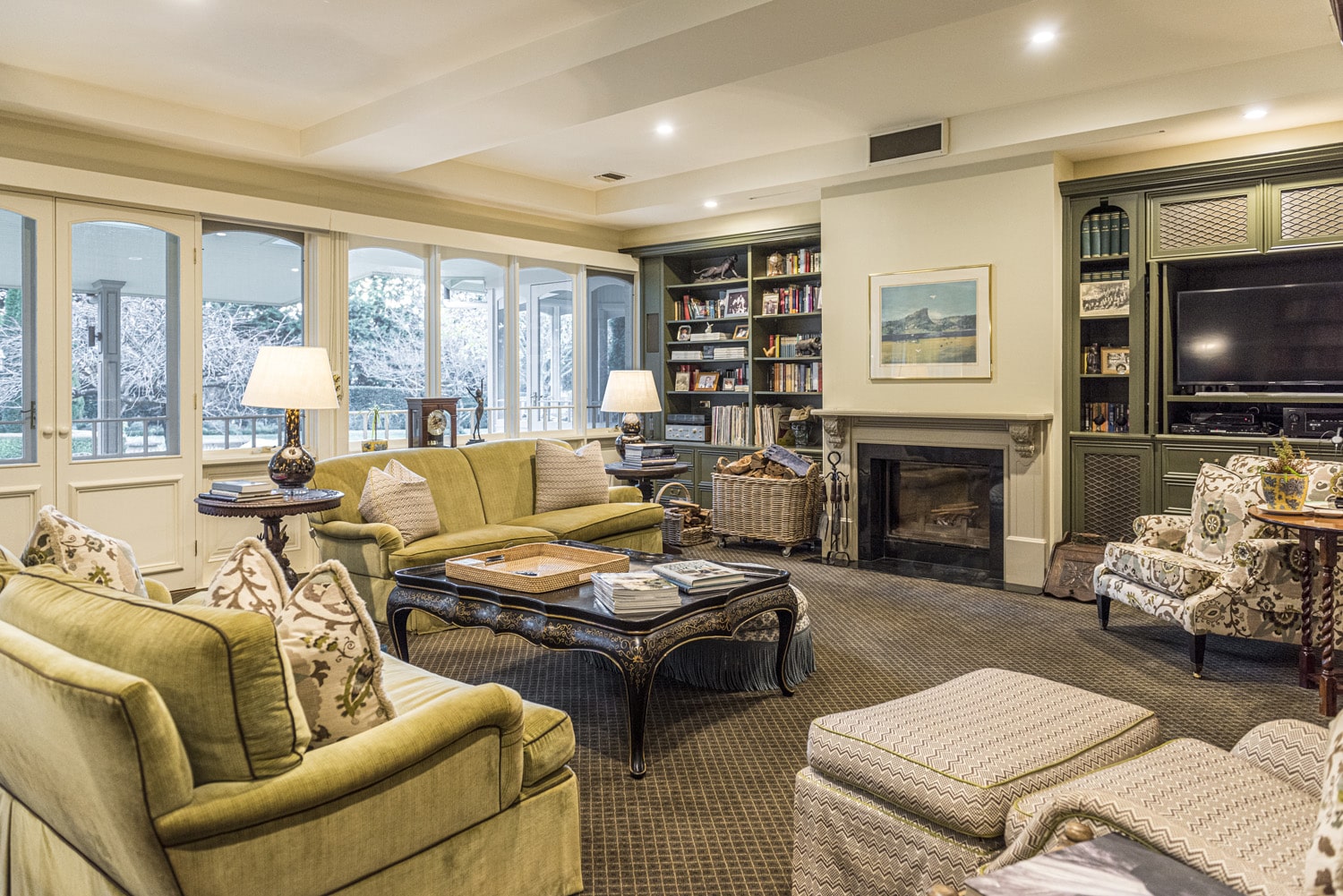
One easy thing to change was the property’s name. It is now called Thenford, named for the village in Oxfordshire where his great-grandfather was born. Other changes have not been as straightforward. As we walk through the house, Sharp notes that the walls and ceilings have been completely repainted, all the curtains replaced, a hallway removed, additional fireplaces installed, the veranda area reconfigured, several rooves have had to be replaced and the old stables have been converted into a laundry, cellar and gym.

“The conditions were excellent that year and we produced about 40 kilograms of honey from each hive. Greg was really excited and said: ‘You have to taste this honey, it’s amazing.’ My experience until then was only with store-bought honey which was always amber in colour and tasted pretty much the same. But this honey was dark and velvety in texture and it had the most gorgeous taste – like fruitcake.”

Greg thought they should enter some local competitions and they were delighted to immediately win awards for best dark honey.

In 2015, only three years after their first harvest, they entered the National Honey Show at the Sydney Royal Easter Show. Astonishingly, they placed first in the Dark category and second in Amber.

Their success in competitions, and the fact they were producing substantially more honey than the family could consume, led to the decision to start selling their honey at local markets under the brand Bulwarra Bees. They enjoyed success from the outset and then began exploring “the honey alchemy side of things”.

“I would love to take credit for this,” says Deb, “but it was actually Greg’s idea originally. He suggested we should try mixing cinnamon with the honey. Well, it would just sell out at the markets every month. This inspired me to think what else we could do and we next tried mixing chocolate with honey for Easter. That went well and I started experimenting further and now we sell 13 different flavours of honey – with another three flavours coming out soon.”

All the preparation – infusing, stirring, pouring, labelling – is done by hand and all their containers are made of glass, not plastic. 

With sales at local markets going well for over five years, the McLaughlins decided to open a shop in Bowral. The first day of trading was scheduled for July 2021 – the week that The Southern Highlands went into a COVID-induced lockdown. They weren’t able to open their doors until October.

They had called the shop The Honey Thief.

“I was speaking to my mother on the phone one day and she asked me how Greg was and what he was up to,” explains Deb. “I said: ‘He’s robbing the hives, he’s a honey thief!’ We thought that would be a good name for our shop.”

The name reveals that Deb and Greg understand and respect where their honey comes from.

“Our first four years of honey production were absolutely amazing, but the past four years have been very challenging,” says Deb. “First there was drought. The plants were stressed and the eucalypts were just not blooming. When there is no rain, there are no flowers and when there are no flowers, there is no honey. In addition, our dams dried up – and each hive needs a litre of water a day. We lost a third of our hives during that time.

“For the past two years there has been too much rain. This means the nectar is very wet and the bees have to work extra hard to get the moisture out in order to produce honey.

“Bee keeping is a fast-growing hobby in Australia, including in The Southern Highlands, and it’s all about flow hives and being able to readily access honey. But I want to encourage kinder bee keeping, which is more about what’s best for the bees and less about what you can take from them. Kinder bee keeping means opening the hives as little as possible and having minimal intervention. It means providing the best environment for the bees rather than focusing on what they can do for us. It’s more about them.”

This is why The Honey Thief currently uses honey from other hives in the area and its labels state the honey is sourced “from Gundungurra country”, which stretches from Picton in the north to Goulburn in the south and west to the Blue Mountains.

Deb notes that one easy thing people can do to support bees, especially during difficult times, is to plant purple flowering varieties. Bees see in black and white when they are flying, but when they begin their descent they start seeing colour – first green and then ultraviolet.

The Honey Thief offers over a dozen types of honey as well as a range of other products. This includes a cough serum made from raw honey with organic lemons, ginger, garlic and onions. This elixir and chai honey are The Honey Thief’s best sellers. They also sell beeswax candles, lip balms and bath products.

The McLaughlins’ original aim was to live a more self-sufficient lifestyle. Apiary was initially just part of their story, but it has grown to become central to their life. Their honey has received numerous prizes, their business has received a Local Business Award for Environmental Sustainability and Deb was selected as a finalist in the 2022 Australian Women’s Small Business Awards.

“We’ve come a long way,” Deb says, “but the biggest challenge is the environment, which we have no control over. Bees are vitally important because they are responsible for the pollination of a third of our crops. They are the pillars of our food chain and we are totally dependent on them. That’s why there needs to be a shift to kinder bee keeping and conservation.”


For more information visit: www.thehoneythief.com.au
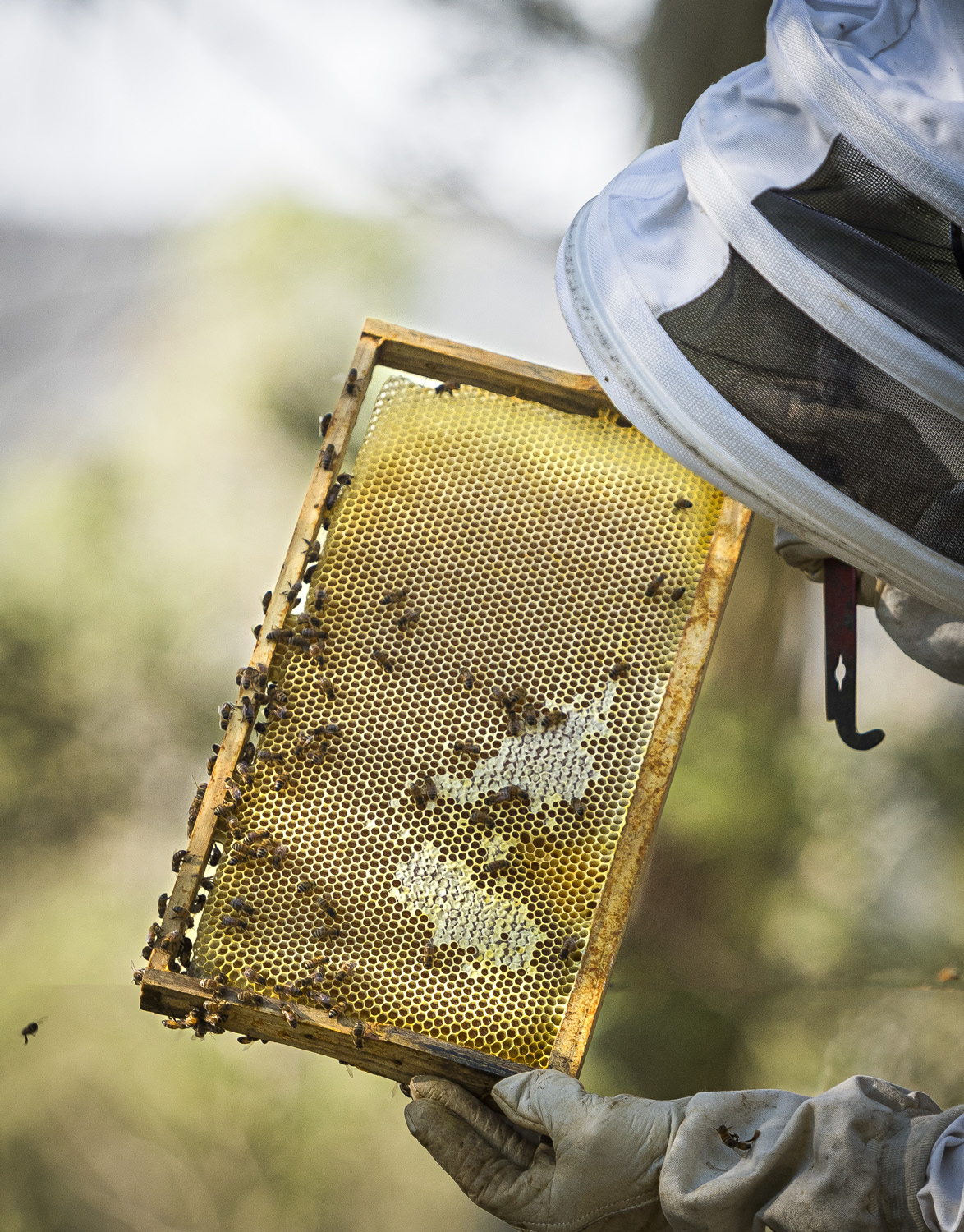
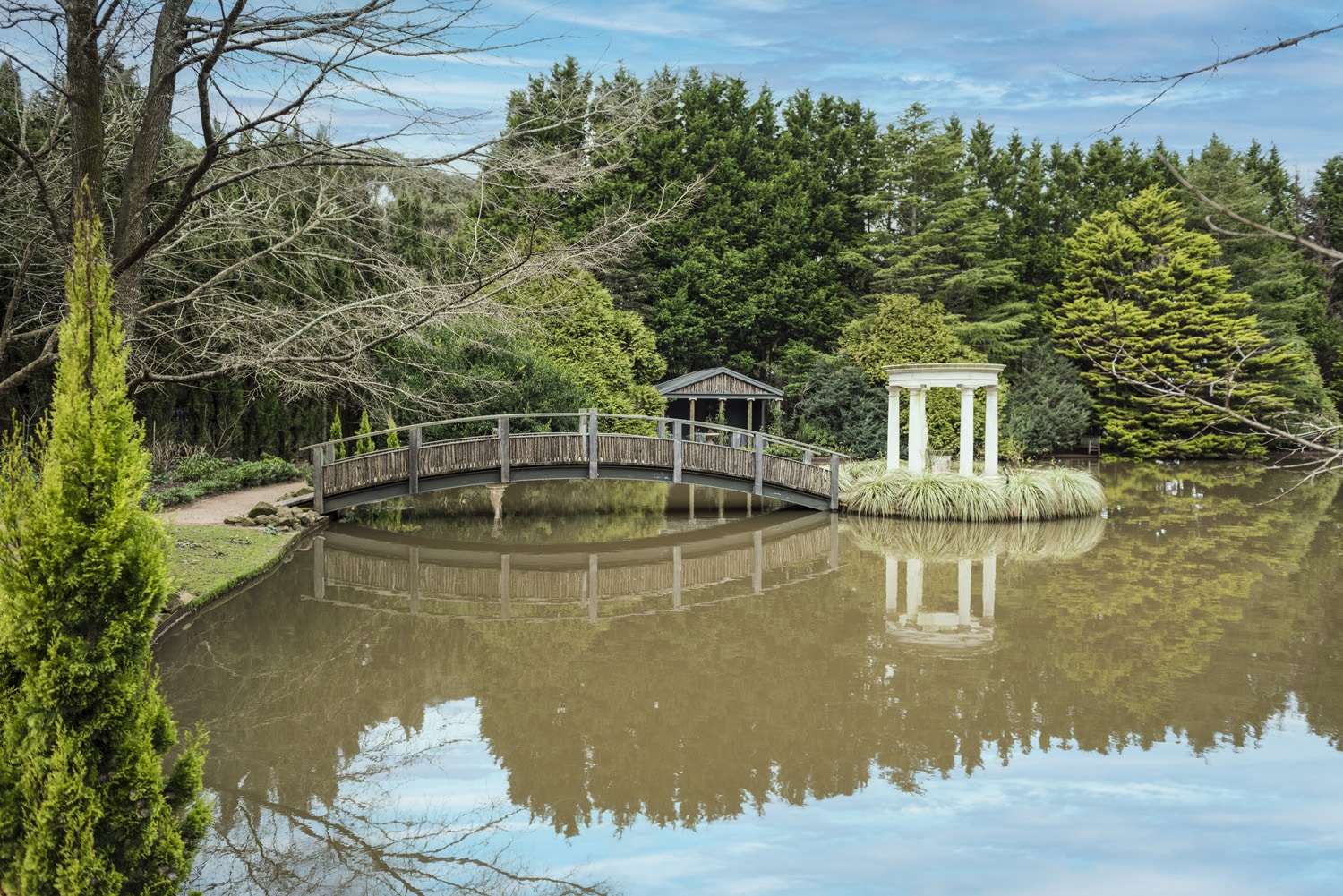
There is a memorial area dedicated to his father, who fought in World War II, and grandfather, who fought in World War I, featuring Lone Pines grown from seedlings from the famous Gallipoli battlefield surrounded by rosemary, which grows wild on the Gallipoli Peninsula and has become a traditional symbol of remembrance of Anzac Day. Fittingly, these plantings were the idea of his partner, Rosemary Cummins.

It is the middle of a particularly cold and wet Southern Highlands Winter and I can only imagine how magnificent the gardens will be in Spring.

We have completed our tour of the 15 acres Sharp bought four years ago and now we move to his latest venture. Two years ago, he bought an additional 200 acres from his neighbours, the McKennas, the original owners of Rona Lodge.

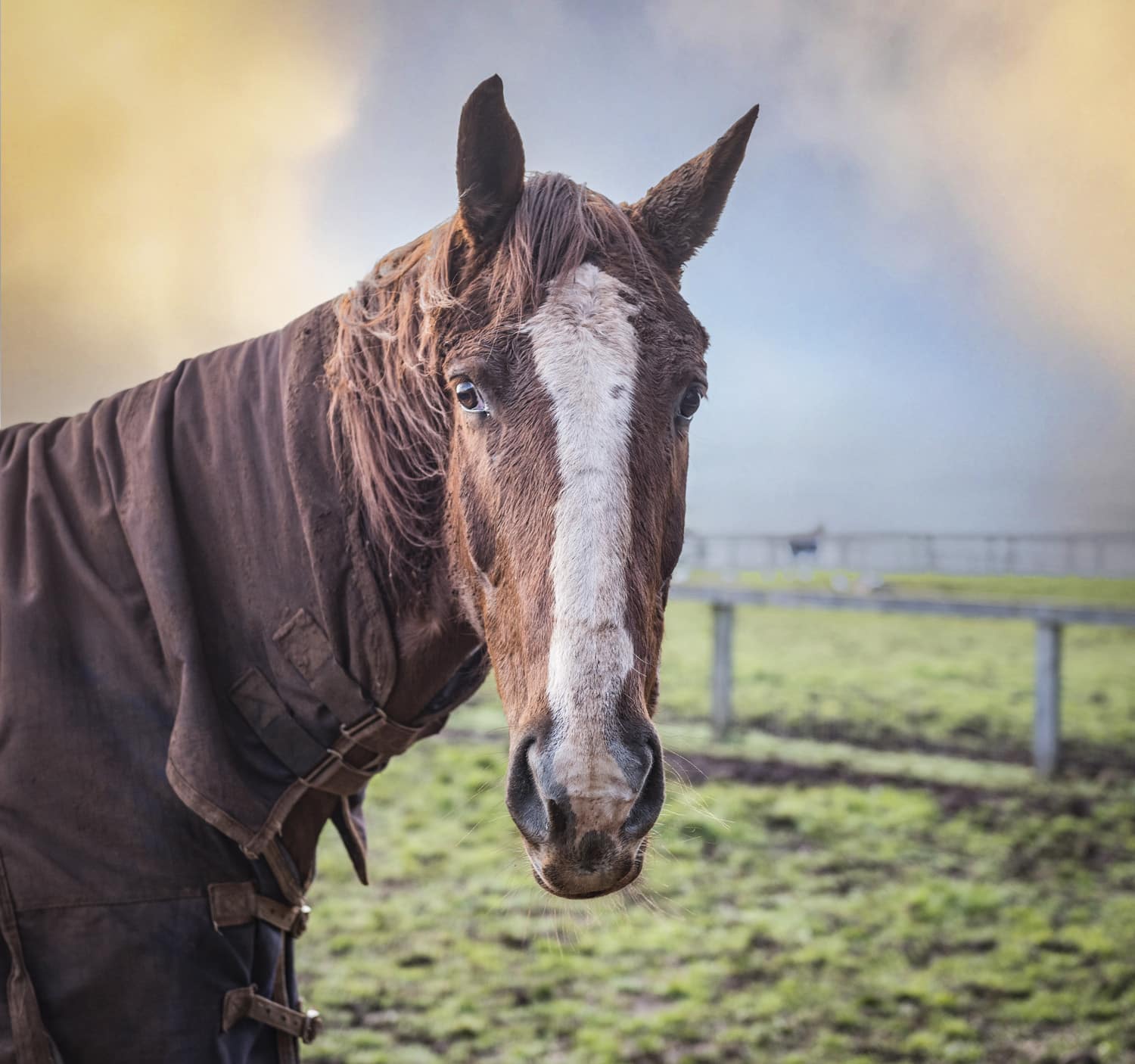
“I have managed to lose substantial sums of money running cattle,” Sharp says. “At The Moss Vale Show each year I joke that I should get the blue ribbon for the greatest loss per hectare in the district. So, when I bought this property, I decided I wanted to do something different. My manager said he knew a bloke named Tim Miller who might be interested in doing something with thoroughbred racehorses on my property. His wife is the daughter of friends of mine from Young, so there was a connection there. Long story short, we have a partnership and Tim runs it.”

Sharp grew up with horses in his home town of Young and his children, especially his daughter, were keen equestrians, but he describes himself as only a recreational rider.

So what exactly is his new horse business?

“We do horse breaking, so we take 12-month-old horses and prepare them to be ridden. And we do pre-training, which is taking horses that have never been to a race track and we put them on a race track. We have two race tracks here, one is 1,200 metres and one is 500 metres, and we have two sets of starting gates and barriers. This allows the horses to familiarise themselves with all that procedure.

“The third thing we do is rehabilitation work. We have an eight horse water walker, which is a pretty special piece of equipment. The horses walk around in a circle in a swimming pool with gates between them. It’s a bit like aquarobics for horses and it’s very good for their muscles and injury recovery. We also have an eight horse dry walker and a gallop speed treadmill, which is great for giving them exercise.

“The other thing we do is spelling – which is basically a horse holiday for a racehorse.”

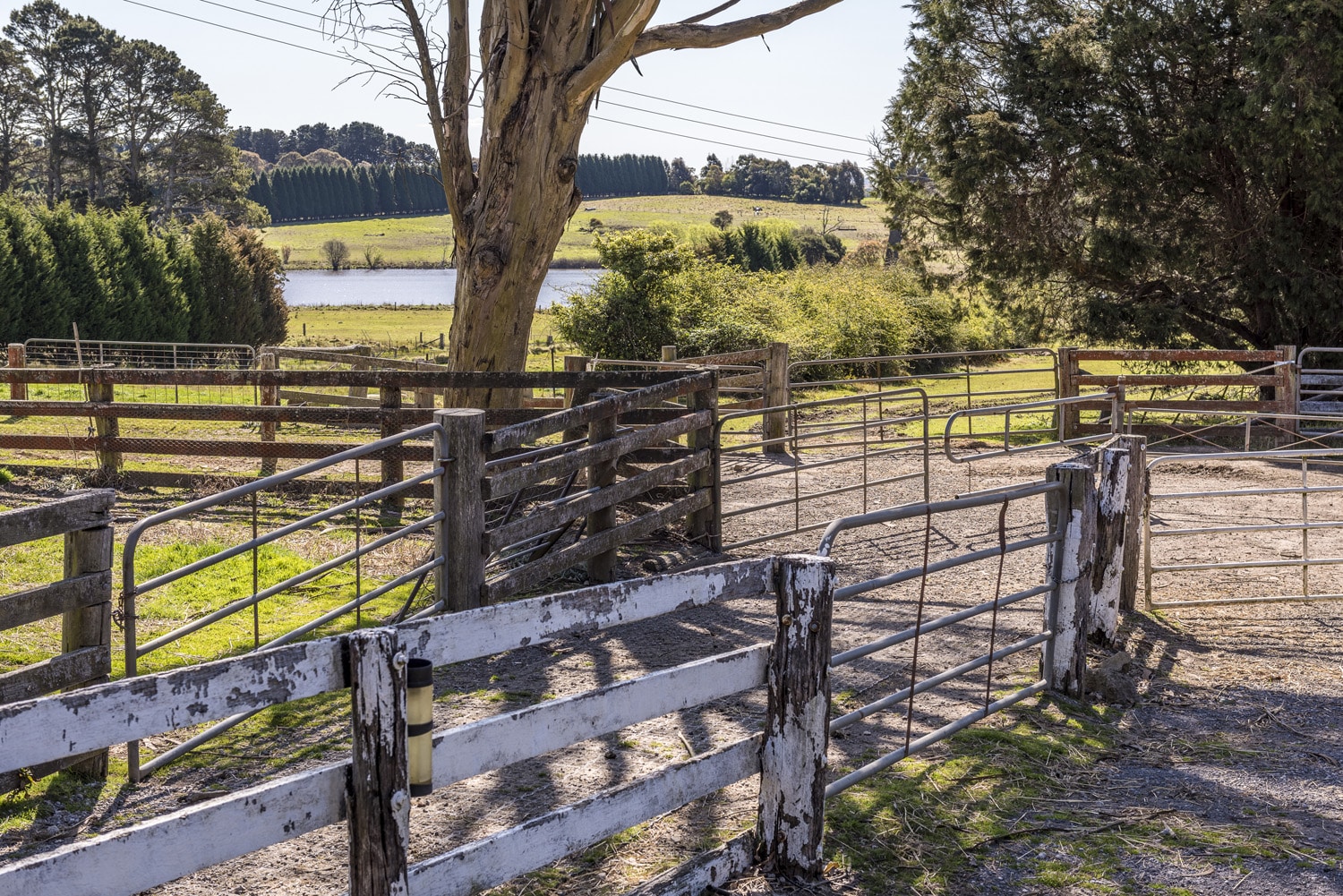
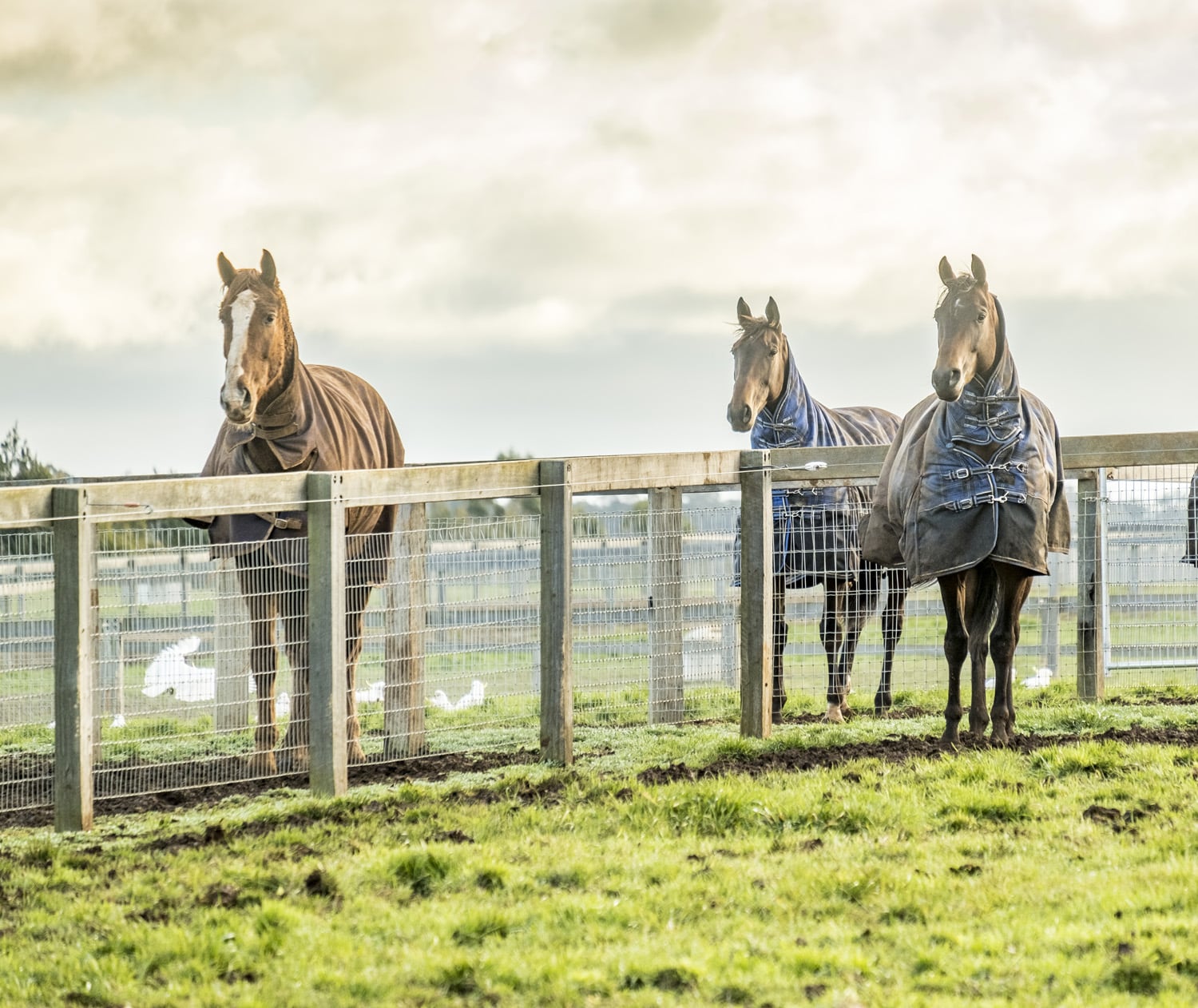
Thenford Farm only started taking horses in February 2021, and there are currently 45 horses on the property. When all the work is finished, it will be able to accommodate about 100 racehorses. The amount of infrastructure is enormous and I ask how many kilometres of fencing he has installed.

“The original quote was for 10 kilometres, but we have ended up with 16 to 17 kilometres,” he says thoughtfully. That is a lot of posts and rails.

For Sharp, Thenford Farm combines bucolic charm with economic sense.

“As the value of land increases in The Southern Highlands, and it’s increased quite dramatically in the past two or three years, it becomes increasingly less economic to run cattle or sheep. So what do you do to maintain the farm-like environment? The best way is with horses, because they are usually expensive things and the cost of the land doesn’t matter as much with horses as it does with cattle and sheep. 

“You also retain a beautiful rural outlook featuring nice fences and green paddocks with horses sitting in them.

“The racehorse industry continues to expand and the historic infrastructure for the industry is now in heavily urbanised areas. The ability to expand that infrastructure, and even keep it, diminishes as time goes by. So the Southern Highlands is a great spot for the growth of the racehorse industry.”

There are also important employment benefits. “If I had 200 acres with cattle on them, I’d probably employ one person,” Sharp notes. “We already employ nine people and we will probably have 14 or 15 when we are fully developed. A lot of people in the racehorse industry make it into a career. They might start out as a stable hand and then work up to different roles, whether it’s a breaker or a trainer or a rider. It’s a great utilisation of the land for this district.”

When he was elected to Parliament as the first Member for the new seat of Gilmore in 1984, the electorate included The Southern Highlands. When the boundaries moved following a redistribution a decade later, Sharp moved to the neighbouring seat of Hume – retaining representation of The Southern Highlands. He has remained in the region since he retired from Parliament in 1998.

For Sharp, The Southern Highlands is home and perfectly located halfway between the two cities where he spends a lot of time – Sydney and Canberra. It’s also easy for his children to visit and stay, as they do regularly. He hates moving house and hopes he won’t be doing so again.

Amanda Mackevicius

Posted by

Words: Michael Sharp. Photography: Ashley Mackevicius.

The bees around Bowral love the blooms of the Brown Barrel eucalypts that grow abundantly on the slopes of Mount Gibraltar.

One of the great joys of the life that Deb and Greg McLaughlin have built for their family in The Southern Highlands is to sit on a hill on a summer afternoon and watch their bees return to their hives.


It is no surprise when you meet him to learn that Mick grew up in Inverell where his family had been breeding Fine Merino sheep and Poll Hereford cattle for three generations. He studied commerce and accounting at Charles Sturt University and worked for Toyota after he graduated. His wife Karen completed an MBA at Charles Sturt University and then worked in a variety of corporate roles.

They bought their first farm in 2002, near Bargo where Karen’s family were living, and Mick thought he would follow in his family’s footsteps.

“I had a plan to grow meat sheep with a self-replacing flock and then out of the blue Karen said: ‘I don’t want sheep, I want alpacas.’ I said: ‘Let me tell you a story about alpacas. I saw my first alpacas at The Sydney Royal Easter Show in about 1989. There were just two of them in a pen in the goat and pig pavilion. I knew what they were, but I said to my grandfather: ‘Pa, what are these?’ He said: ‘Son, they’re alpacas. Steer clear of them, they will be the feral goat of the 2000s.’

“I told Karen there was no fibre industry, no meat industry and no return on investment and that only iconic, well to do people could afford to have alpacas for their tax scheme. But despite everything I put forward, she said: ‘I don’t care, that’s what I want to do. They are such interesting and beautiful animals.’ And then she told me she’d done all this research and even spoken to Janie Forrest.”

Janie Forrest was an industry leader, having taken over the administration and management of Coolaroo Alpaca Stud in 1995 and then purchasing that business in 1998.

“We’d recently bought our first car and we thought we were so good because we’d saved up and paid for it in cash,” Mick recalls. “And then we bought our first couple of alpacas – and they cost more than the car.”

It was a very steep learning curve for the Williams.

“The conditions were excellent that year and we produced about 40 kilograms of honey from each hive. Greg was really excited and said: ‘You have to taste this honey, it’s amazing.’ My experience until then was only with store-bought honey which was always amber in colour and tasted pretty much the same. But this honey was dark and velvety in texture and it had the most gorgeous taste – like fruitcake.”

Greg thought they should enter some local competitions and they were delighted to immediately win awards for best dark honey.

In 2015, only three years after their first harvest, they entered the National Honey Show at the Sydney Royal Easter Show. Astonishingly, they placed first in the Dark category and second in Amber.

Their success in competitions, and the fact they were producing substantially more honey than the family could consume, led to the decision to start selling their honey at local markets under the brand Bulwarra Bees. They enjoyed success from the outset and then began exploring “the honey alchemy side of things”.

“I would love to take credit for this,” says Deb, “but it was actually Greg’s idea originally. He suggested we should try mixing cinnamon with the honey. Well, it would just sell out at the markets every month. This inspired me to think what else we could do and we next tried mixing chocolate with honey for Easter. That went well and I started experimenting further and now we sell 13 different flavours of honey – with another three flavours coming out soon.”

All the preparation – infusing, stirring, pouring, labelling – is done by hand and all their containers are made of glass, not plastic. 

With sales at local markets going well for over five years, the McLaughlins decided to open a shop in Bowral. The first day of trading was scheduled for July 2021 – the week that The Southern Highlands went into a COVID-induced lockdown. They weren’t able to open their doors until October.

They had called the shop The Honey Thief.

“I was speaking to my mother on the phone one day and she asked me how Greg was and what he was up to,” explains Deb. “I said: ‘He’s robbing the hives, he’s a honey thief!’ We thought that would be a good name for our shop.”

The name reveals that Deb and Greg understand and respect where their honey comes from.

“Our first four years of honey production were absolutely amazing, but the past four years have been very challenging,” says Deb. “First there was drought. The plants were stressed and the eucalypts were just not blooming. When there is no rain, there are no flowers and when there are no flowers, there is no honey. In addition, our dams dried up – and each hive needs a litre of water a day. We lost a third of our hives during that time.

“For the past two years there has been too much rain. This means the nectar is very wet and the bees have to work extra hard to get the moisture out in order to produce honey.

“Bee keeping is a fast-growing hobby in Australia, including in The Southern Highlands, and it’s all about flow hives and being able to readily access honey. But I want to encourage kinder bee keeping, which is more about what’s best for the bees and less about what you can take from them. Kinder bee keeping means opening the hives as little as possible and having minimal intervention. It means providing the best environment for the bees rather than focusing on what they can do for us. It’s more about them.”

This is why The Honey Thief currently uses honey from other hives in the area and its labels state the honey is sourced “from Gundungurra country”, which stretches from Picton in the north to Goulburn in the south and west to the Blue Mountains.

Deb notes that one easy thing people can do to support bees, especially during difficult times, is to plant purple flowering varieties. Bees see in black and white when they are flying, but when they begin their descent they start seeing colour – first green and then ultraviolet.

The Honey Thief offers over a dozen types of honey as well as a range of other products. This includes a cough serum made from raw honey with organic lemons, ginger, garlic and onions. This elixir and chai honey are The Honey Thief’s best sellers. They also sell beeswax candles, lip balms and bath products.

The McLaughlins’ original aim was to live a more self-sufficient lifestyle. Apiary was initially just part of their story, but it has grown to become central to their life. Their honey has received numerous prizes, their business has received a Local Business Award for Environmental Sustainability and Deb was selected as a finalist in the 2022 Australian Women’s Small Business Awards.

“We’ve come a long way,” Deb says, “but the biggest challenge is the environment, which we have no control over. Bees are vitally important because they are responsible for the pollination of a third of our crops. They are the pillars of our food chain and we are totally dependent on them. That’s why there needs to be a shift to kinder bee keeping and conservation.”


For more information visit: www.thehoneythief.com.au
Denise Faulkner

Posted by

Words: Michael Sharp. Photography: Ashley Mackevicius.

The bees around Bowral love the blooms of the Brown Barrel eucalypts that grow abundantly on the slopes of Mount Gibraltar.

One of the great joys of the life that Deb and Greg McLaughlin have built for their family in The Southern Highlands is to sit on a hill on a summer afternoon and watch their bees return to their hives.


It is no surprise when you meet him to learn that Mick grew up in Inverell where his family had been breeding Fine Merino sheep and Poll Hereford cattle for three generations. He studied commerce and accounting at Charles Sturt University and worked for Toyota after he graduated. His wife Karen completed an MBA at Charles Sturt University and then worked in a variety of corporate roles.

They bought their first farm in 2002, near Bargo where Karen’s family were living, and Mick thought he would follow in his family’s footsteps.

“I had a plan to grow meat sheep with a self-replacing flock and then out of the blue Karen said: ‘I don’t want sheep, I want alpacas.’ I said: ‘Let me tell you a story about alpacas. I saw my first alpacas at The Sydney Royal Easter Show in about 1989. There were just two of them in a pen in the goat and pig pavilion. I knew what they were, but I said to my grandfather: ‘Pa, what are these?’ He said: ‘Son, they’re alpacas. Steer clear of them, they will be the feral goat of the 2000s.’

“I told Karen there was no fibre industry, no meat industry and no return on investment and that only iconic, well to do people could afford to have alpacas for their tax scheme. But despite everything I put forward, she said: ‘I don’t care, that’s what I want to do. They are such interesting and beautiful animals.’ And then she told me she’d done all this research and even spoken to Janie Forrest.”

Janie Forrest was an industry leader, having taken over the administration and management of Coolaroo Alpaca Stud in 1995 and then purchasing that business in 1998.

“We’d recently bought our first car and we thought we were so good because we’d saved up and paid for it in cash,” Mick recalls. “And then we bought our first couple of alpacas – and they cost more than the car.”

It was a very steep learning curve for the Williams.

“The conditions were excellent that year and we produced about 40 kilograms of honey from each hive. Greg was really excited and said: ‘You have to taste this honey, it’s amazing.’ My experience until then was only with store-bought honey which was always amber in colour and tasted pretty much the same. But this honey was dark and velvety in texture and it had the most gorgeous taste – like fruitcake.”

Greg thought they should enter some local competitions and they were delighted to immediately win awards for best dark honey.

In 2015, only three years after their first harvest, they entered the National Honey Show at the Sydney Royal Easter Show. Astonishingly, they placed first in the Dark category and second in Amber.

Their success in competitions, and the fact they were producing substantially more honey than the family could consume, led to the decision to start selling their honey at local markets under the brand Bulwarra Bees. They enjoyed success from the outset and then began exploring “the honey alchemy side of things”.

“I would love to take credit for this,” says Deb, “but it was actually Greg’s idea originally. He suggested we should try mixing cinnamon with the honey. Well, it would just sell out at the markets every month. This inspired me to think what else we could do and we next tried mixing chocolate with honey for Easter. That went well and I started experimenting further and now we sell 13 different flavours of honey – with another three flavours coming out soon.”

All the preparation – infusing, stirring, pouring, labelling – is done by hand and all their containers are made of glass, not plastic. 

With sales at local markets going well for over five years, the McLaughlins decided to open a shop in Bowral. The first day of trading was scheduled for July 2021 – the week that The Southern Highlands went into a COVID-induced lockdown. They weren’t able to open their doors until October.

They had called the shop The Honey Thief.

“I was speaking to my mother on the phone one day and she asked me how Greg was and what he was up to,” explains Deb. “I said: ‘He’s robbing the hives, he’s a honey thief!’ We thought that would be a good name for our shop.”

The name reveals that Deb and Greg understand and respect where their honey comes from.

“Our first four years of honey production were absolutely amazing, but the past four years have been very challenging,” says Deb. “First there was drought. The plants were stressed and the eucalypts were just not blooming. When there is no rain, there are no flowers and when there are no flowers, there is no honey. In addition, our dams dried up – and each hive needs a litre of water a day. We lost a third of our hives during that time.

“For the past two years there has been too much rain. This means the nectar is very wet and the bees have to work extra hard to get the moisture out in order to produce honey.

“Bee keeping is a fast-growing hobby in Australia, including in The Southern Highlands, and it’s all about flow hives and being able to readily access honey. But I want to encourage kinder bee keeping, which is more about what’s best for the bees and less about what you can take from them. Kinder bee keeping means opening the hives as little as possible and having minimal intervention. It means providing the best environment for the bees rather than focusing on what they can do for us. It’s more about them.”

This is why The Honey Thief currently uses honey from other hives in the area and its labels state the honey is sourced “from Gundungurra country”, which stretches from Picton in the north to Goulburn in the south and west to the Blue Mountains.

Deb notes that one easy thing people can do to support bees, especially during difficult times, is to plant purple flowering varieties. Bees see in black and white when they are flying, but when they begin their descent they start seeing colour – first green and then ultraviolet.

The Honey Thief offers over a dozen types of honey as well as a range of other products. This includes a cough serum made from raw honey with organic lemons, ginger, garlic and onions. This elixir and chai honey are The Honey Thief’s best sellers. They also sell beeswax candles, lip balms and bath products.

The McLaughlins’ original aim was to live a more self-sufficient lifestyle. Apiary was initially just part of their story, but it has grown to become central to their life. Their honey has received numerous prizes, their business has received a Local Business Award for Environmental Sustainability and Deb was selected as a finalist in the 2022 Australian Women’s Small Business Awards.

“We’ve come a long way,” Deb says, “but the biggest challenge is the environment, which we have no control over. Bees are vitally important because they are responsible for the pollination of a third of our crops. They are the pillars of our food chain and we are totally dependent on them. That’s why there needs to be a shift to kinder bee keeping and conservation.”


For more information visit: www.thehoneythief.com.au

Join our mailing list
Interests(Required)
This site is protected by reCAPTCHA and the Google Privacy Policy and Terms of Service apply.
REGISTER YOUR INTEREST: