Drew Truslove
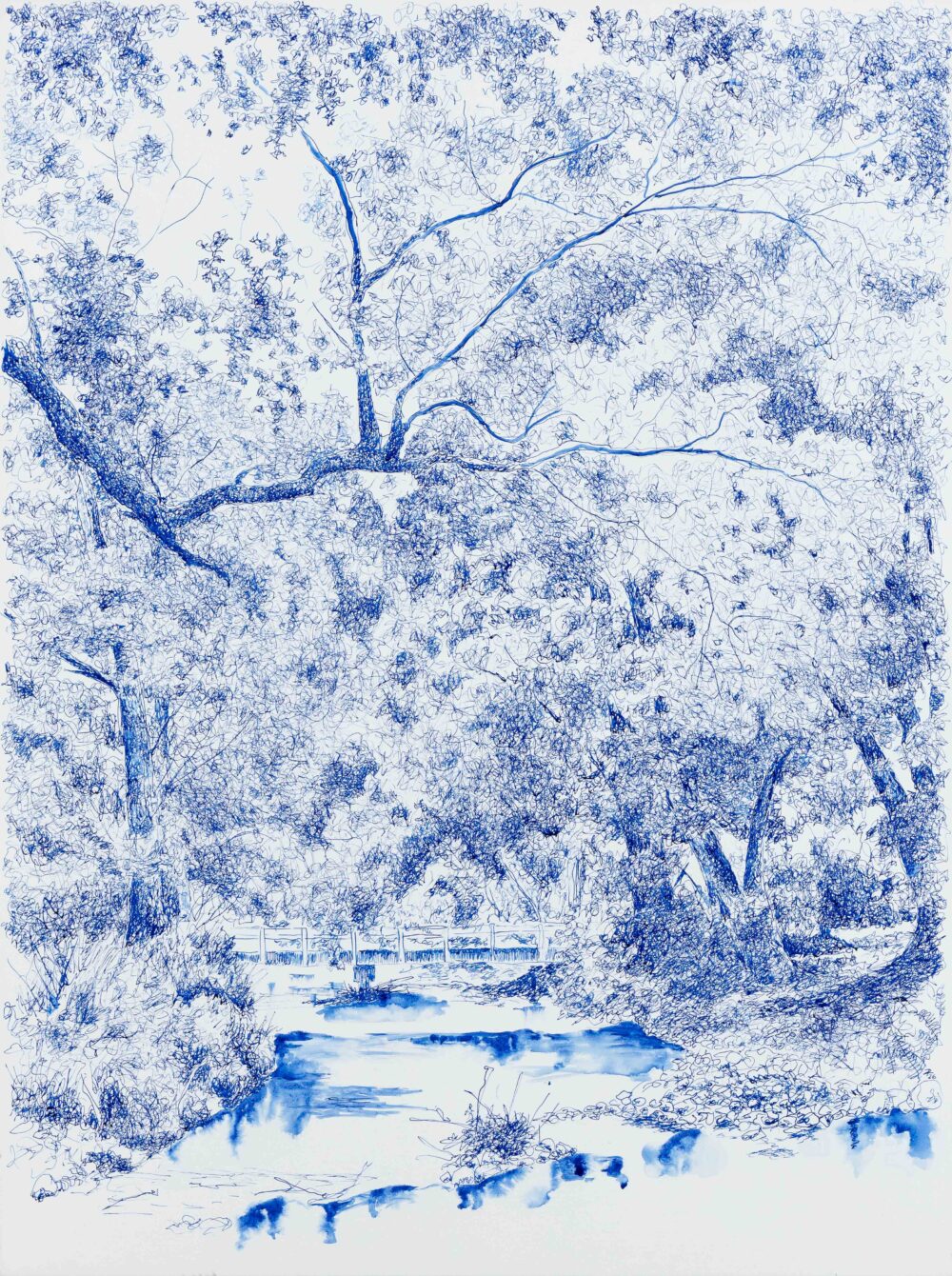
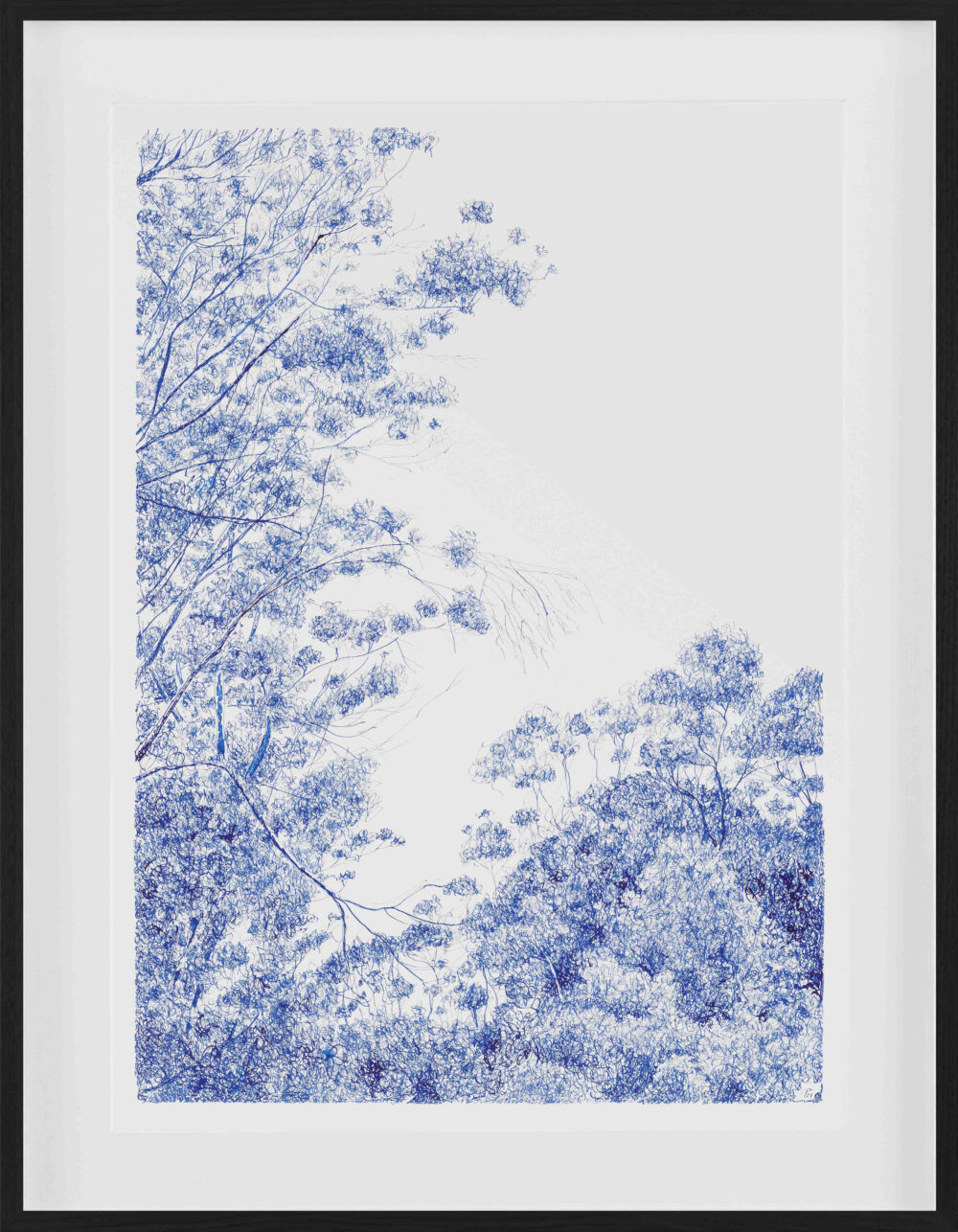
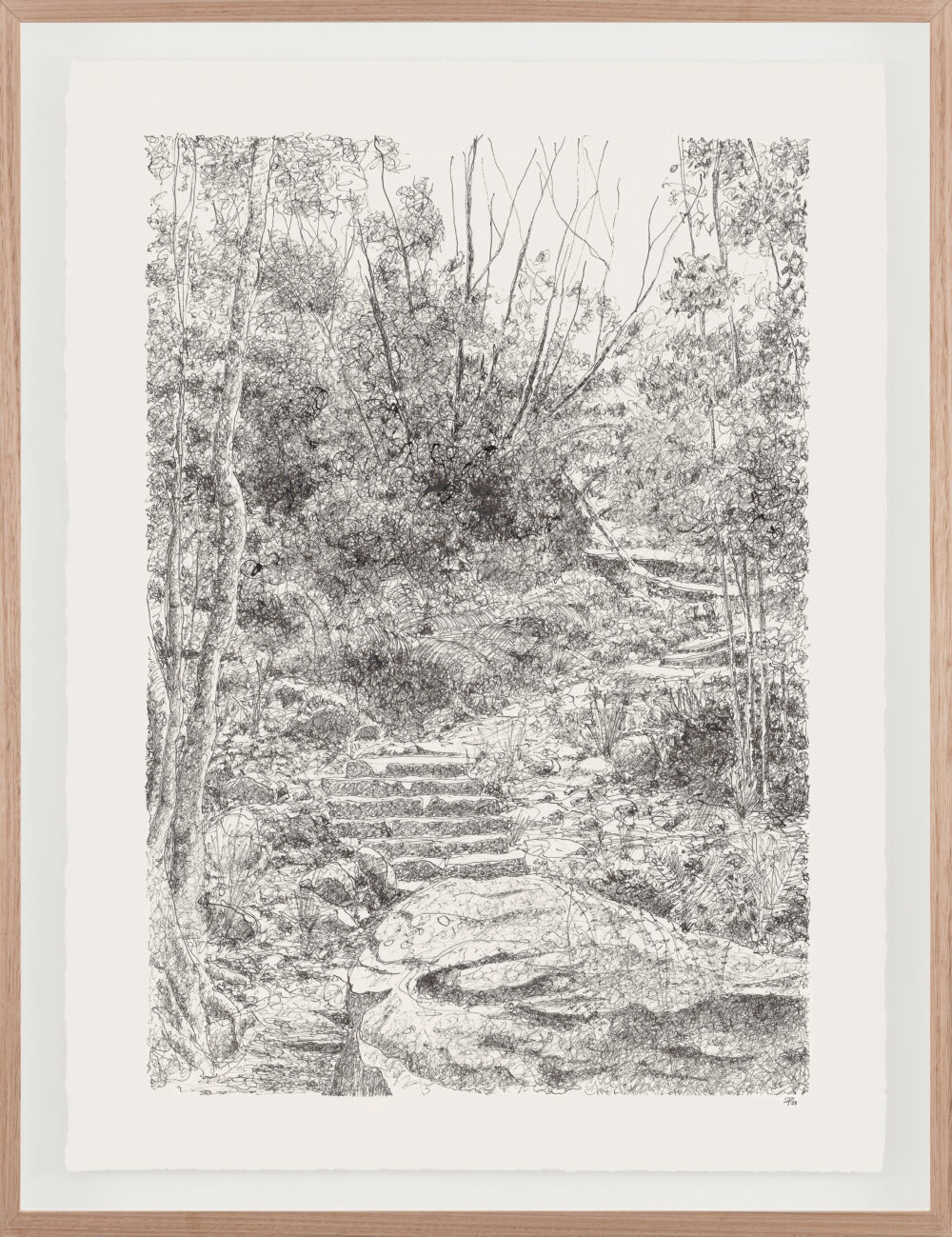
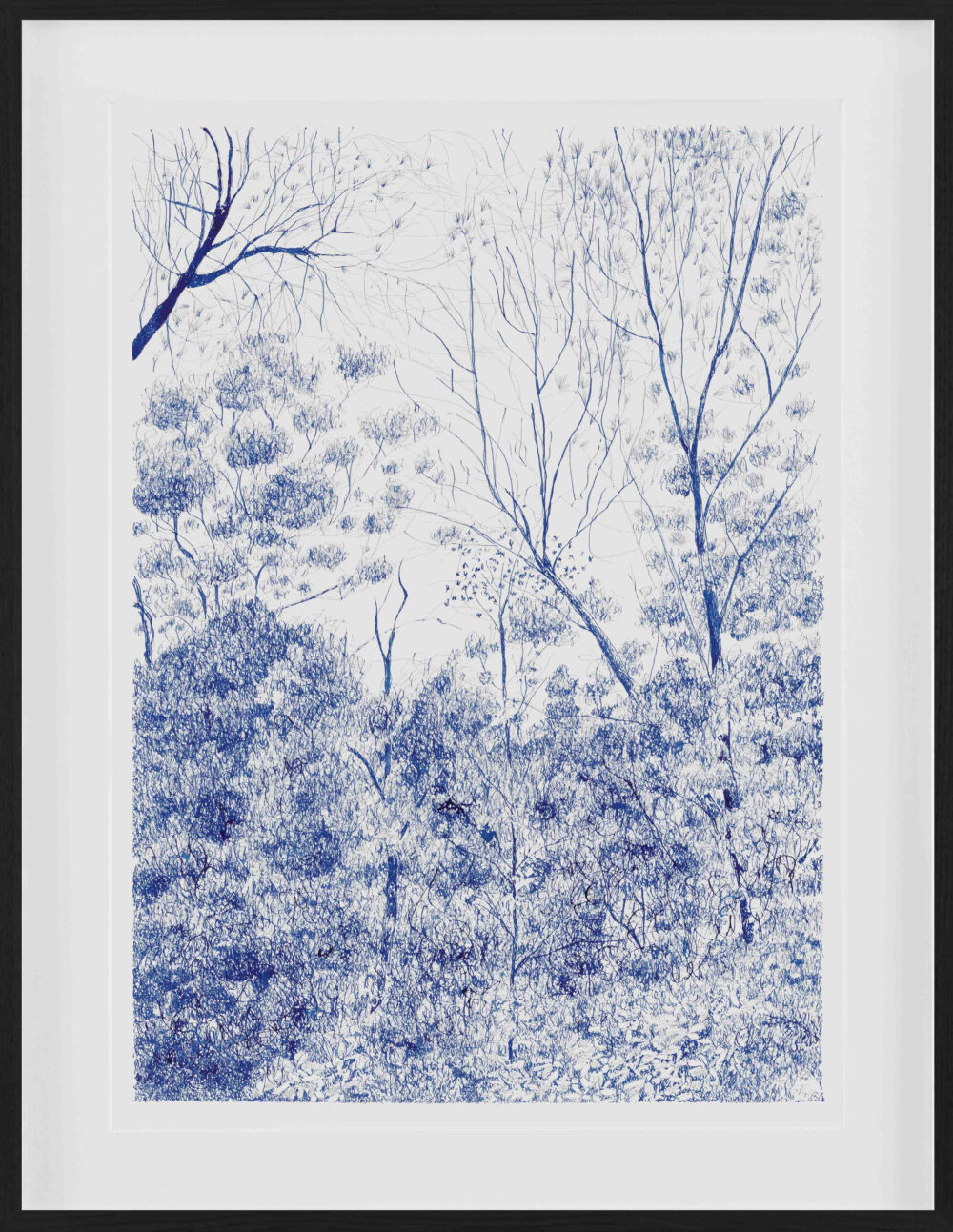
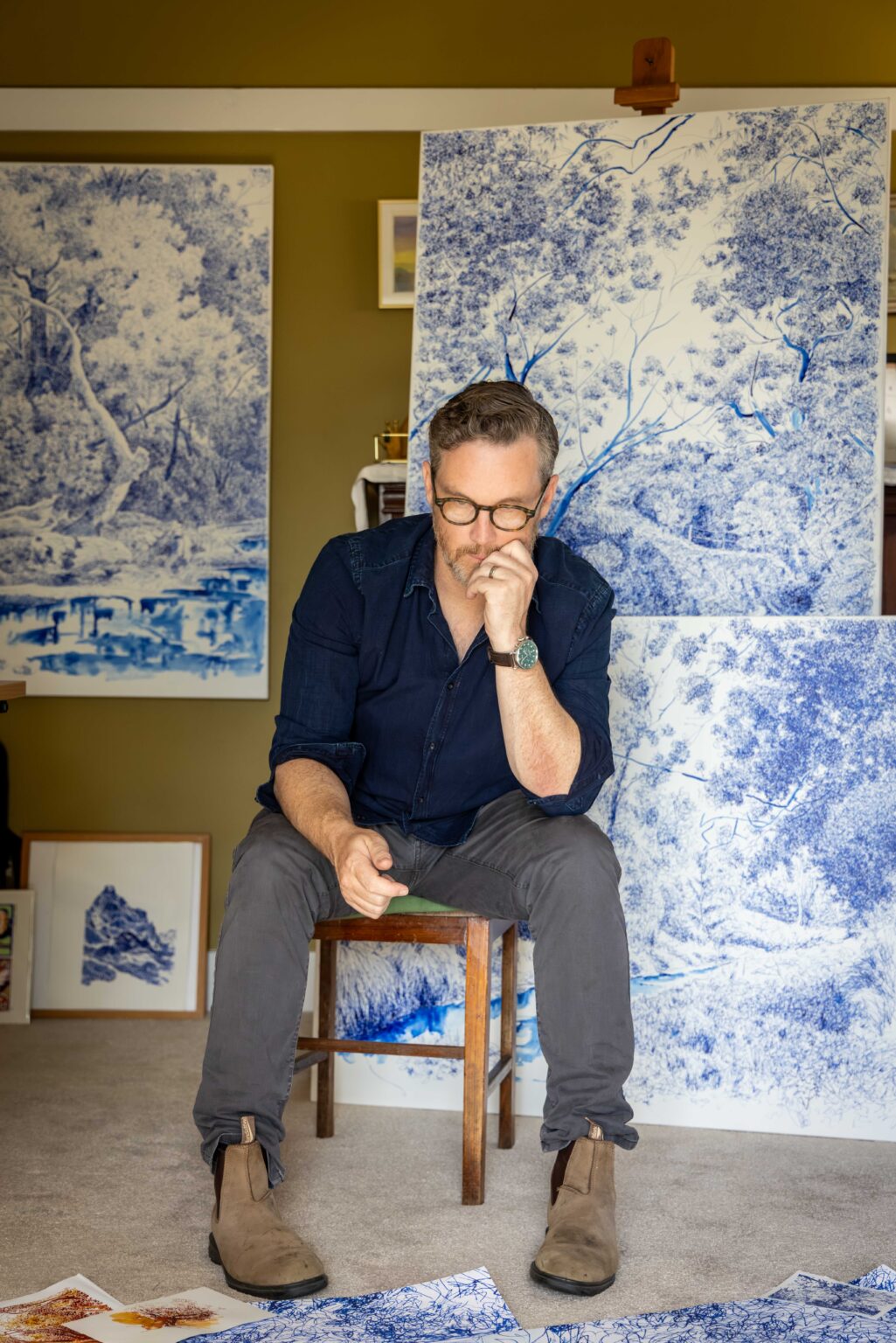
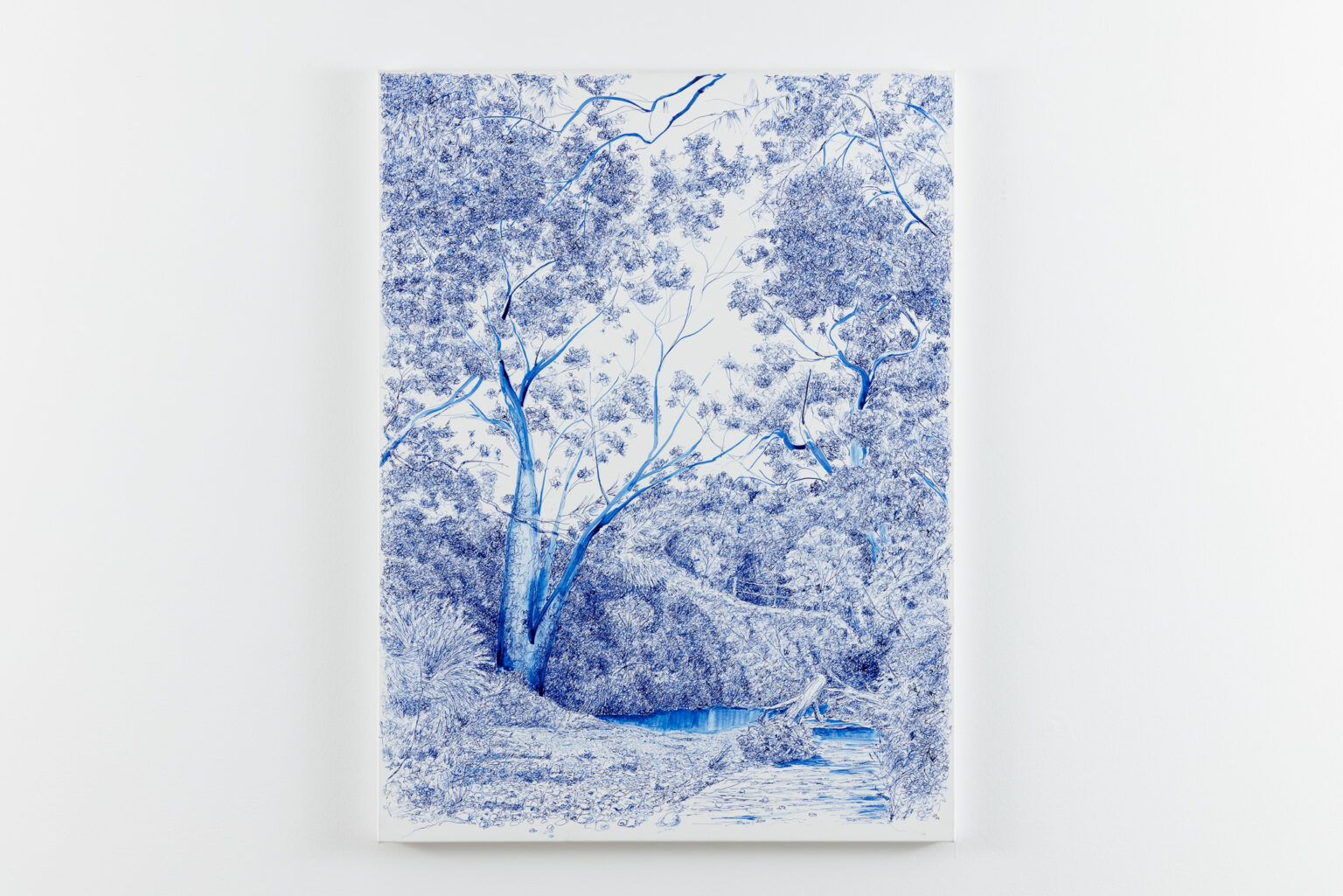
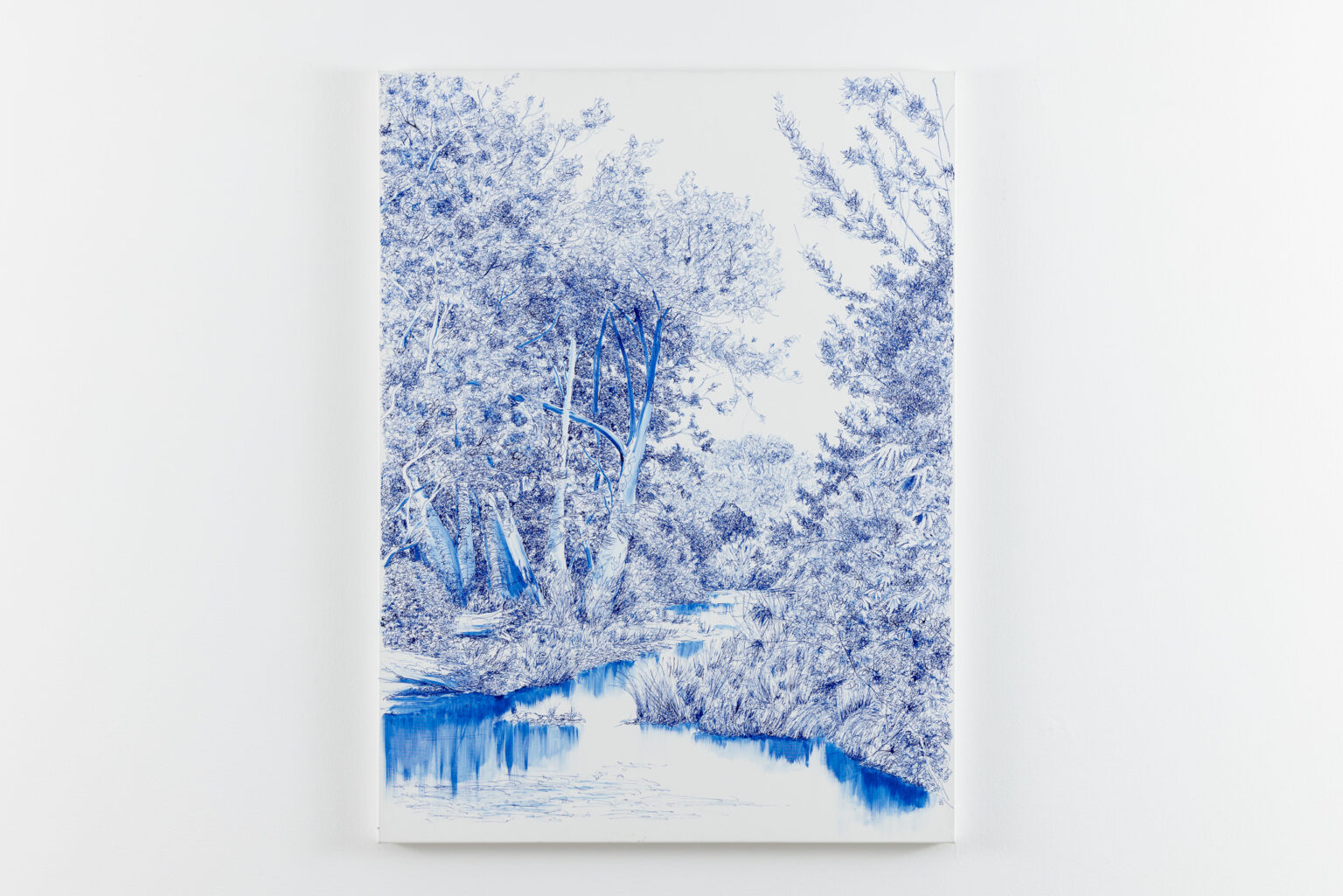
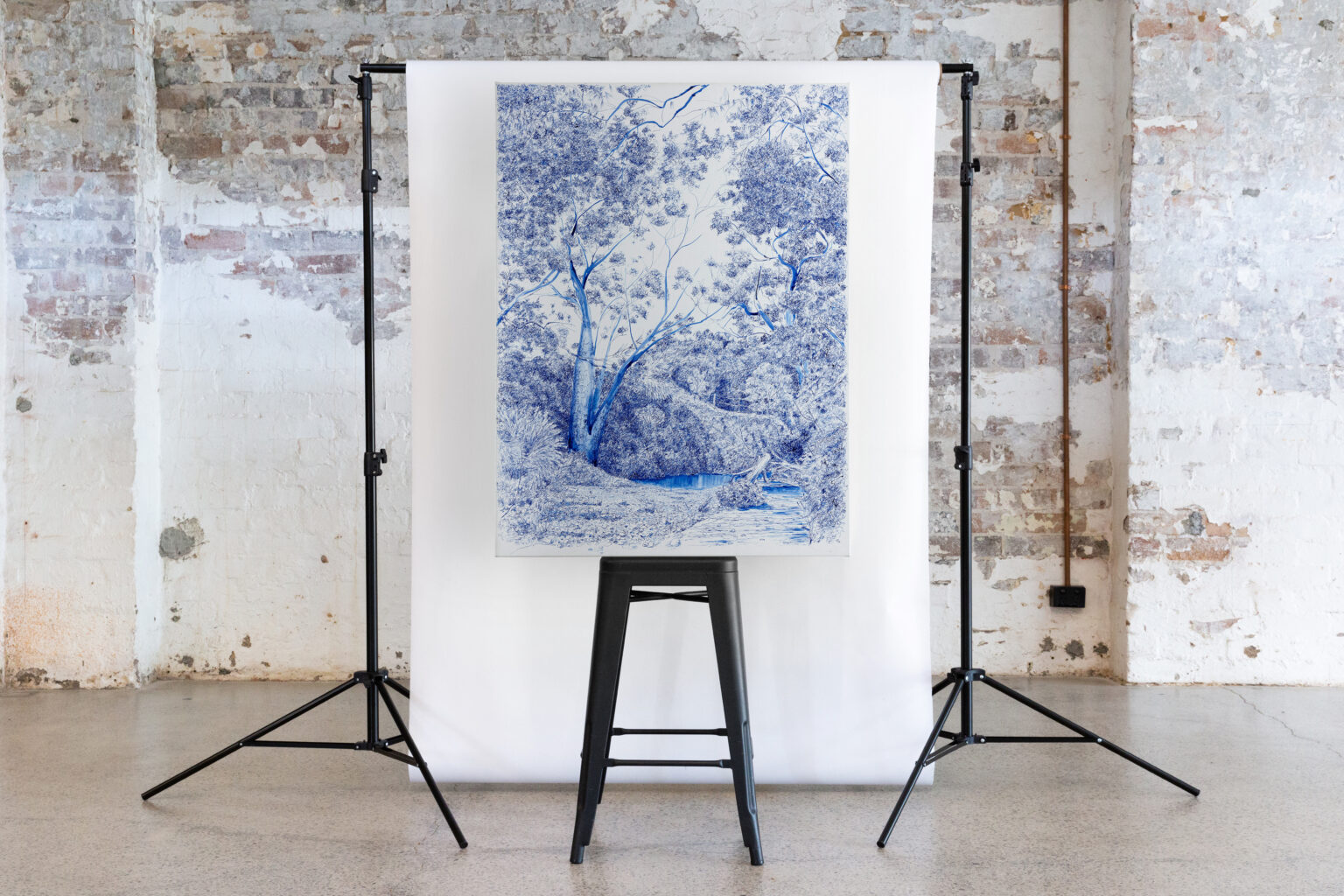
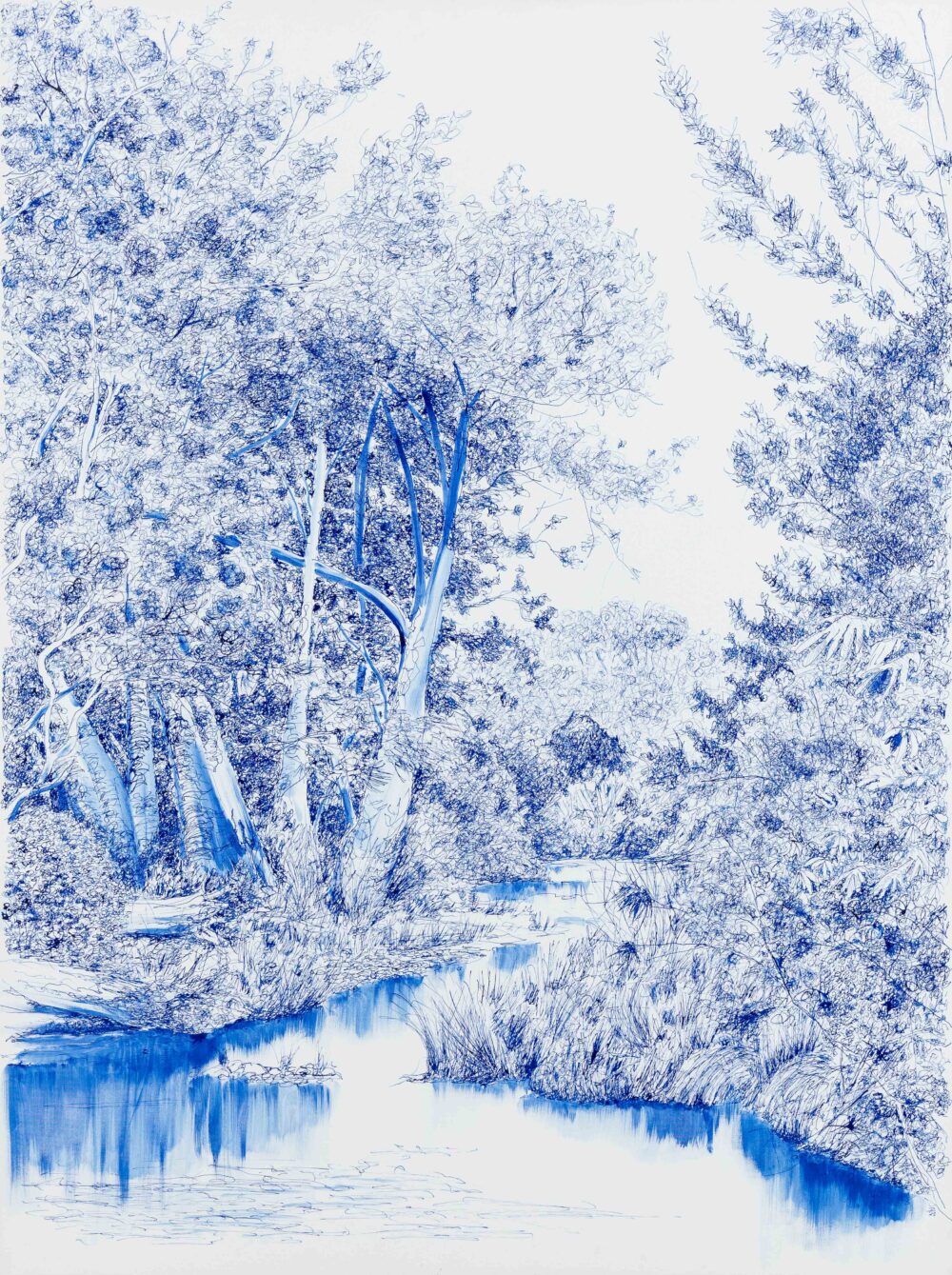
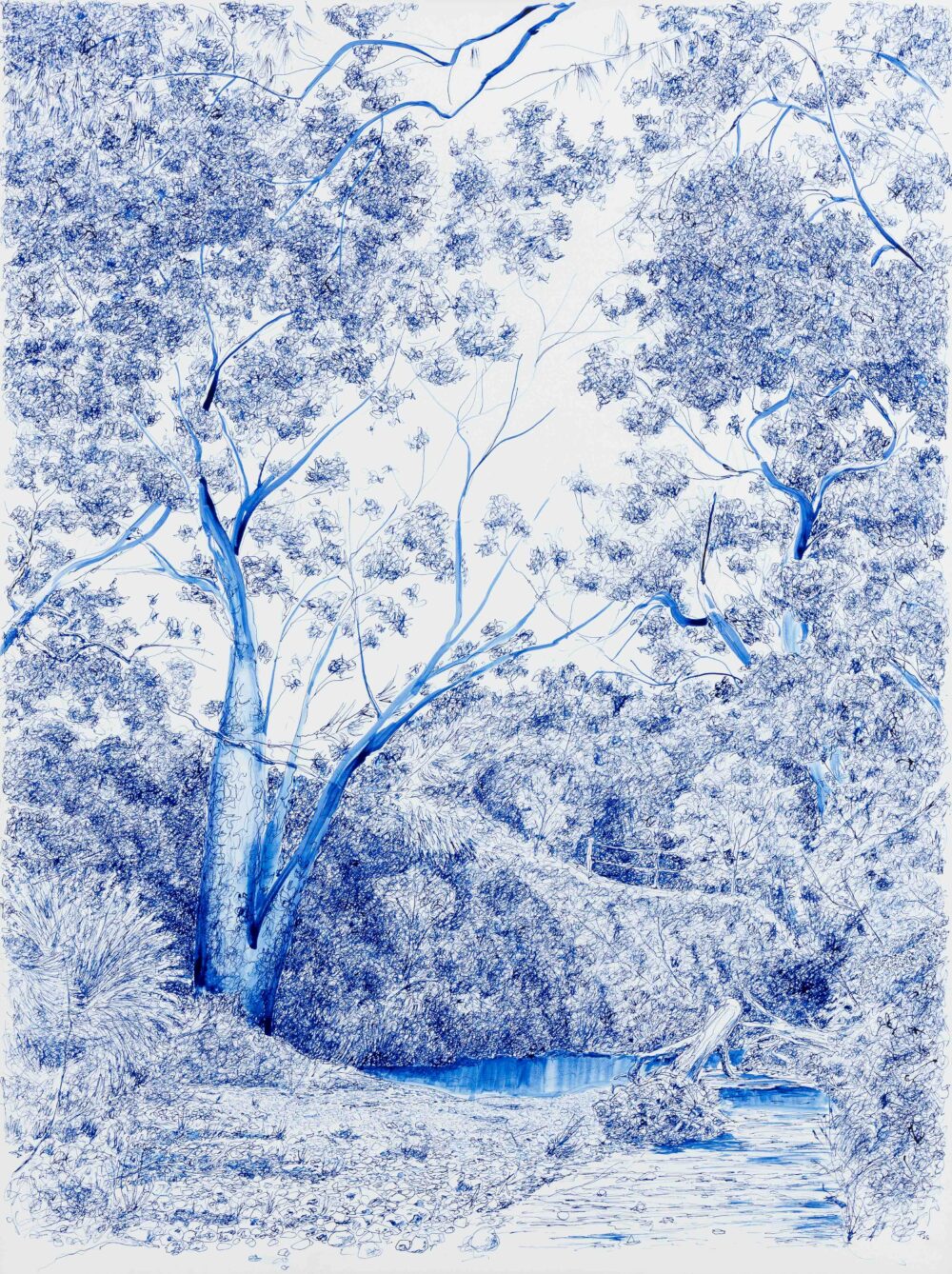
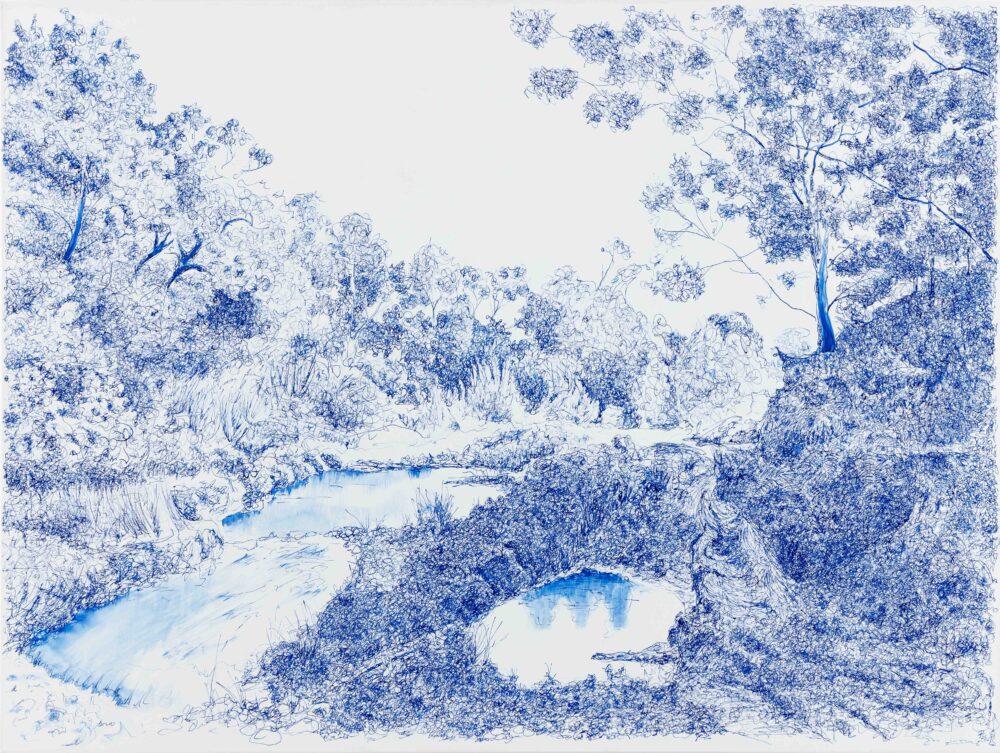
Eora/Sydney-based artist, Drew Truslove turns his attention again to the Minnamurra River and its surrounding bushland, tracing the tangled beauty and abundance of this river country.
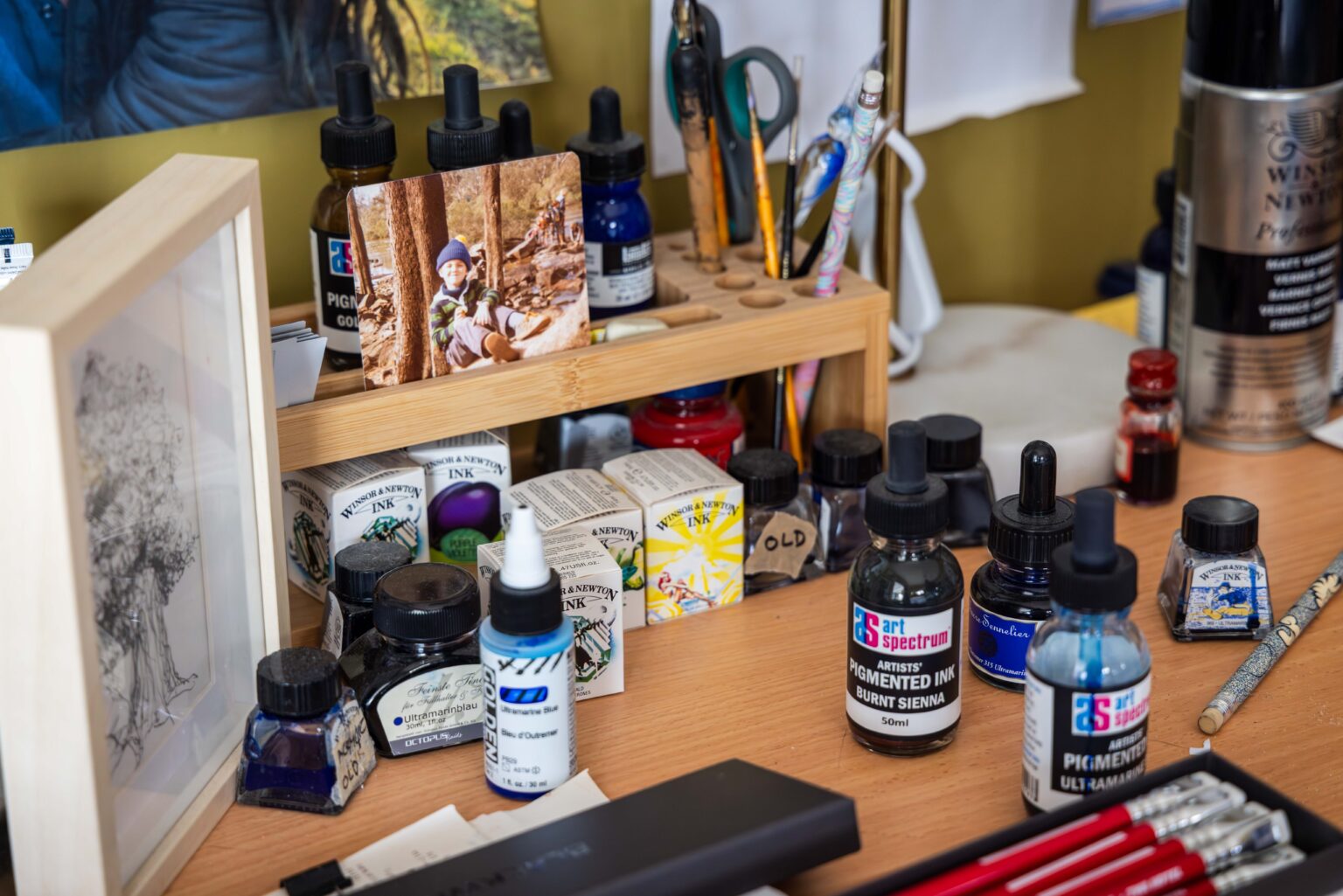
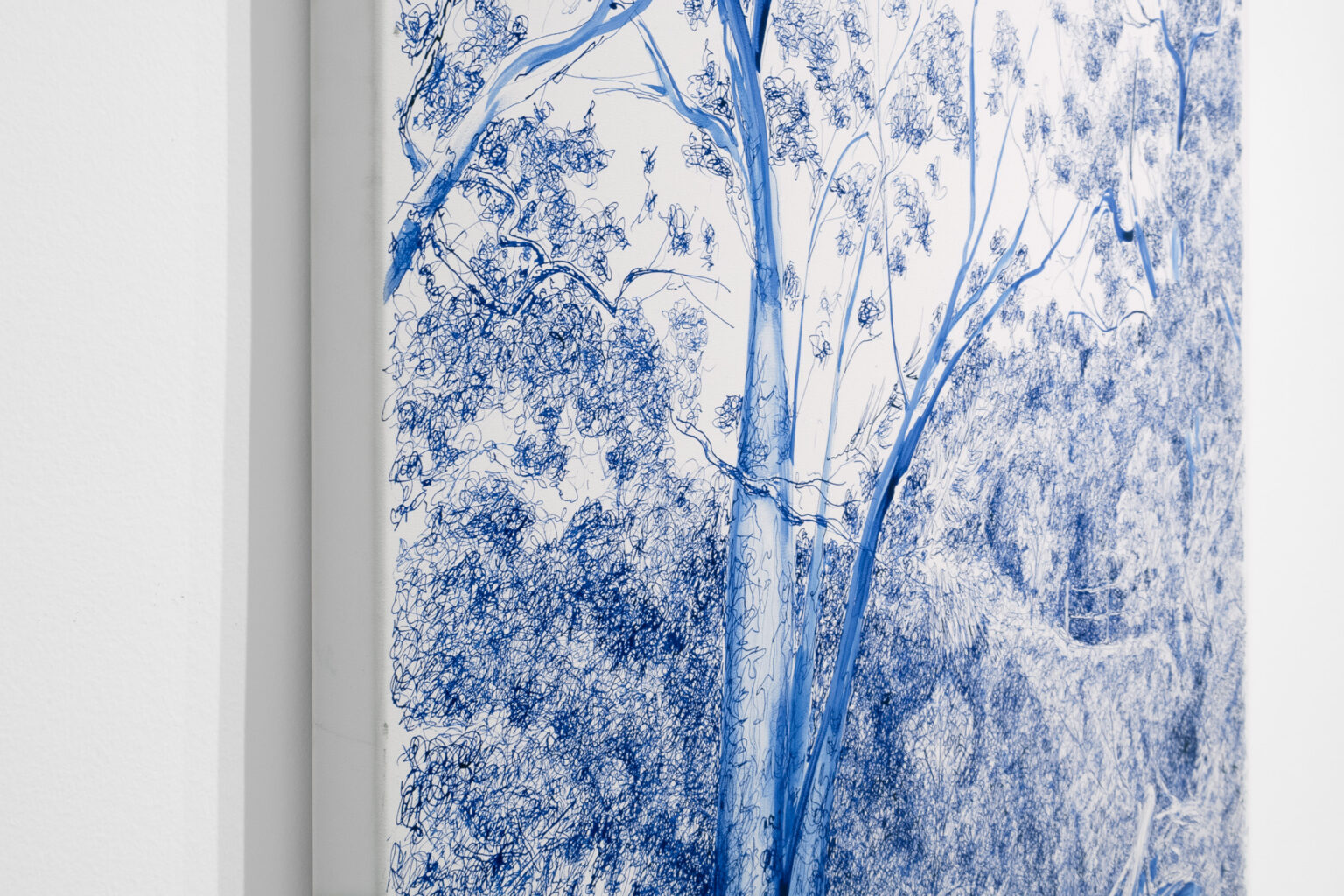
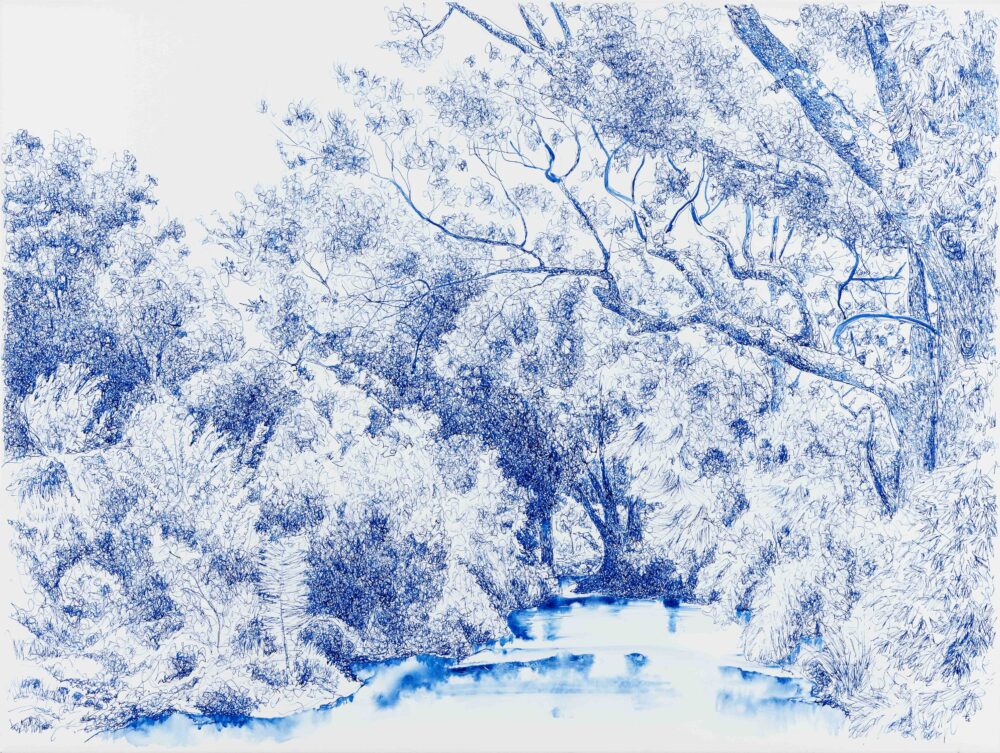
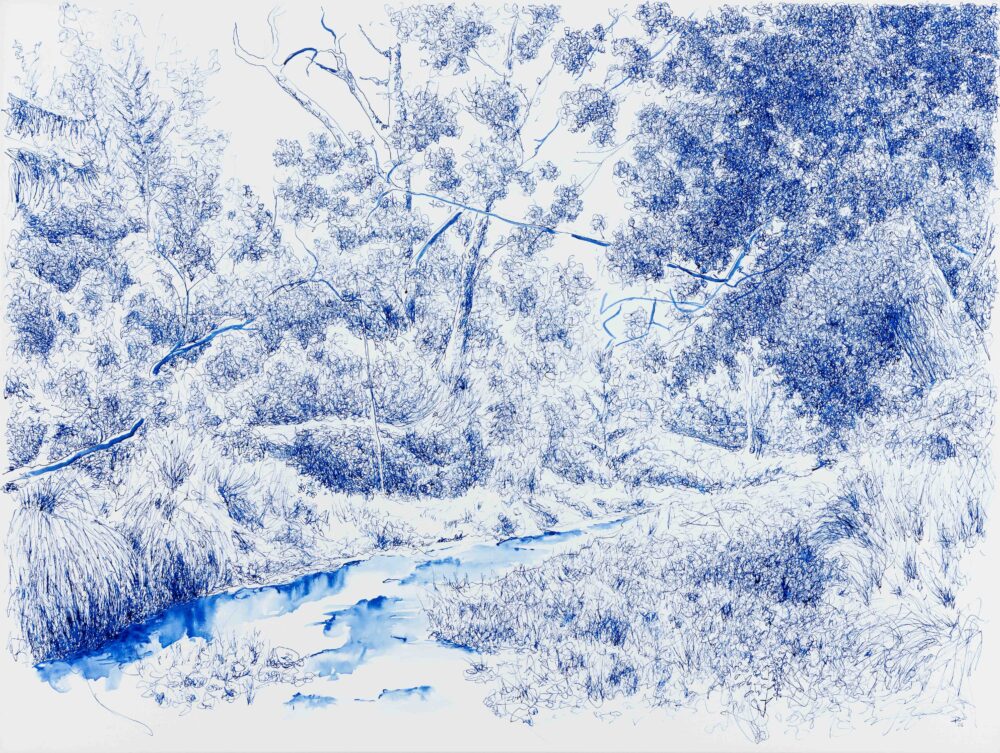
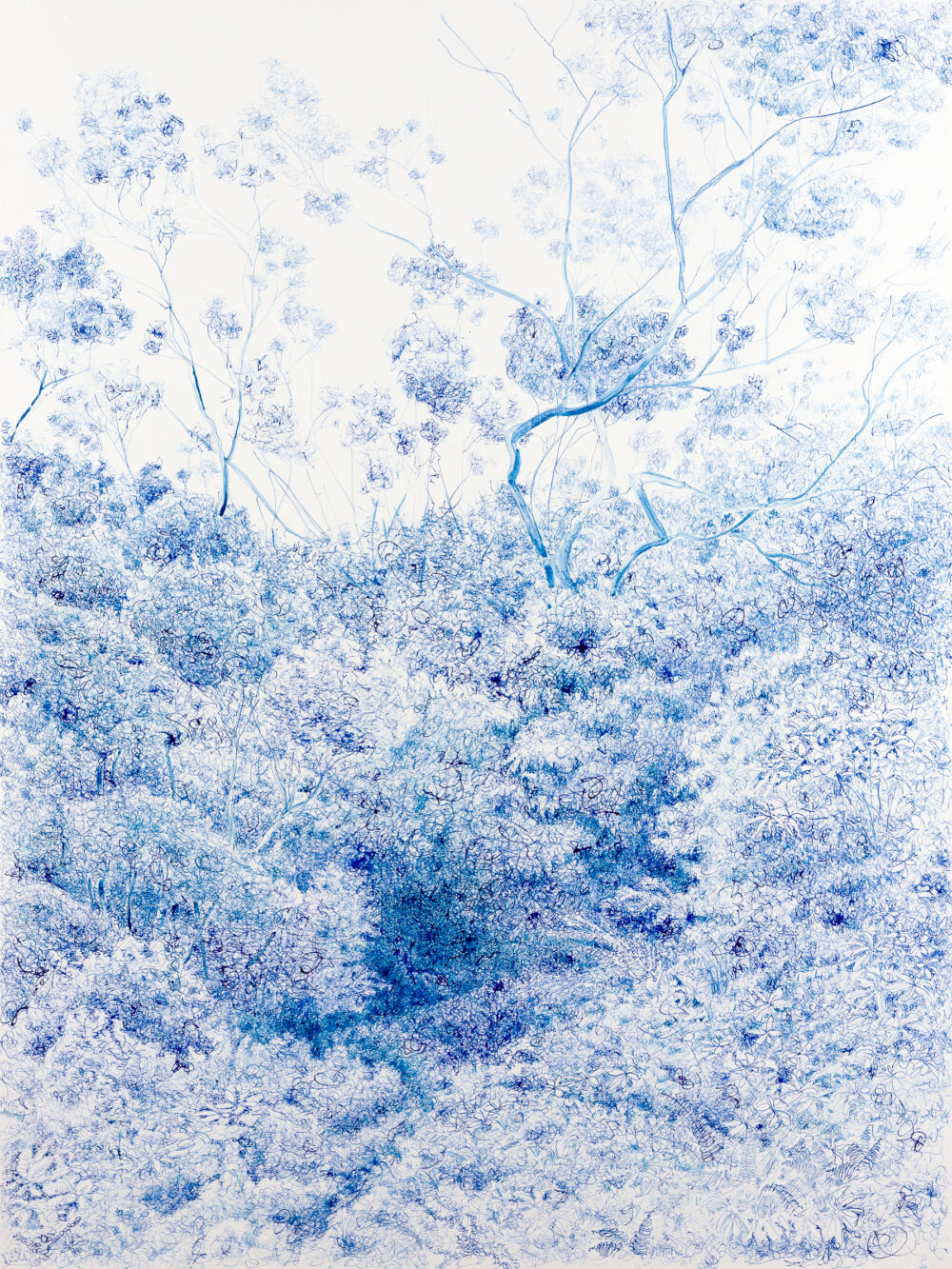
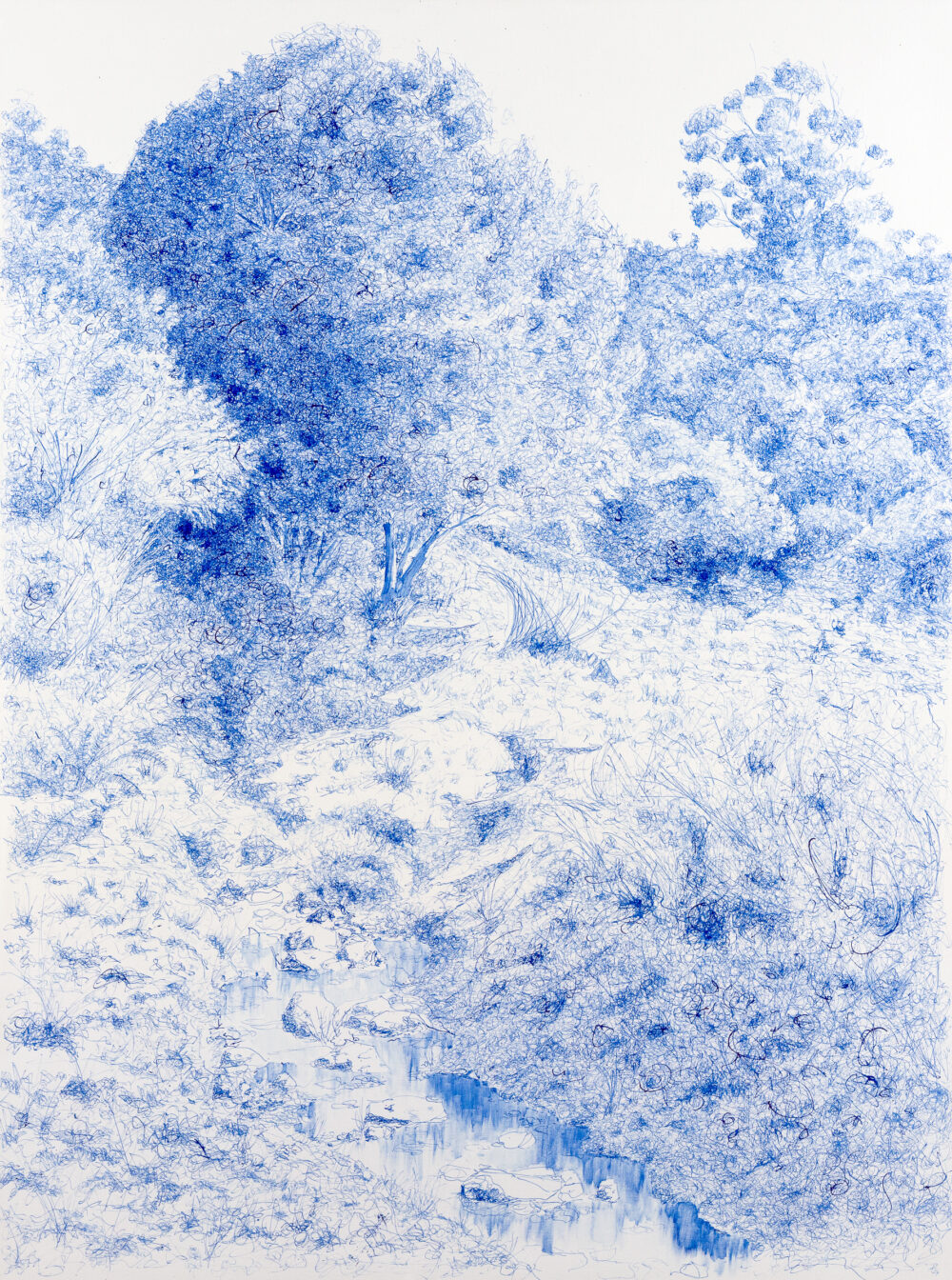
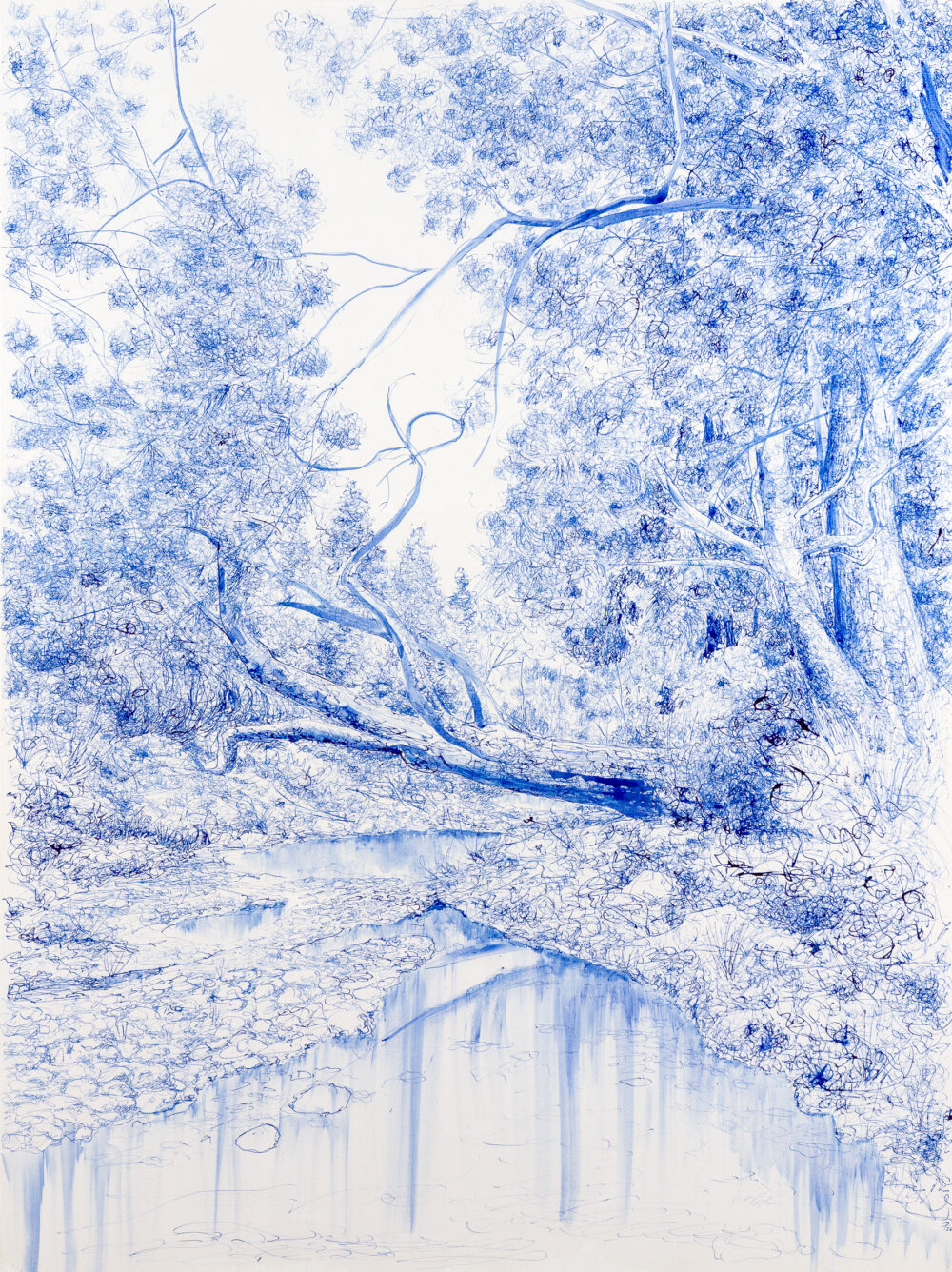
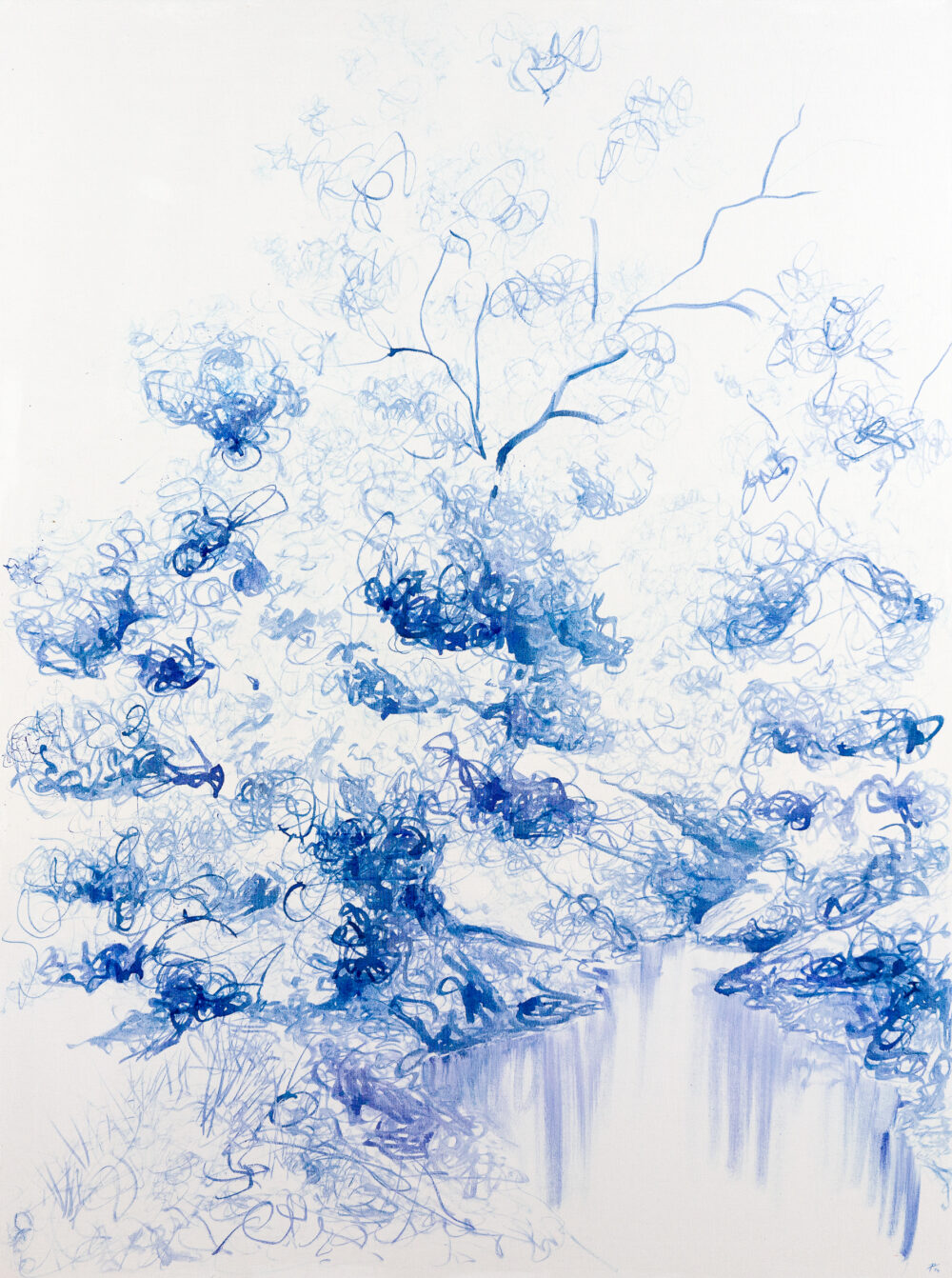
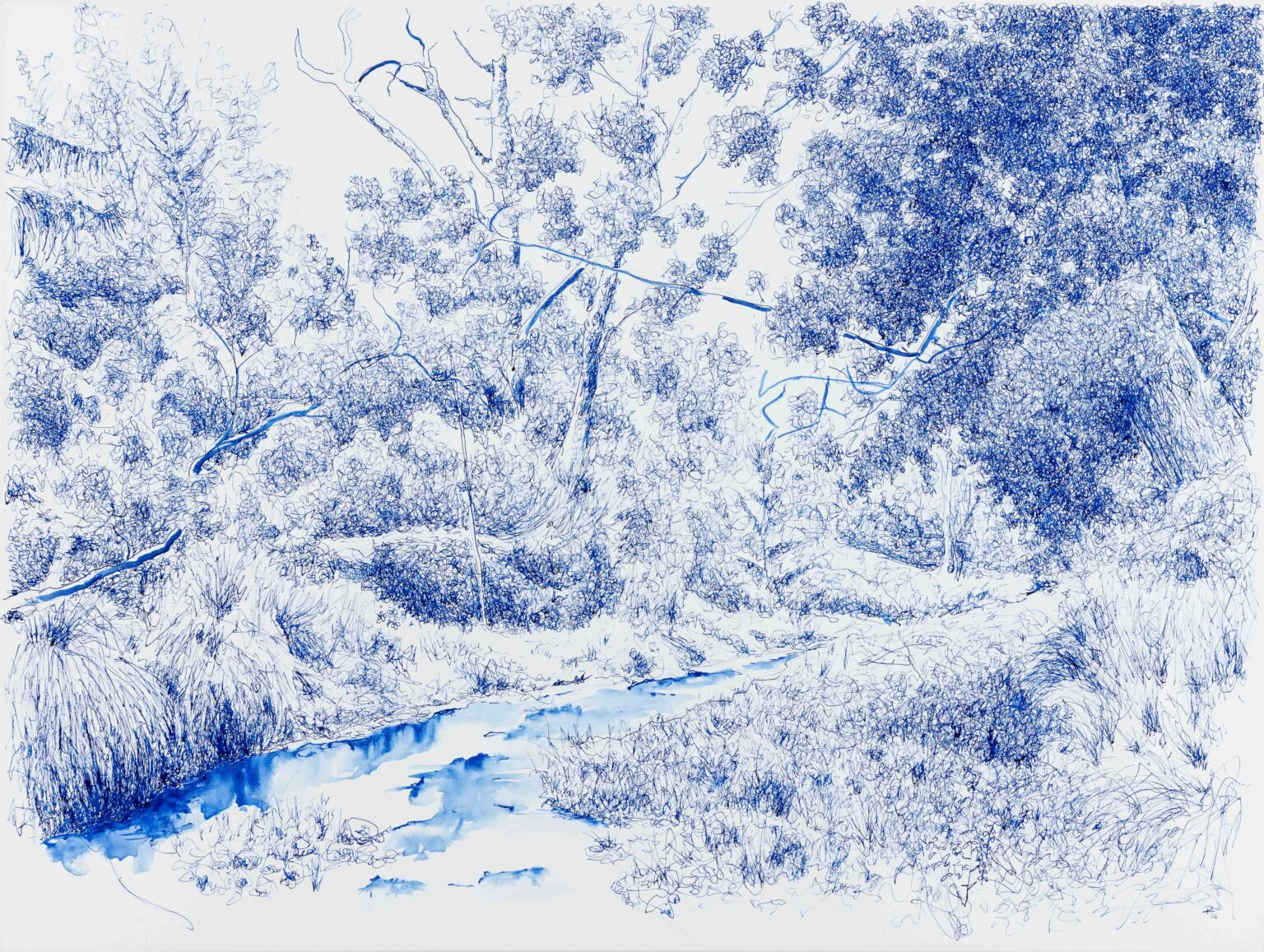
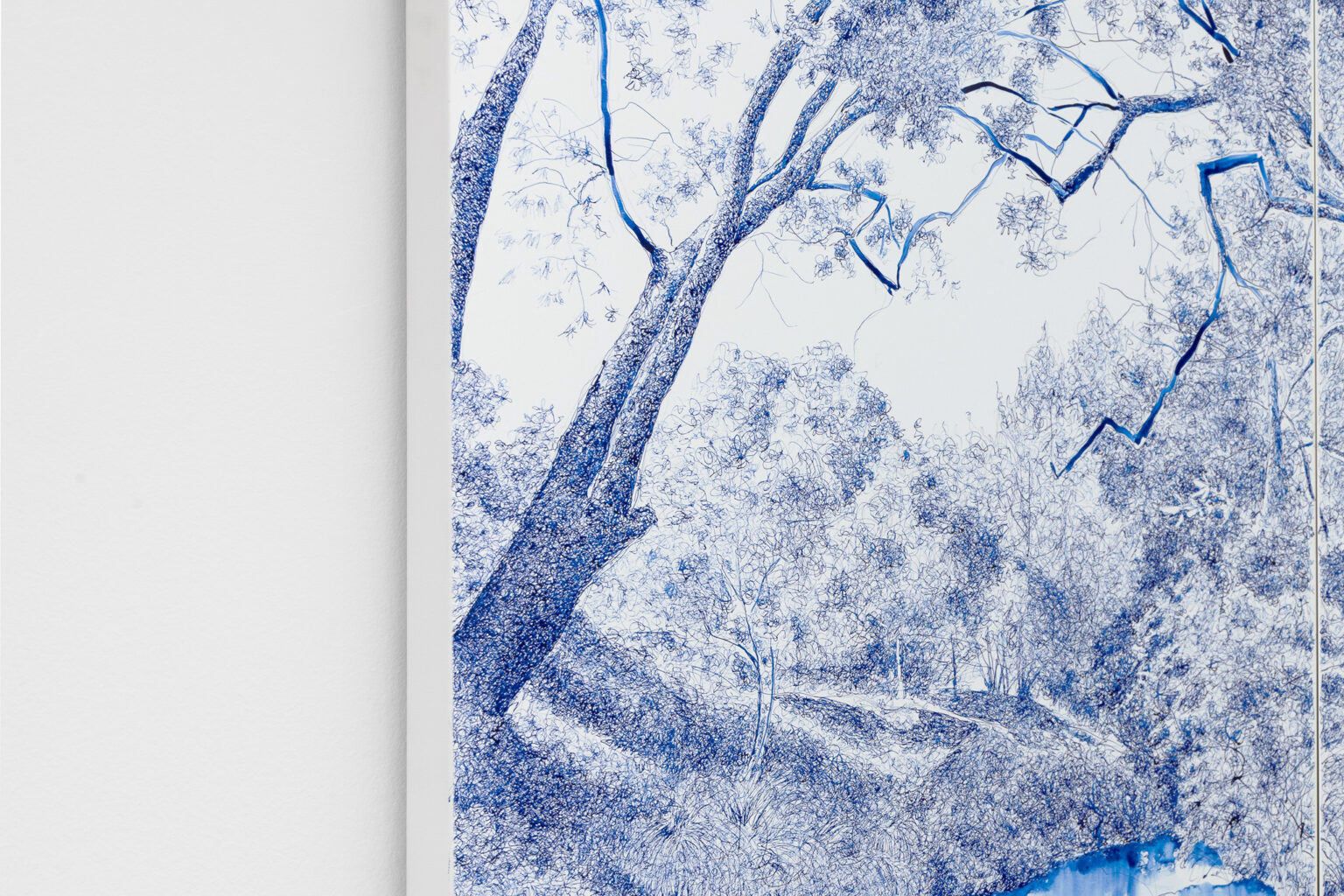
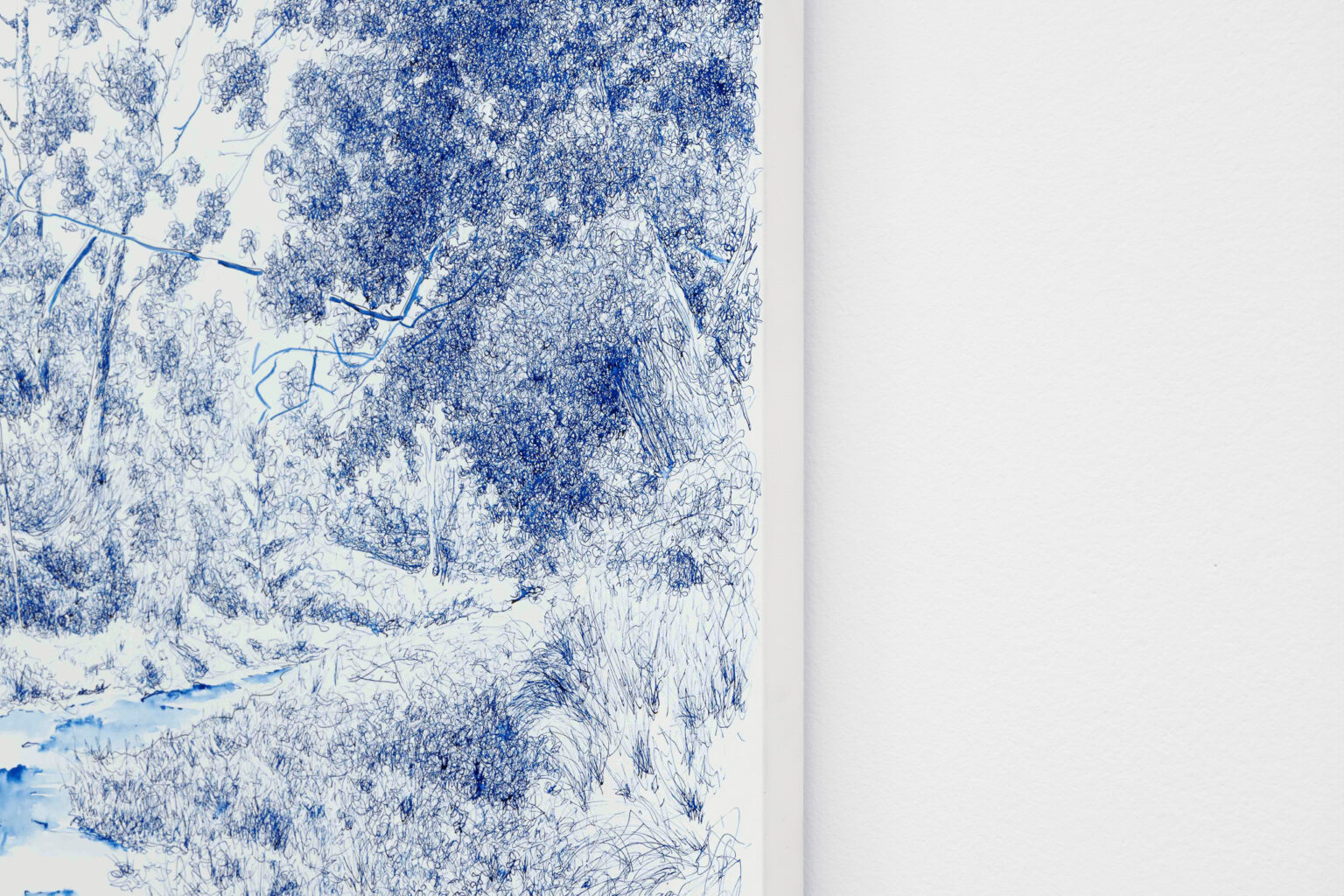
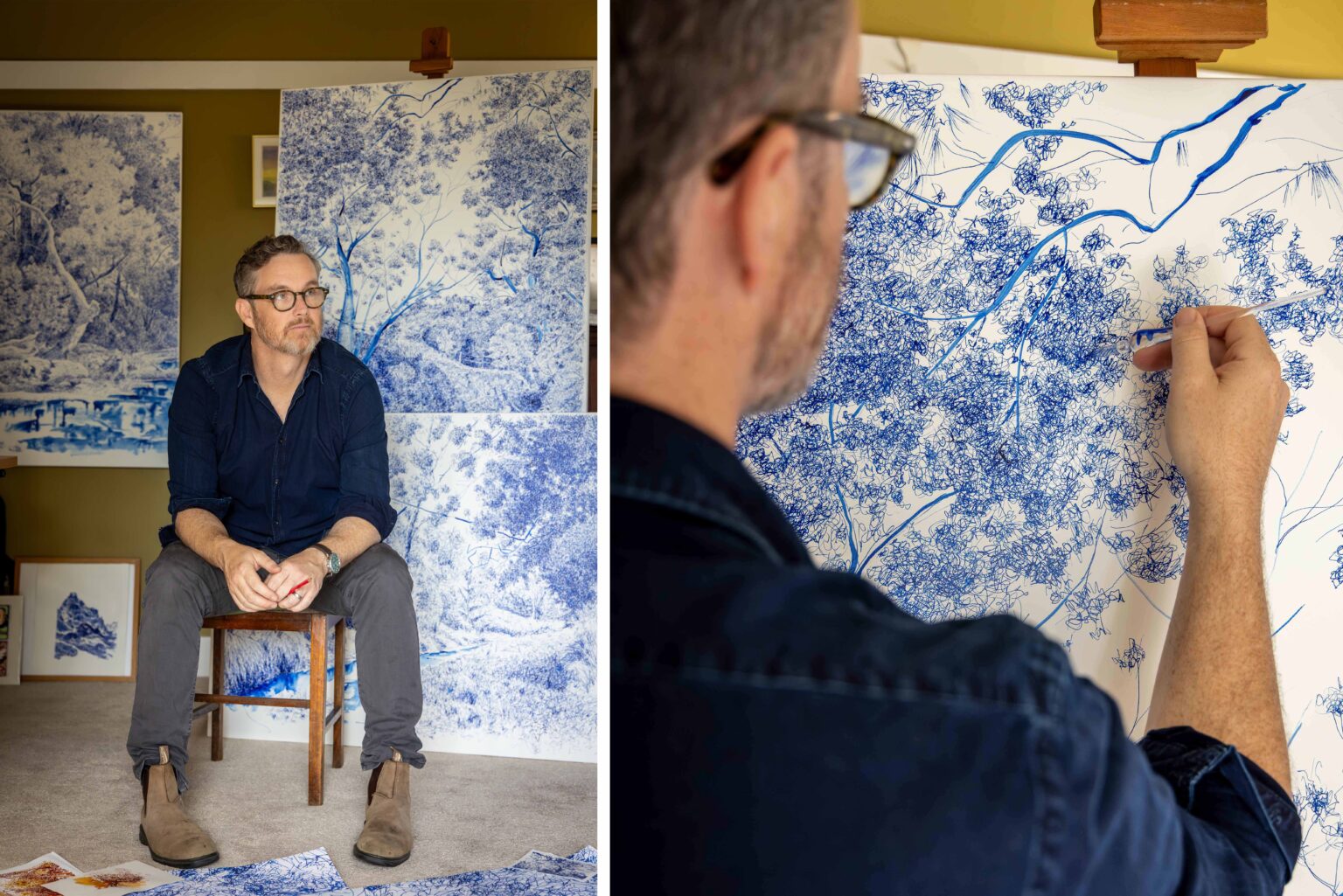
Working with a single colour—a luminous, mineral blue – Truslove’s landscape are drawn in near-continuous fields of marks, looping, searching and restless. His line doubles back, thickens and disperses, at times so fine it seems to hover just above the canvas, then gathering weight along the spine of a trunk, or in the articulation of roots gripping the bank. Ink proves uniquely suited to this task. It follows the slip of a hand without resistance, registering each pause and surge of confidence.
The effect is of a landscape in the process of assembling itself: the river country as a shifting tangle of elements and relations, continually being rewritten.
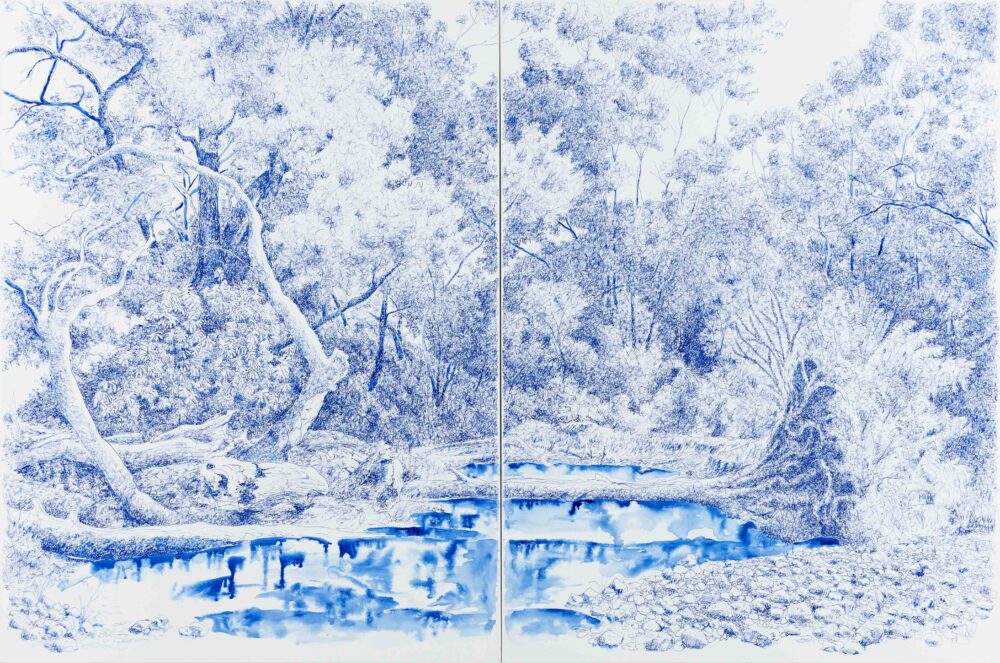
In After the Flood, Truslove observes the Minnamurra River after a period of inundation. Flooded banks have been reshaped, trees displaced and channels re-routed. There is an underlying awareness of force, of what the river is capable of when it exceeds its usual bounds. “I was curious about how the pieces would turn out.” says the artist. “Would they be paintings of destruction and mess or would they show something else. In the end the scenes I focused on show both damage and growth in harmony together.”
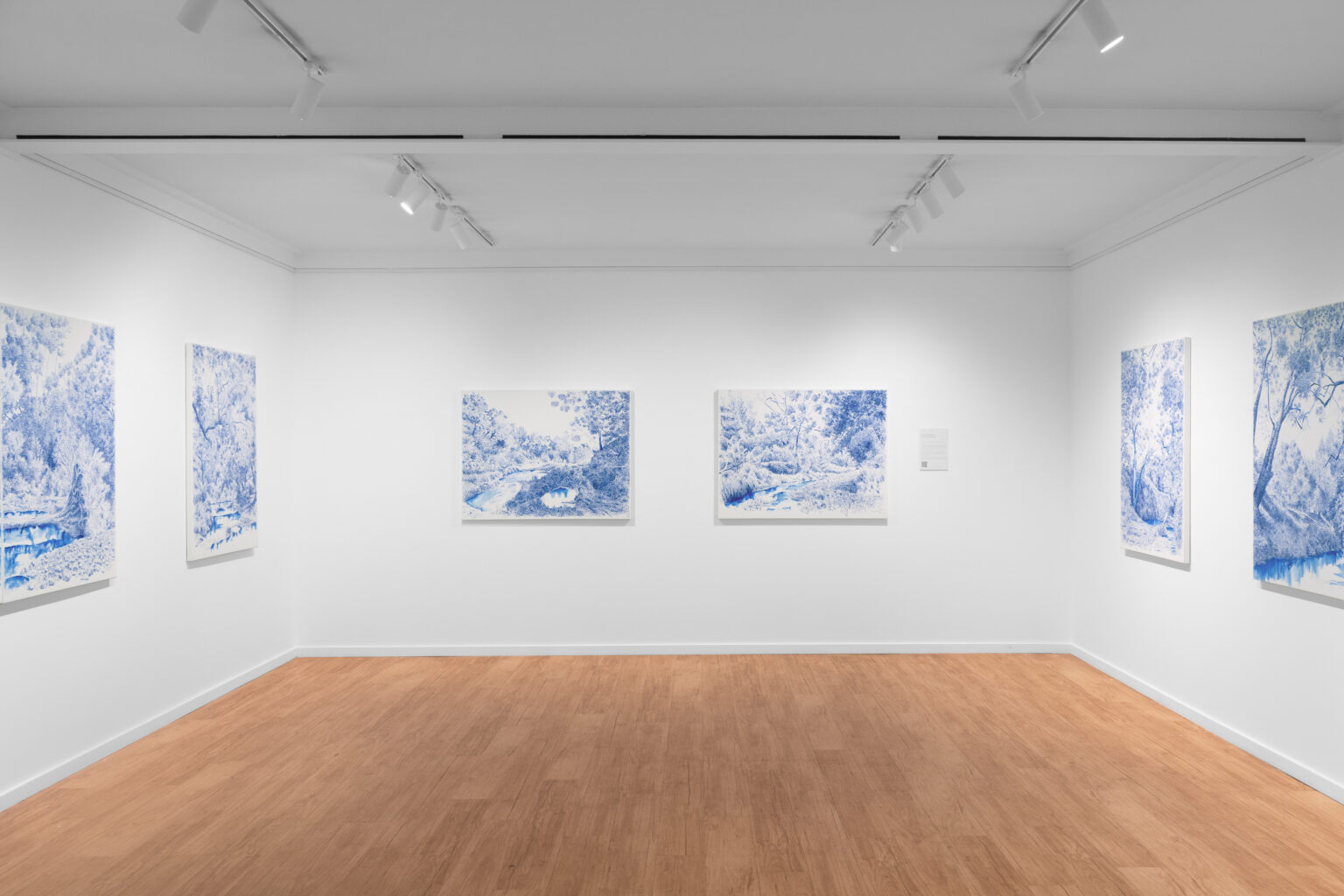
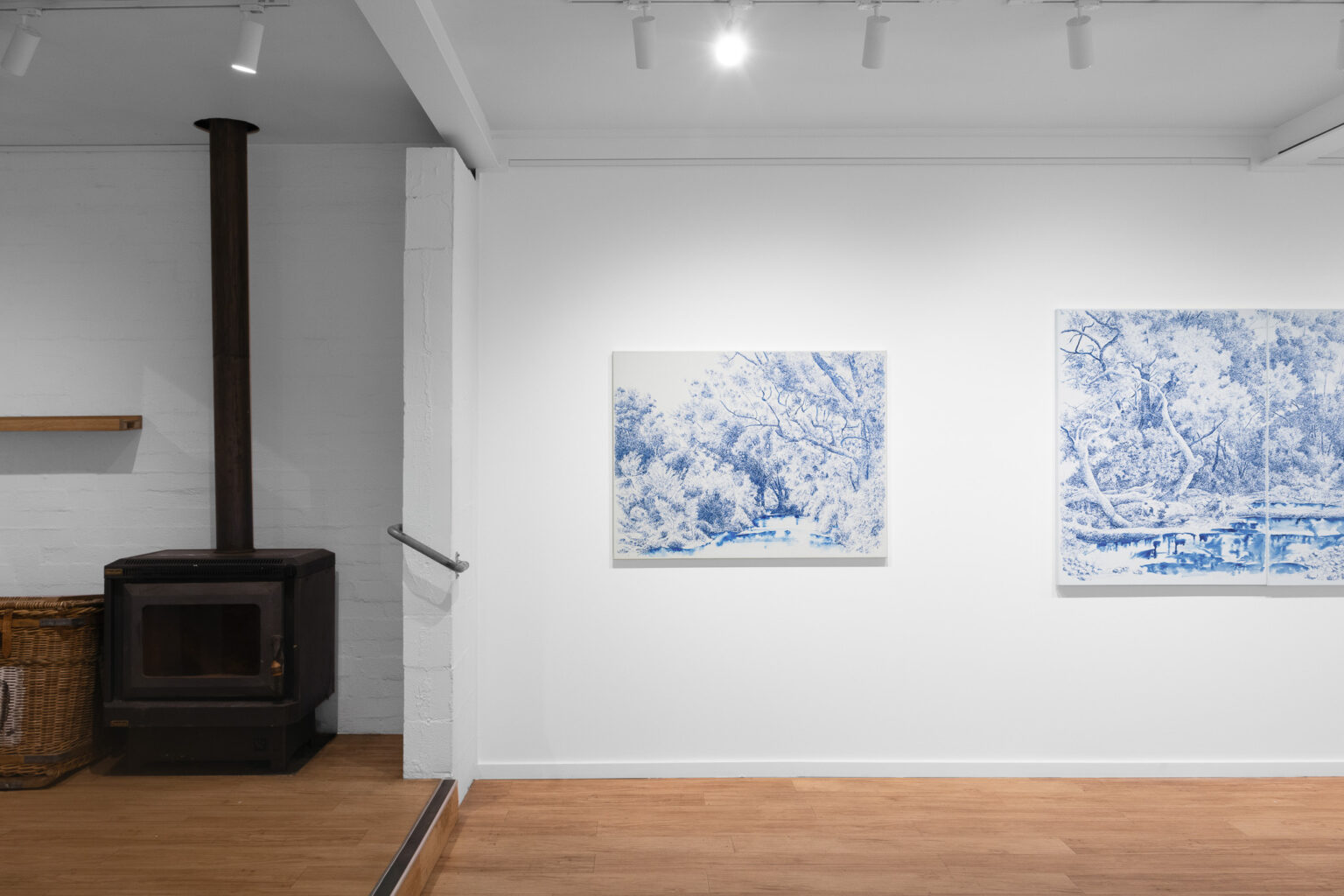
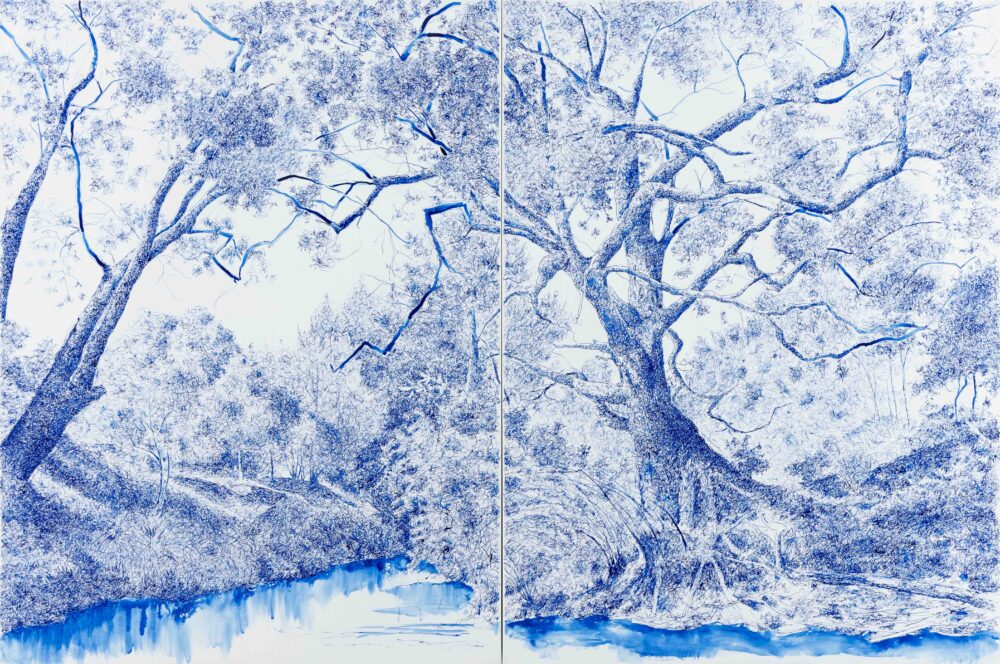
Earlier attentions to lightly marked fox paths—seen in Truslove’s first collection with Michael Reid Southern Highlands (Fox Paths – Minnamurra River, December 2024 to Feb 2025) —finds an echo in these reworked grounds. Here, however, traces of movement are more forcefully inscribed. The introduction of diptychs extends this thinking outward: the seam between panels becomes another line within the work, a hinge across which the landscape unfolds.
“The diptychs have allowed me to explore larger, more dramatic representations of this landscape.” says the artist. “I’ve been slowly escalating the size of these pieces in recent years to try and replicate the intensity, scale and immersive nature of the scenes. It’s allowed me to play around with composition in a different way, looking at scenes that ‘work’ individually and combined.”
What Drew Truslove ultimately proposes is a different way of seeing landscape. In choosing ink as the final medium, he makes a decisive claim: that a line and a single colour – drawn with clarity, patience, and an acute responsiveness to the world – can hold the vastness, force, and subtlety of a landscape.
Named Runner-Up in the 2024 National Emerging Art Prize, and recipient of the Award of Excellence in the Morgans Financial Prize for an Emerging Painter for ‘Flat Rock, River Crossing, 7th Angle’, Truslove is an artist of growing stature. After the Flood is his third solo collection with Michael Reid – with his prior two collections selling out in their entirety.
What led you down the artist path?
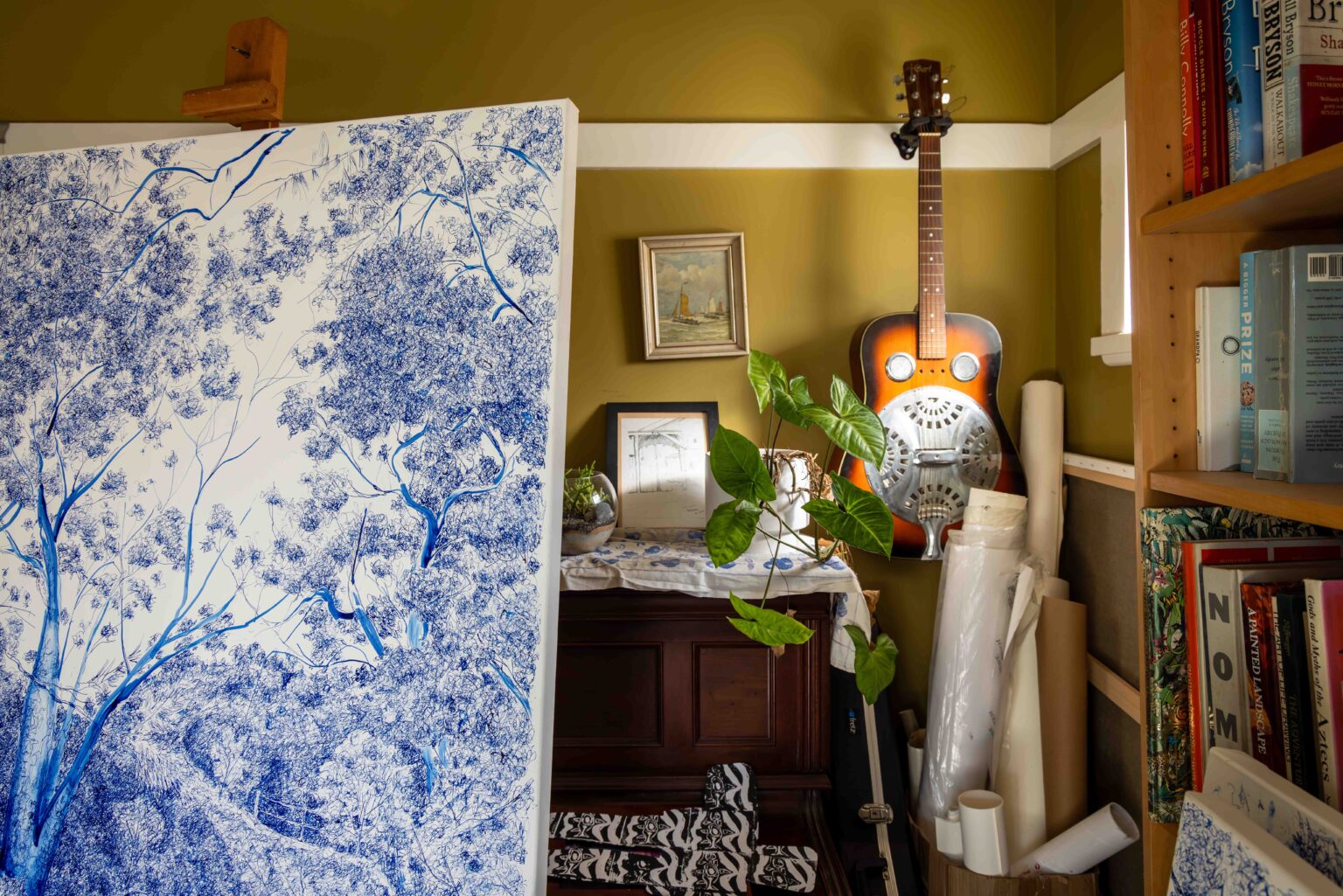
I’ve always drawn and painted ever since I could pick up a crayon. It’s never really got out of my system. When I was a kid, I used to get up and draw at night if I couldn’t sleep. More recently I’ve developed a style that’s a lot of fun to paint, so that certainly helped me go down this path. I like the physicality and the tangibility of painting, and the fact that there really are no rules. I love the freedom with painting – anyone can do it.
What compelled you to return to the Minnamurra River?
I tend to get obsessed with places, and that area around Minnamurra River and Jamberoo is a bit of a landscape muse for me. I love the cosiness and the immersive nature of the canopies and odd-angled trees along the river.
In particular, I wanted to look at the river following a sequence of floods that came through recently. They had arrived one after the other, increasing in intensity given the water didn’t have time to subside or sink into the soil. The effects were brutal. The flood didn’t care if it was picking up rocks, large trees, fences, parts of bridges, cars, anything. They were all picked up and thrown around. Afterwards there was an eerie sense of stillness. Quiet, gurgling rivers, glassy mirrors in the water, yet above this were bits of landscape, torn off and twisted and shifted around with the force of the water.
Then in the middle of that all that destruction, new life was bursting forth.