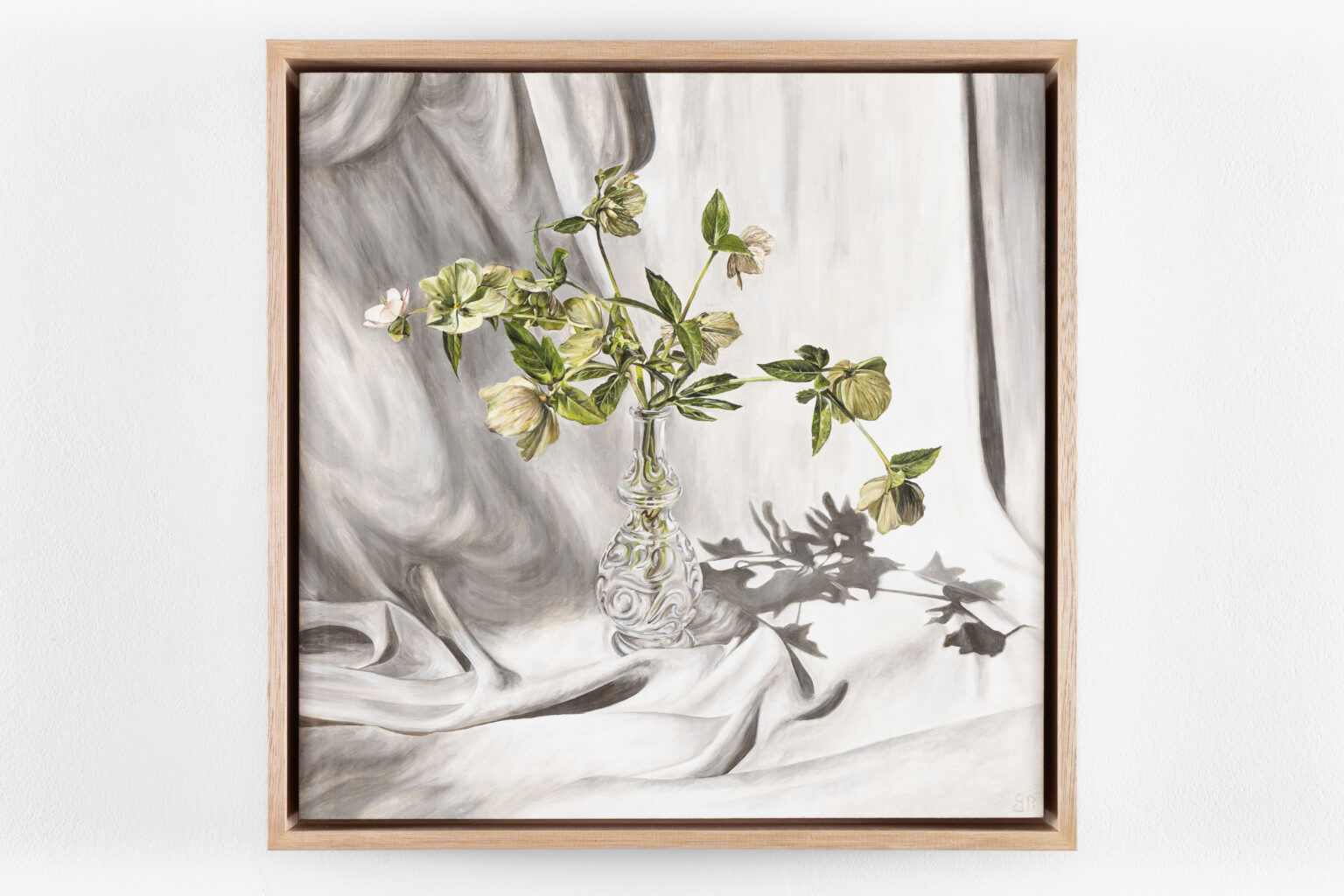
Still Here
- Georgia Pricone
- 14 Oct—8 Nov 2026
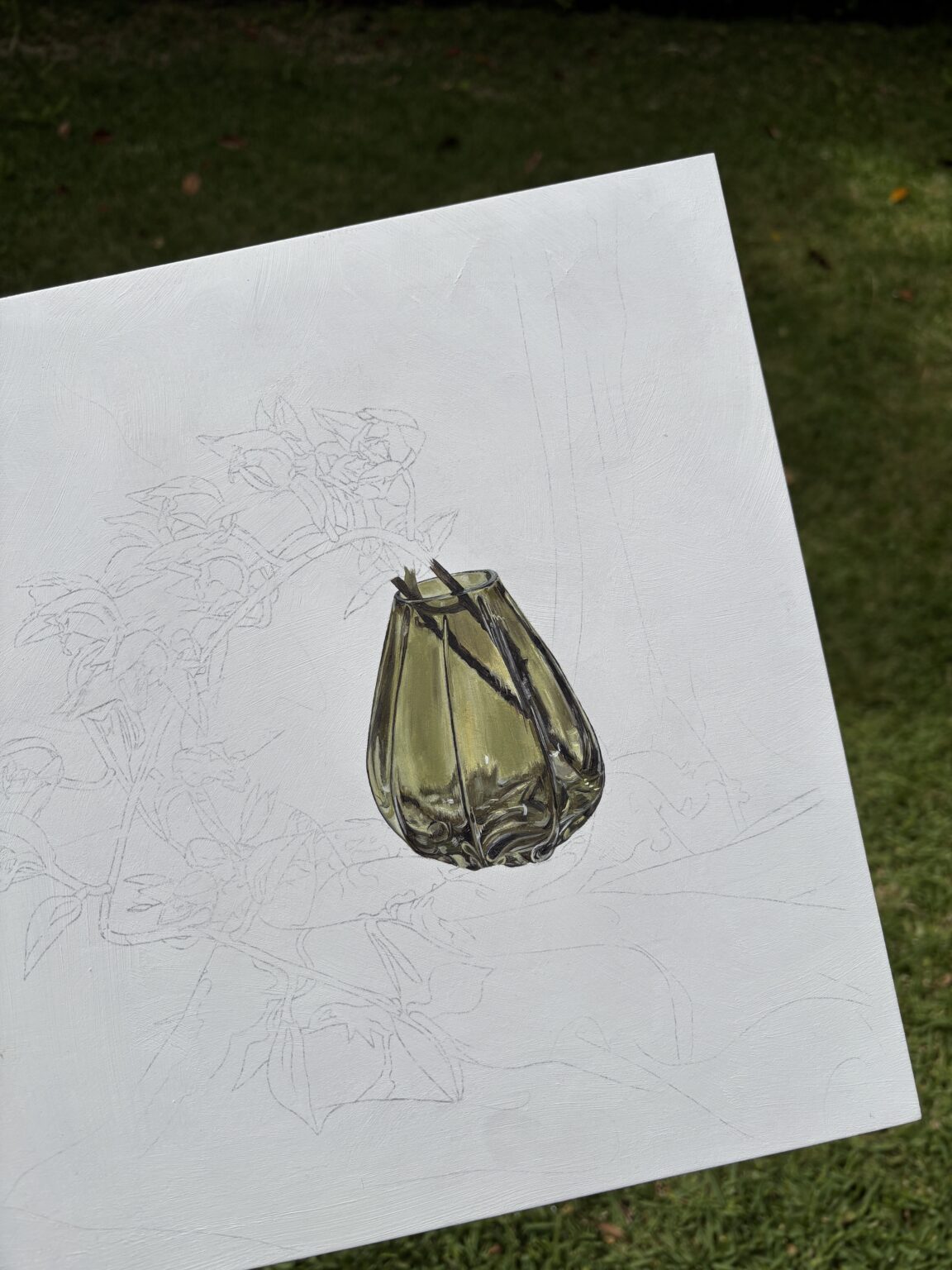
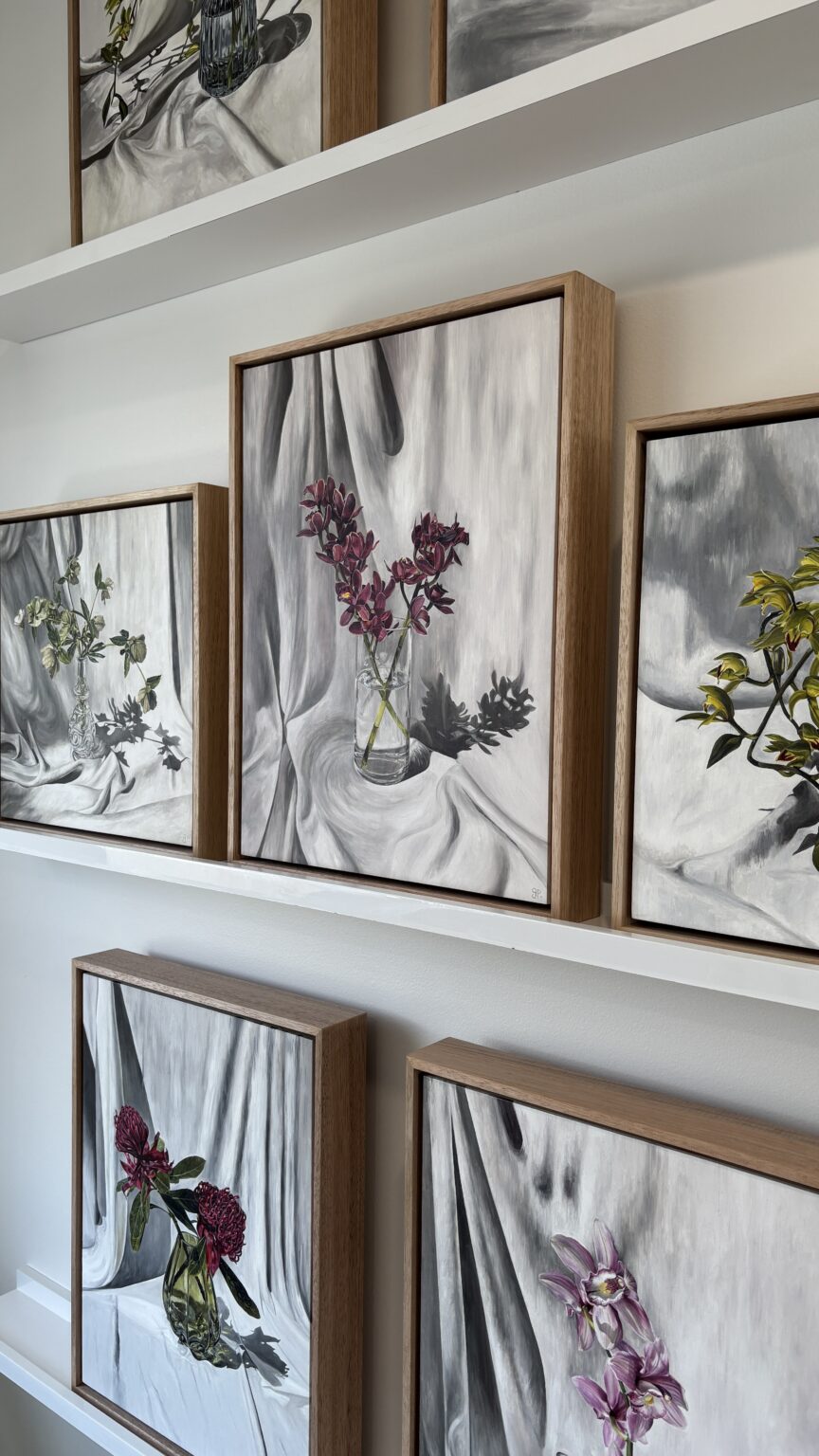
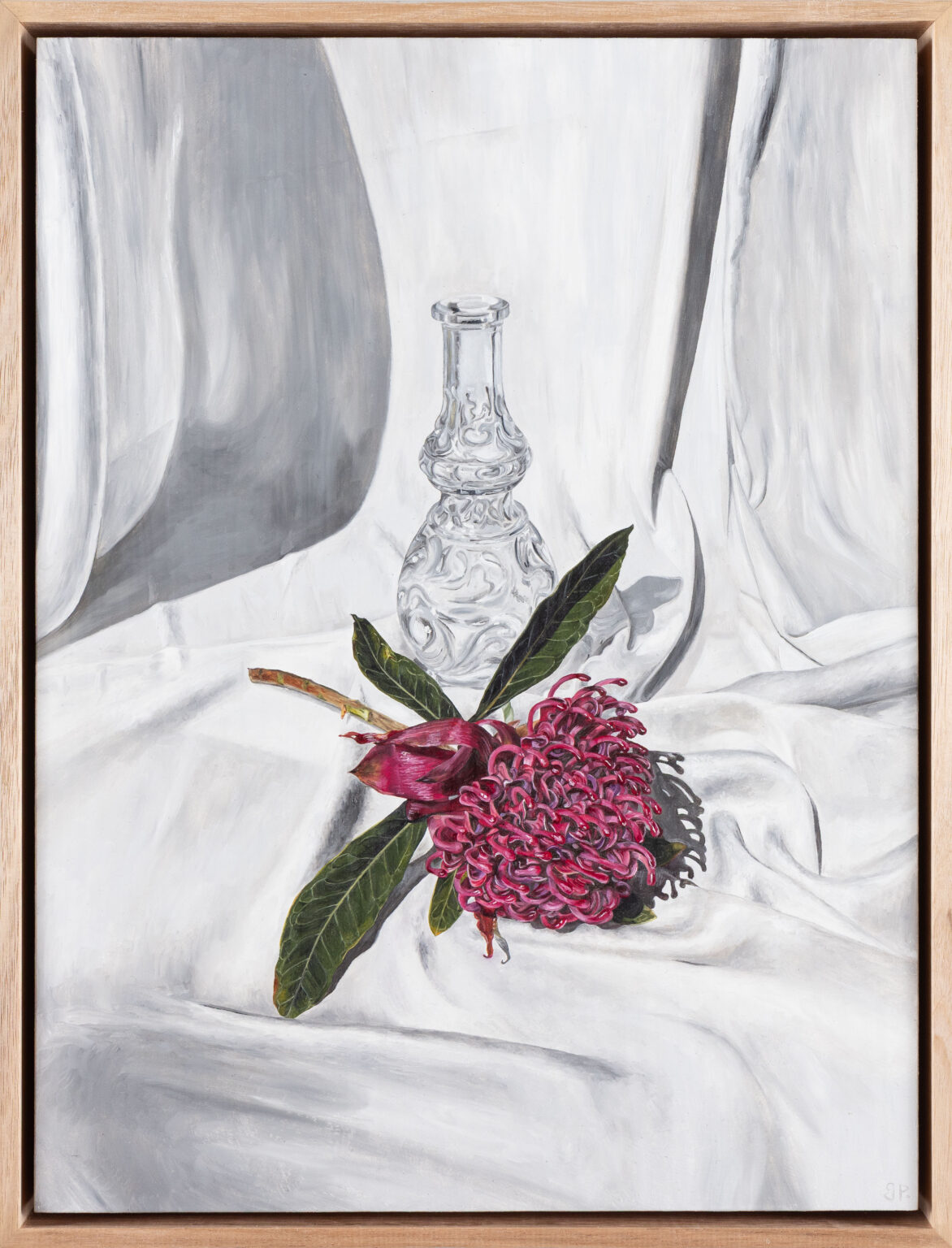
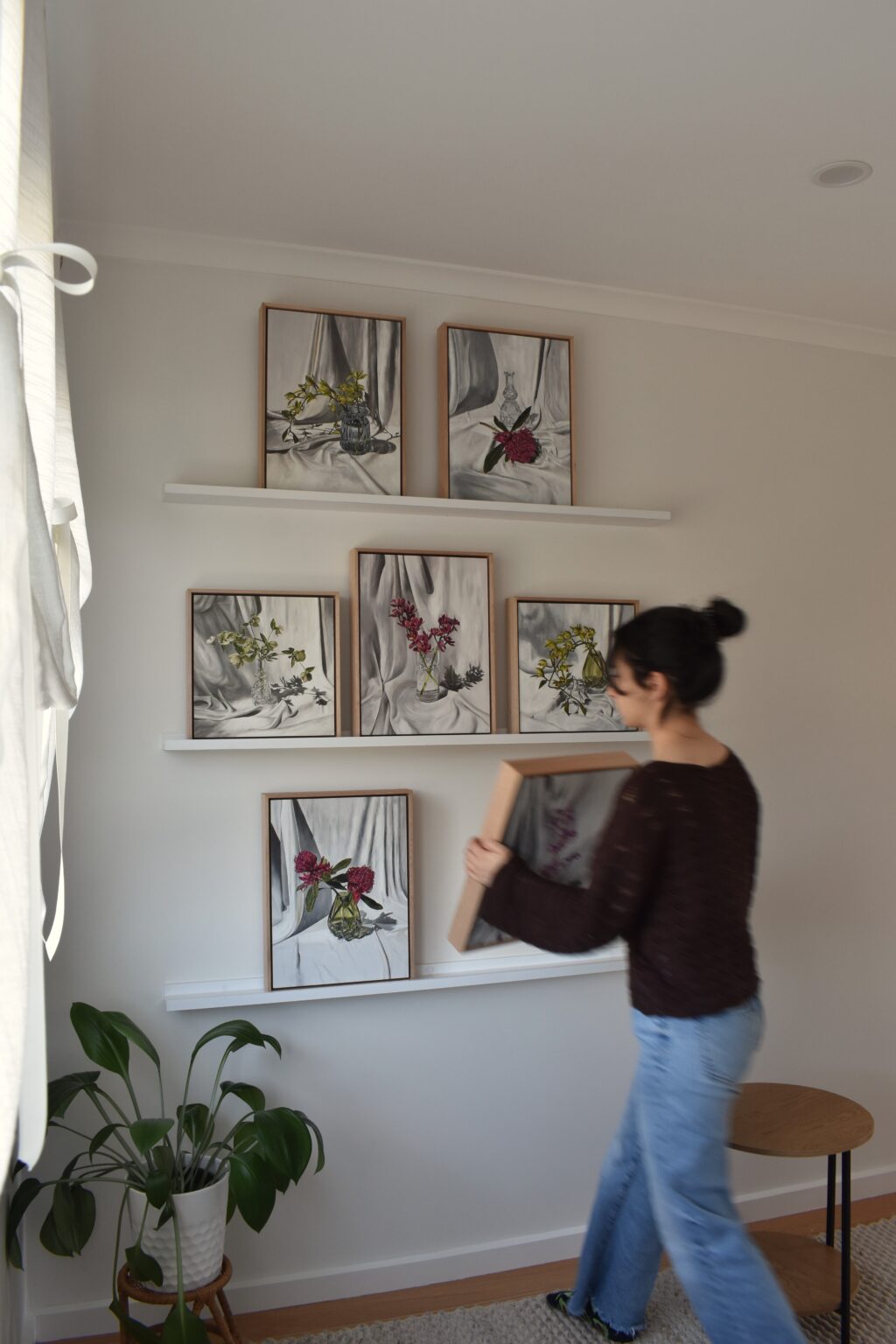
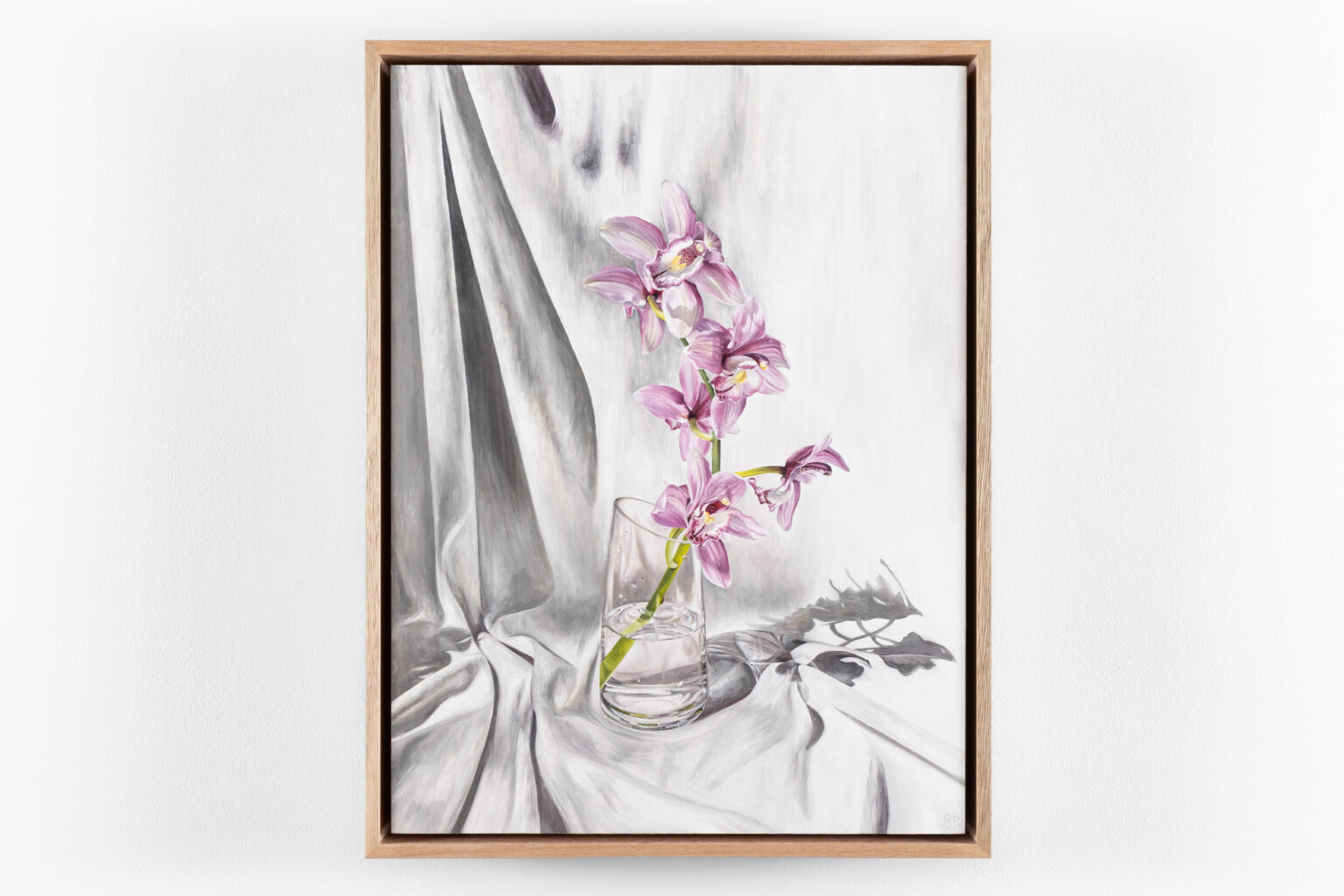
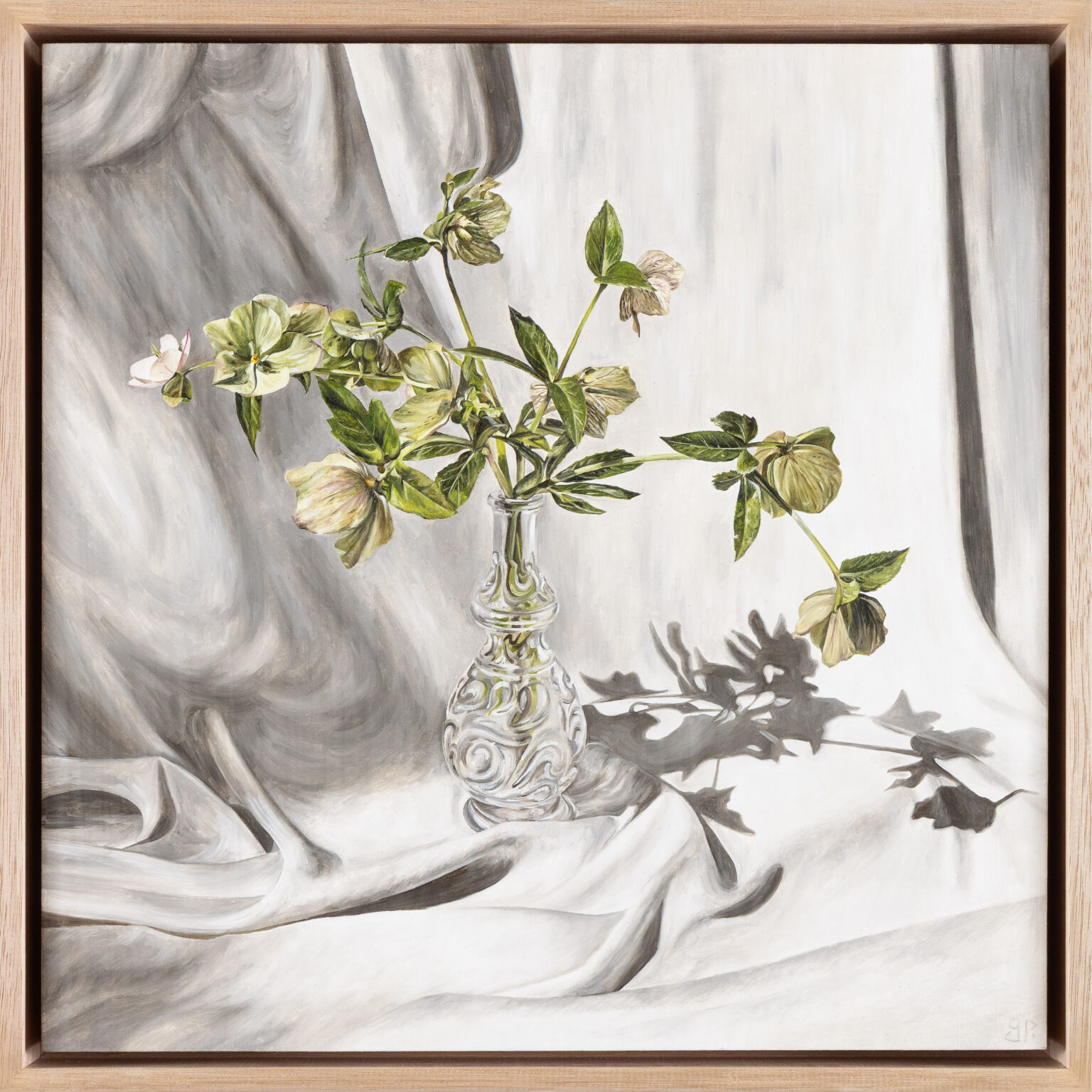
In Still Here, Georgia Pricone returns to the still-life genre with the technical assurance and close observation that characterised her 2023 debut, Botanica Vita. The seven paintings are the result of sustained periods of looking in her Melbourne studio, where Pricone works with an almost scholarly concentration on the particularities of her subjects.
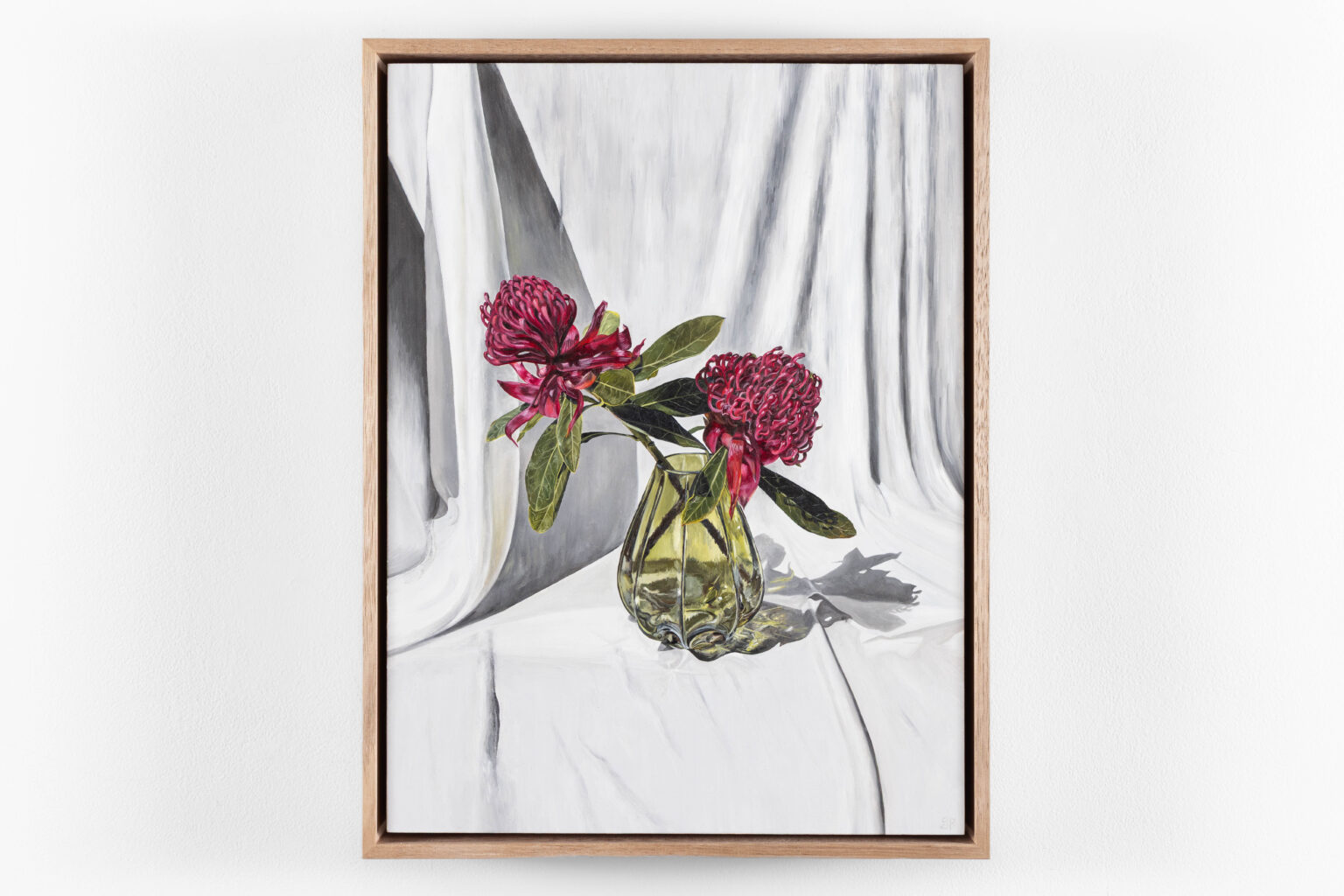
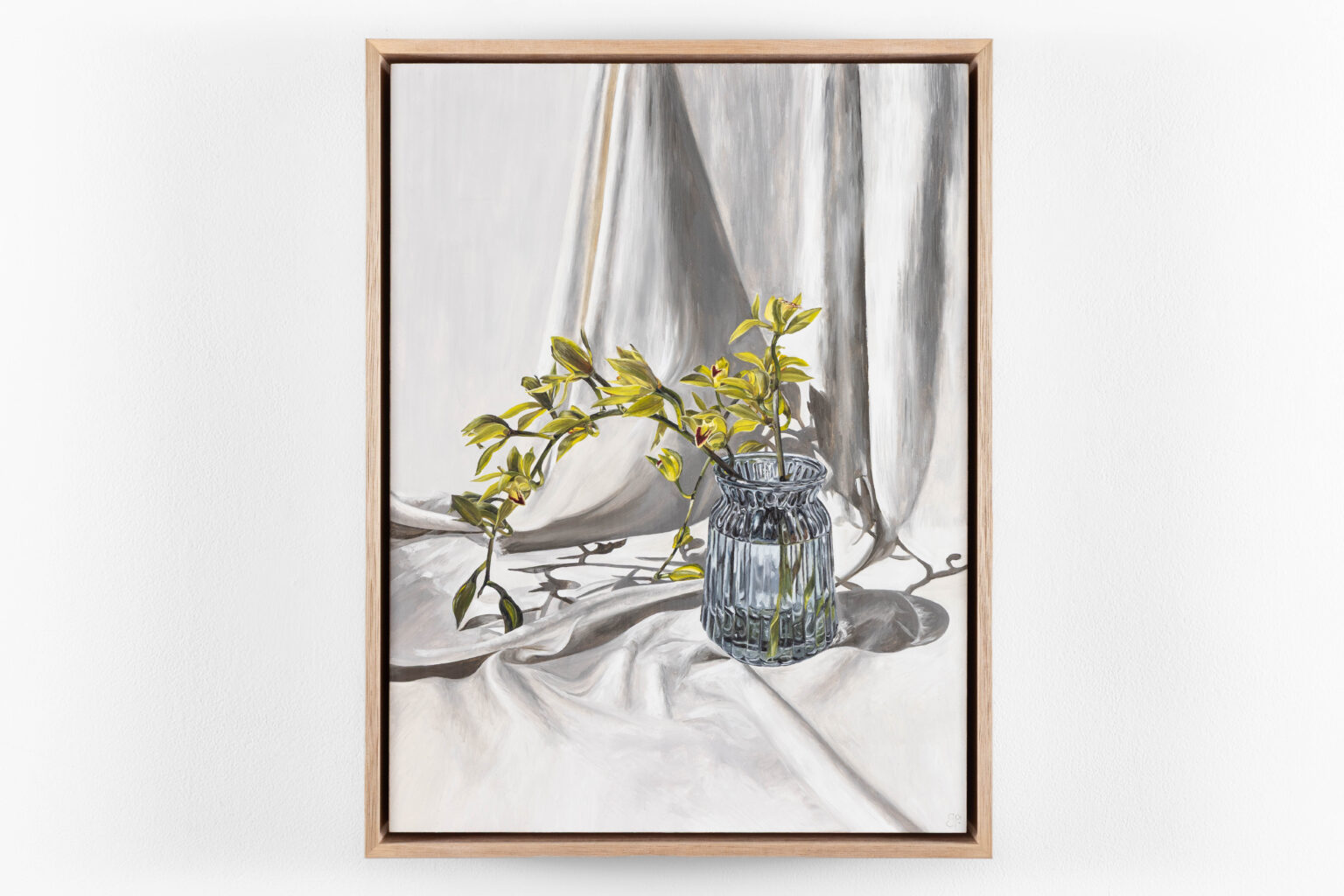
Their apparent simplicity is hard-won. Flowers and glass vessels are arranged, reconsidered and subtly repositioned; the fall of light is adjusted until each element assumes its precise place. Very little intervenes between the object and the eye. Against expanses of white, the density of a petal, the transparency of glass, the weight of fabric and the peculiar translucency of a leaf become events in themselves.
Margaret Preston provides an important precedent for this way of looking. Writing of Australian wildflowers, she observed that they were “quite on their own”, their colour possessing a softness and brilliance particular to the Australian atmosphere. She also described still life as a “laboratory table on which aesthetic problems can be isolated”: a place where form, colour and composition might be examined with unusual intensity.
Pricone’s flowers invite precisely this kind of scrutiny. Her waratahs and orchids retain the asymmetry and irregularity of the living plant: stems establish unexpected diagonals, leaves project beyond the measured confines of their vessels, and flowers resist the symmetry imposed upon them. Against this, the glassware brings a different order. Some vessels have the clean, streamlined geometry associated with Art Deco; others are rounded and baluster-shaped, their scrolling surfaces more ornate and almost baroque. In each painting, the vessel establishes a formal discipline against which the flowers can retain their unruliness.
The white drapery complicates this arrangement further. Soft in substance but emphatic in form, it gathers into folds that are almost architectural, at times suggesting marble or plaster. It brings to mind the sculptural language of classical antiquity, and in particular the strange authority of the fragment: the marble figure whose missing limb or torso has separated it from its original whole, yet whose incompleteness has become inseparable from its beauty.
Something of this condition is present in Pricone’s flowers. Cut from their living source and held upright by glass and water, they are fully present and already passing from it. Their shadows sharpen the paradox. Cast across the drapery, they become temporary counterparts to the flowers themselves, visible only for as long as the light permits. The still life, in Pricone’s hands, is a means of holding a fleeting arrangement in suspension: flower and vessel, cloth and shadow, all briefly fixed before the inevitable change.