Sacred in the Ordinary
- Mirra Whale
- 16—26 Jul 2026
“My recent body of work is an exploration of scopophilia—an Ancient Greek term translating to the love of looking, or the aesthetic gratification derived from deep observation. While the word often carries psychological or sensual connotations, I find it perfectly captures the quiet, driving obsession at the heart of still life painting.”
Mirra Whale is a Sydney-based artist who has, over a matter of decades, established herself as one of the most beloved and admired still life painters and portraitists working in Australia.
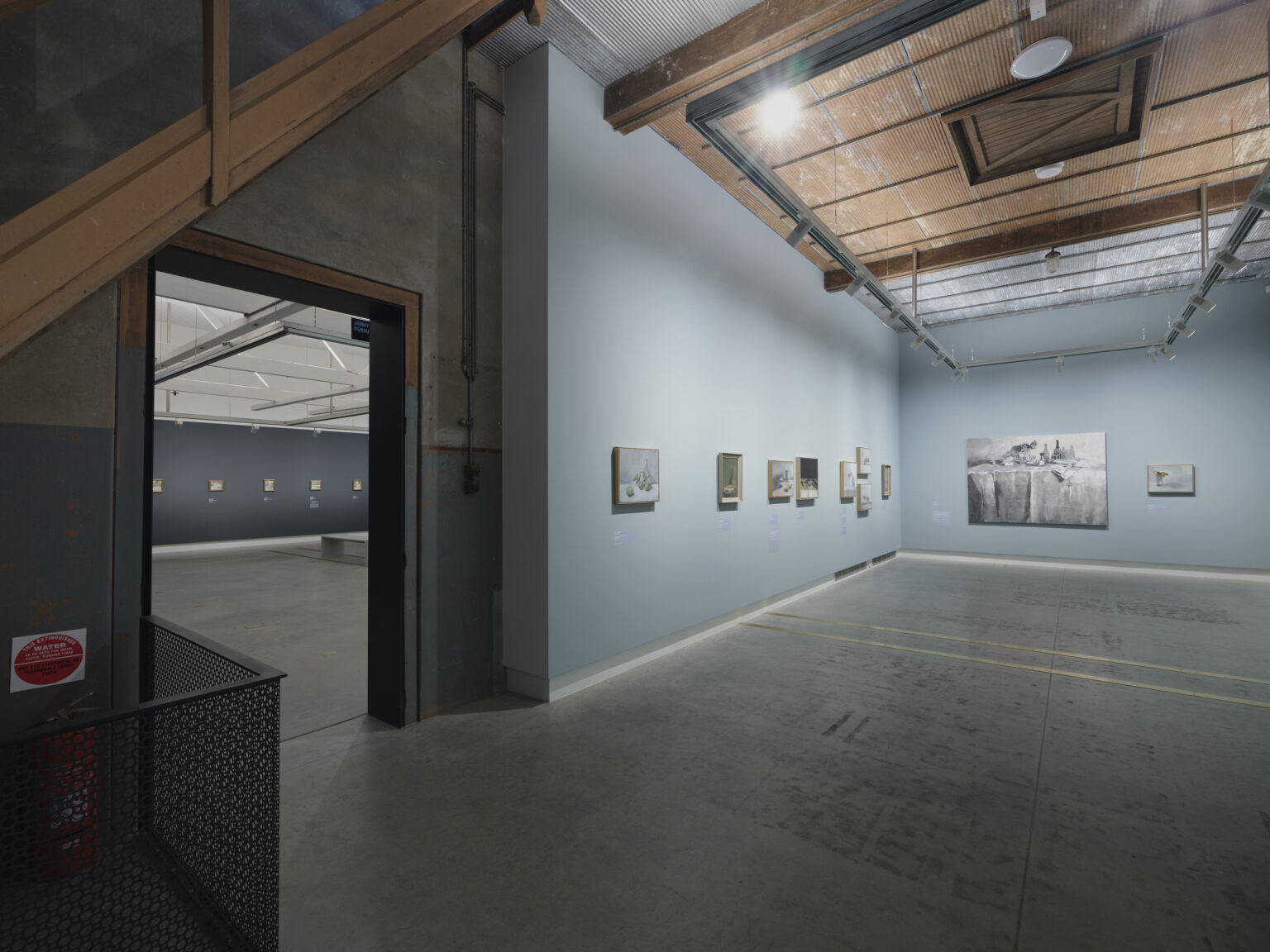
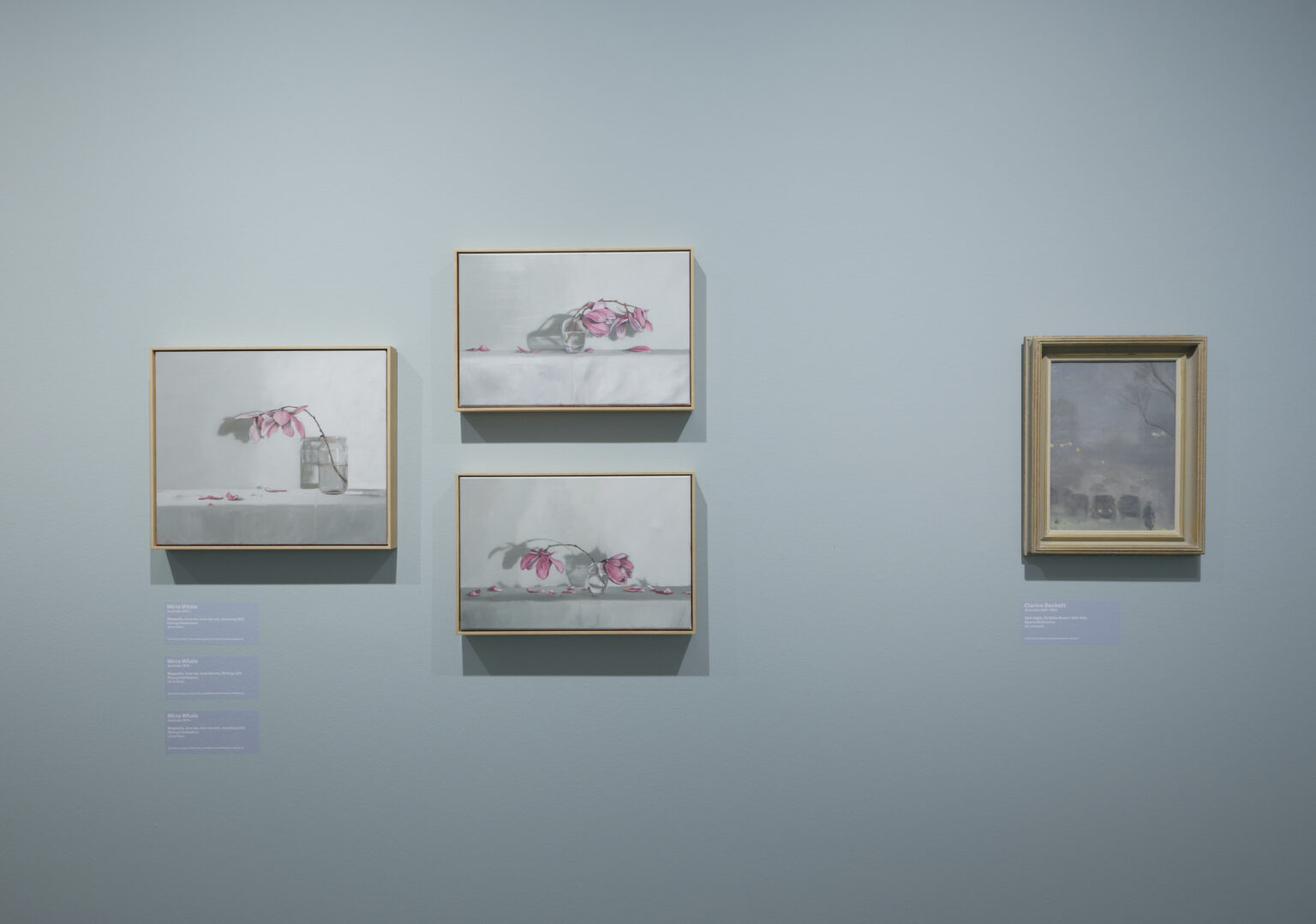
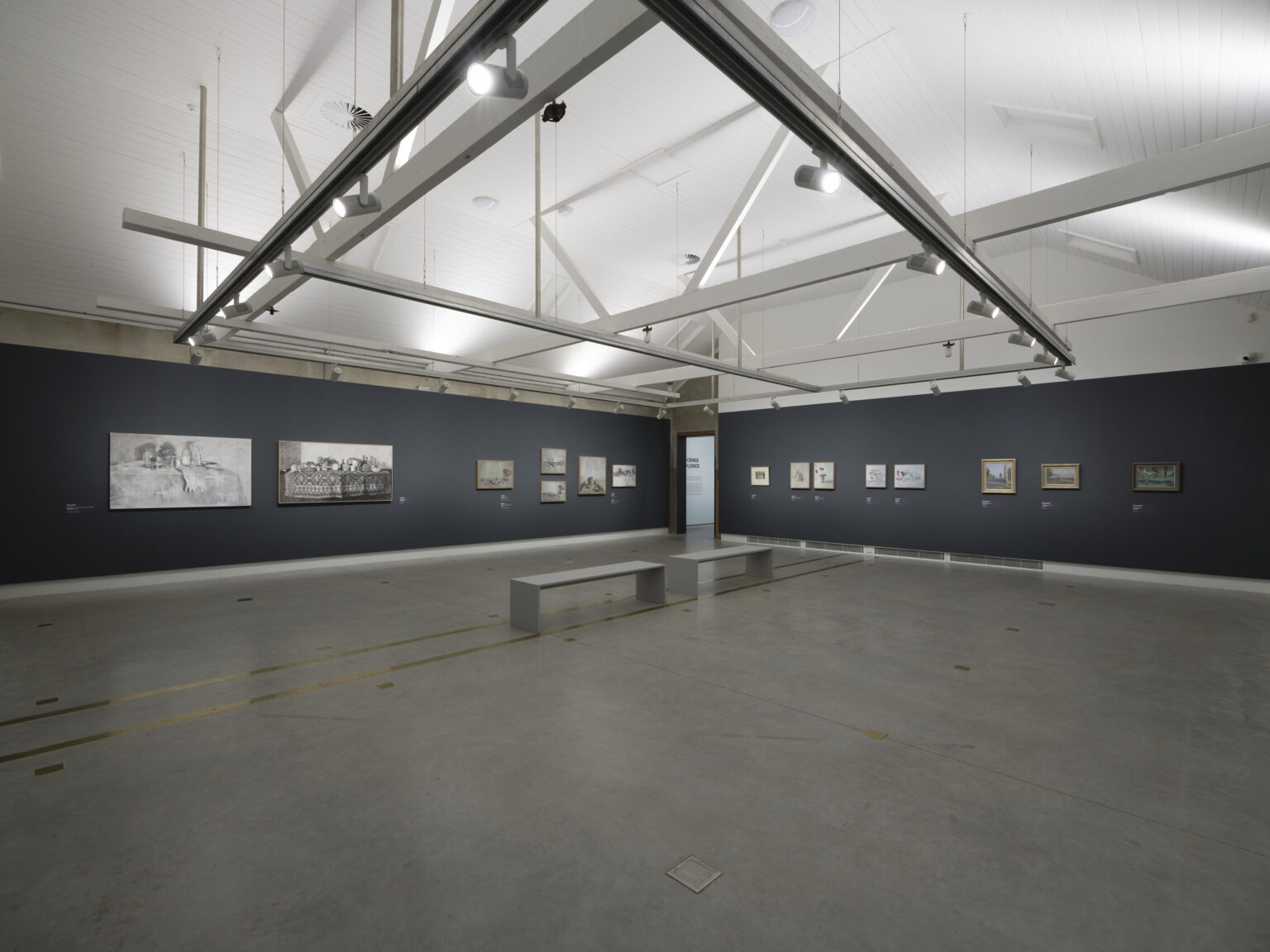
A five-time Archibald finalist, Whale was recently the subject of an expansive survey exhibition at the Ngununggula regional art gallery, Scenes and Silence—a career milestone which, for the first time, saw key examples from the artist’s career positioned in conversation with each other, drawn from private collections across the country.
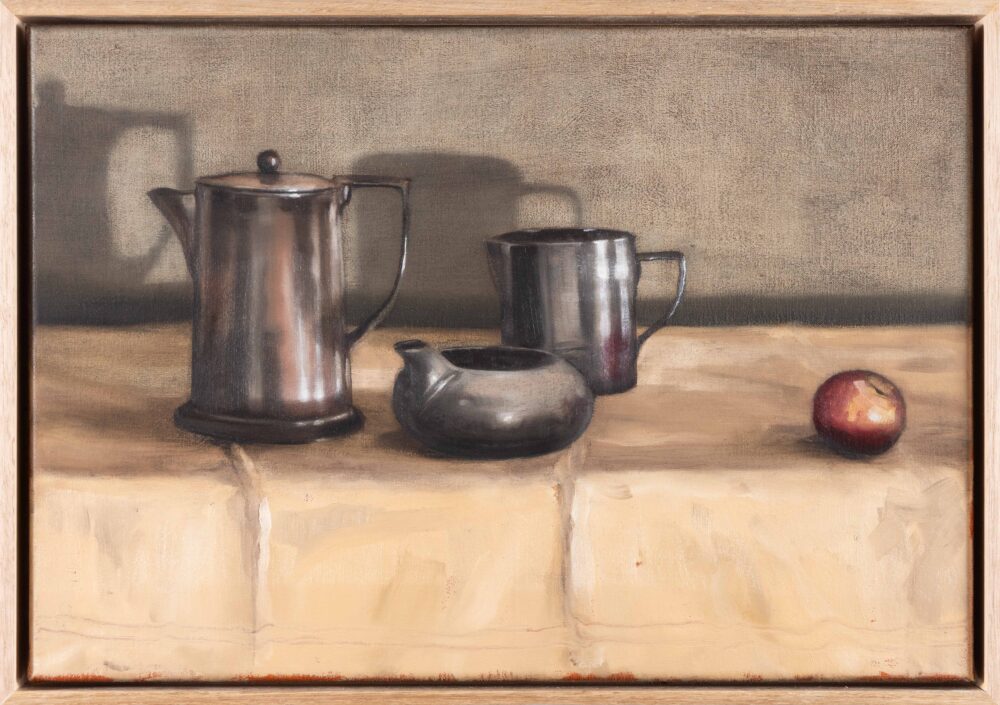
It was at Ngununggula that the widest arc of Whale’s practice—and her studied devotion to simple scenes, populated by utilitarian vessels and clipped botanicals—became clearer than ever. Hers is an artist’s life devoted to the beauty and staying power of those items and arrangements around us; our pursuit of grace in the domestic interior.
“The subjects of these paintings are intentionally intimate, drawn entirely from the immediate sanctuary of my home and studio. There is no manufactured grandeur here; instead, I find beauty in the overlooked and the familiar. Flowers are gathered from kerbside foraging, fruit rests on my kitchen counter, and cherished objects have travelled alongside me for decades, carrying the invisible weight of memory and time.”
Whale, in life as in art, remains deeply humble, and her practice is a private devotion to form and technique.
When Scenes and Silence was presented alongside an important travelling collection by Clarice Beckett from the National Gallery of Australia, the resonance between these painters was immediately felt. Between them, a serious and disciplined search for beauty—enthral to its force, and the sheer joy of a well-done surface.
“To truly look at an object is an act of pure pleasure,” she says. “The deliberate interplay of light and shadow, the geometry of form, and the texture of a surface are not merely subjects to be recorded; they are the very essence of seeing. Through these paintings, I want to reclaim the act of looking as a form of slow, meditative joy.”
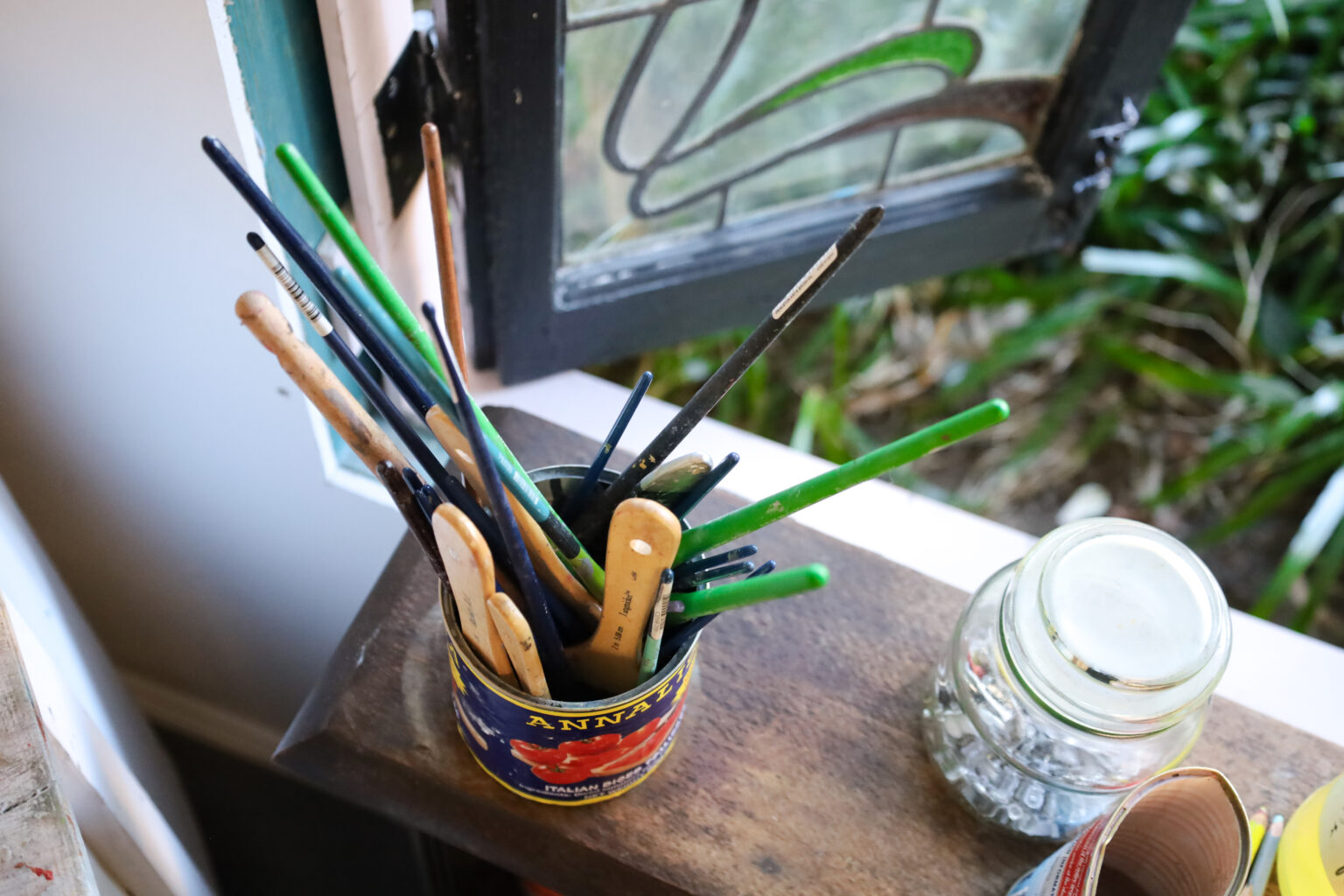
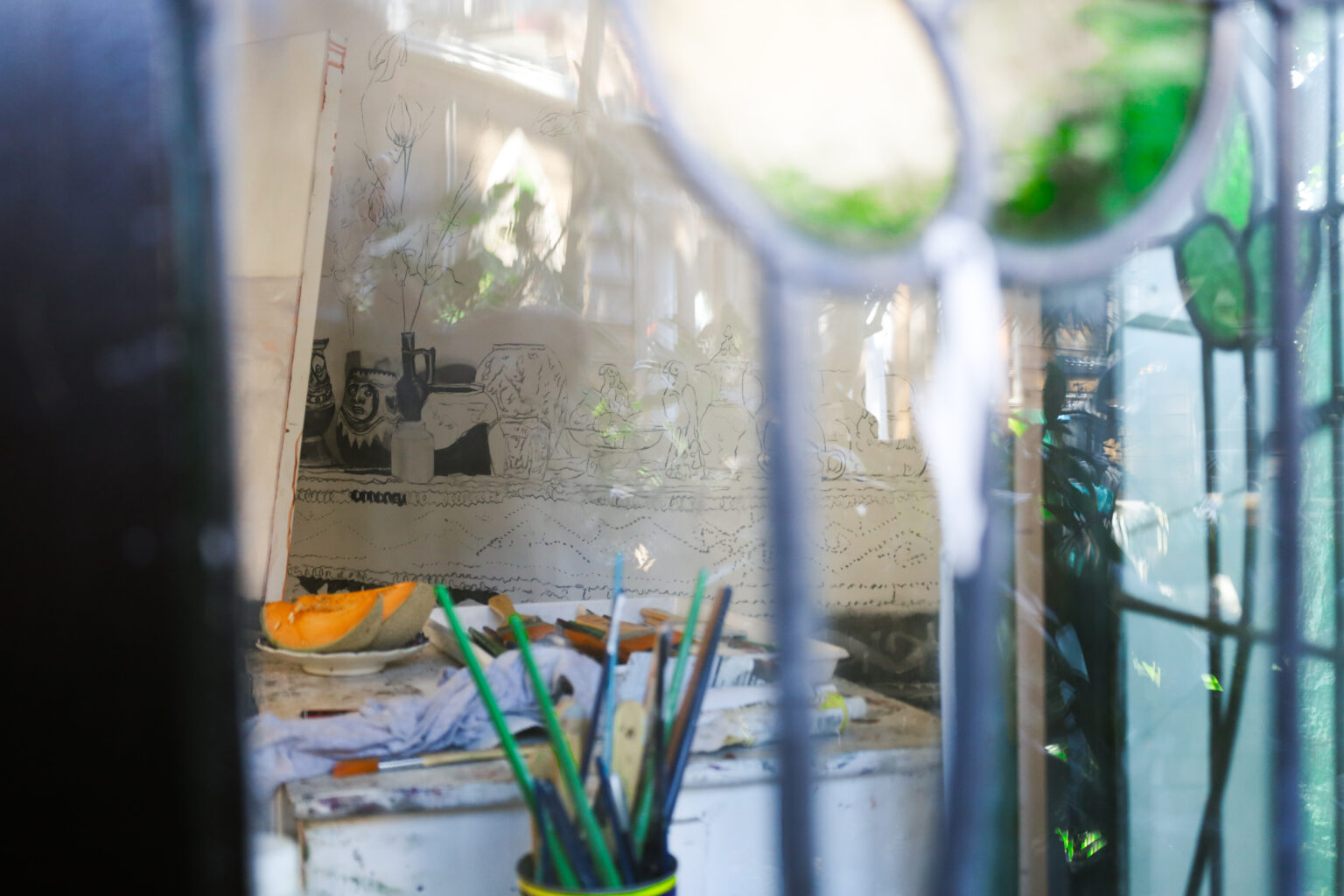
Whale’s studio is a bustling, frenzied space of work and study, tubes and ornamented bowls jostling for space, and a shelf which is, in the Margaret Preston sense, her ‘laboratory’, around which her forms are arranged and tested.
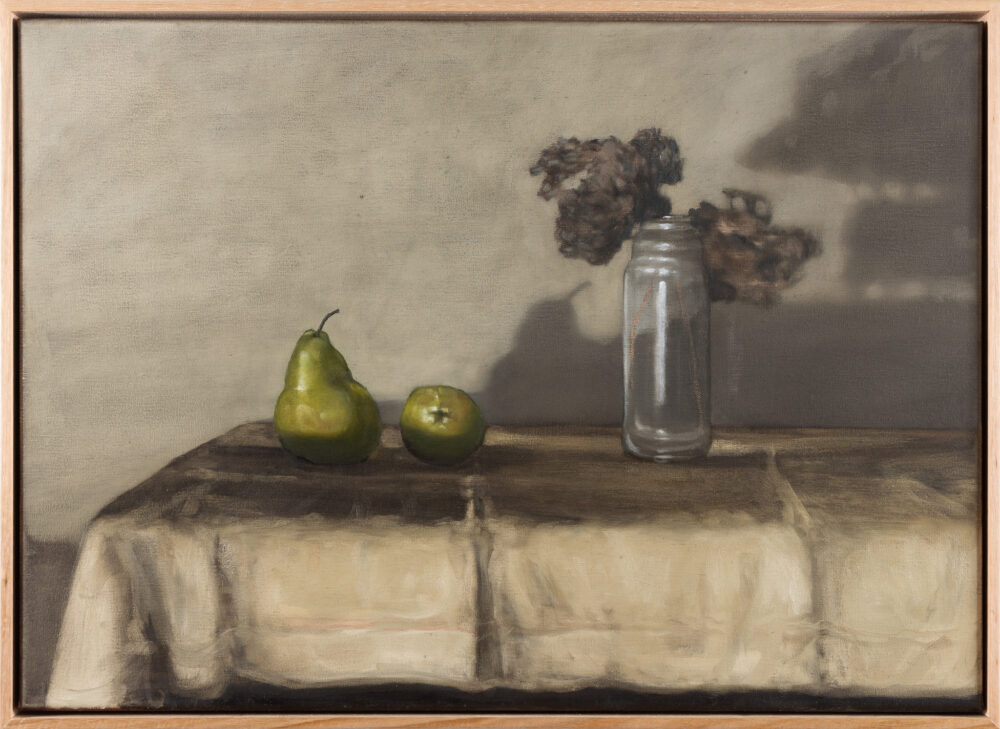
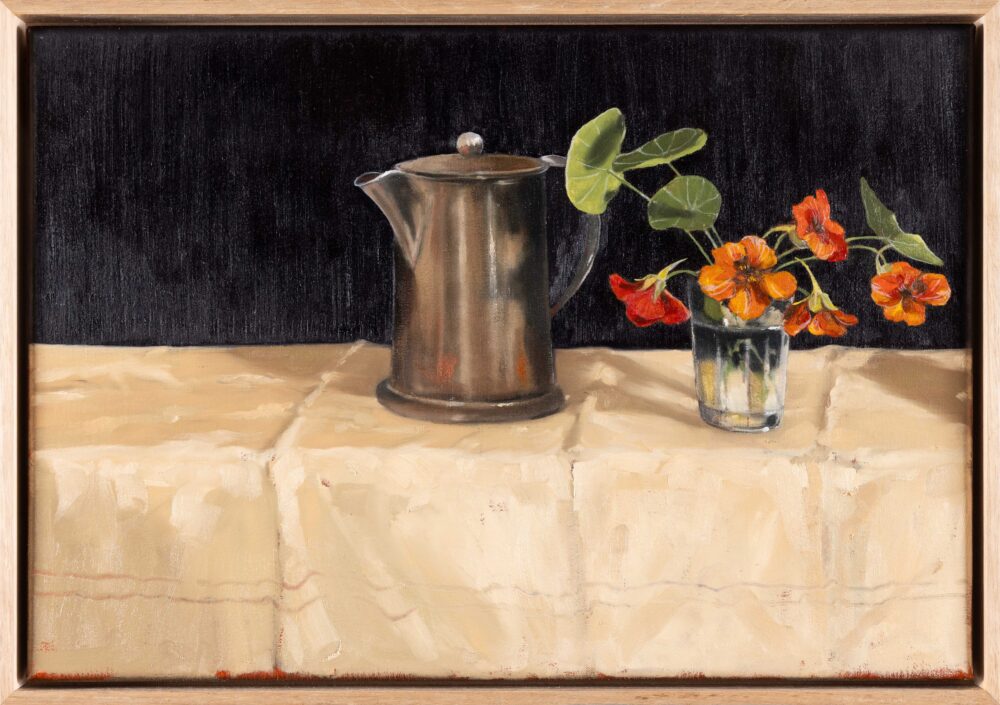
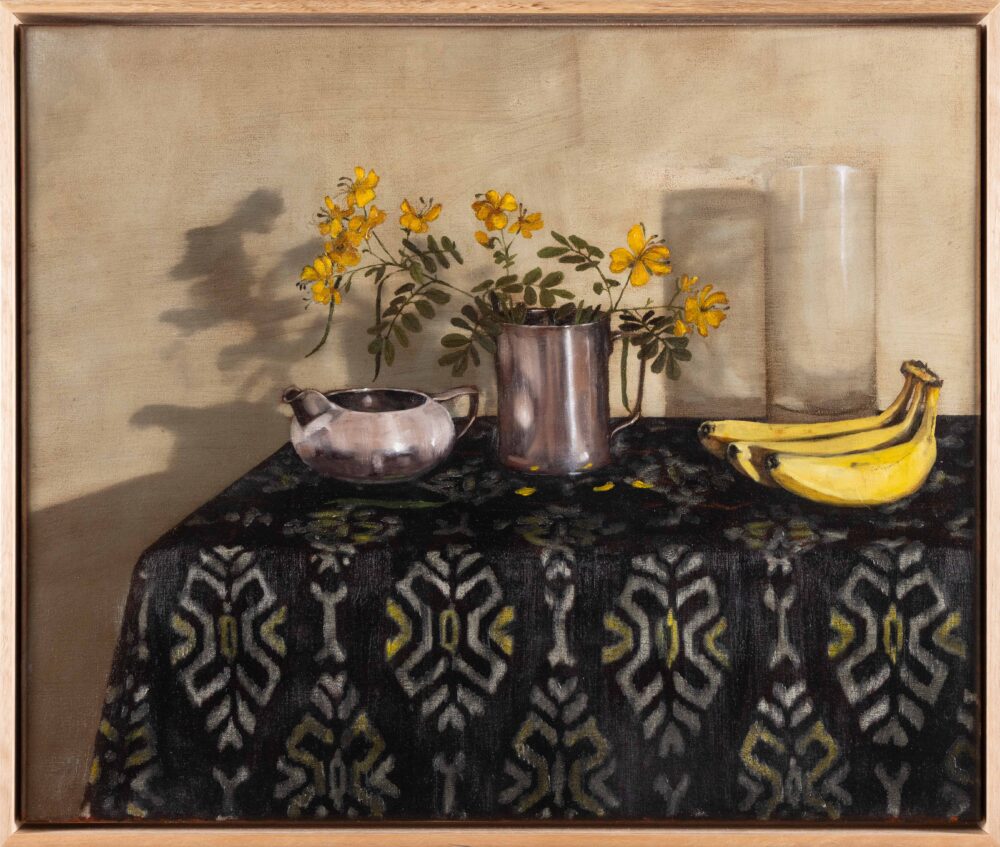
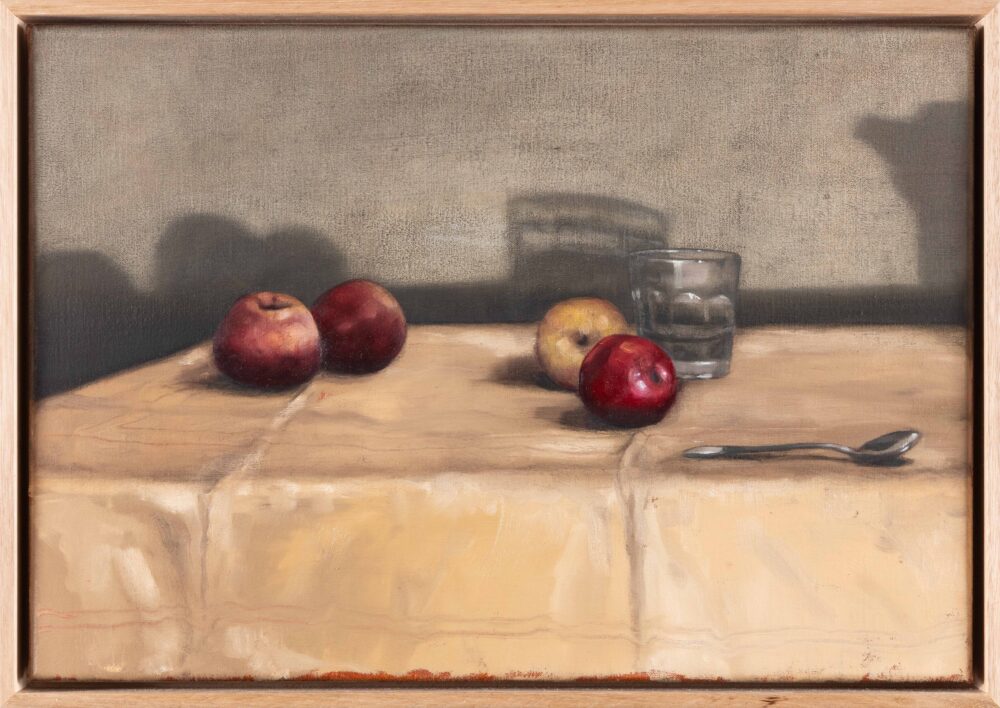
A clear hallmark of a Mirra Whale painting is the tabletop, seen from the slightly elevated or directly side-profile view, atop which tablecloths are left to bunch, crease and drape, ostensibly ‘scoring’ the scene, or setting a kind of soft, geometric grid, almost like the lines of sheet music, and her vessels, the written notes.
It’s this fundamental order and balance that grounds the work, gives it solidity and firmness—and, when actually viewed together, it is as though Mirra is painting on a table that extends for miles; a table that stretches beyond the frame, and has provided the scaffold for her work throughout her career.
Sacred in the Ordinary is, as Mirra writes, “an invitation to slow, to step into my studio, and to share in the profound, instinctual pleasure of simply looking.” It is an invitation we accept in a heartbeat.