


In Conversation: Drew Truslove

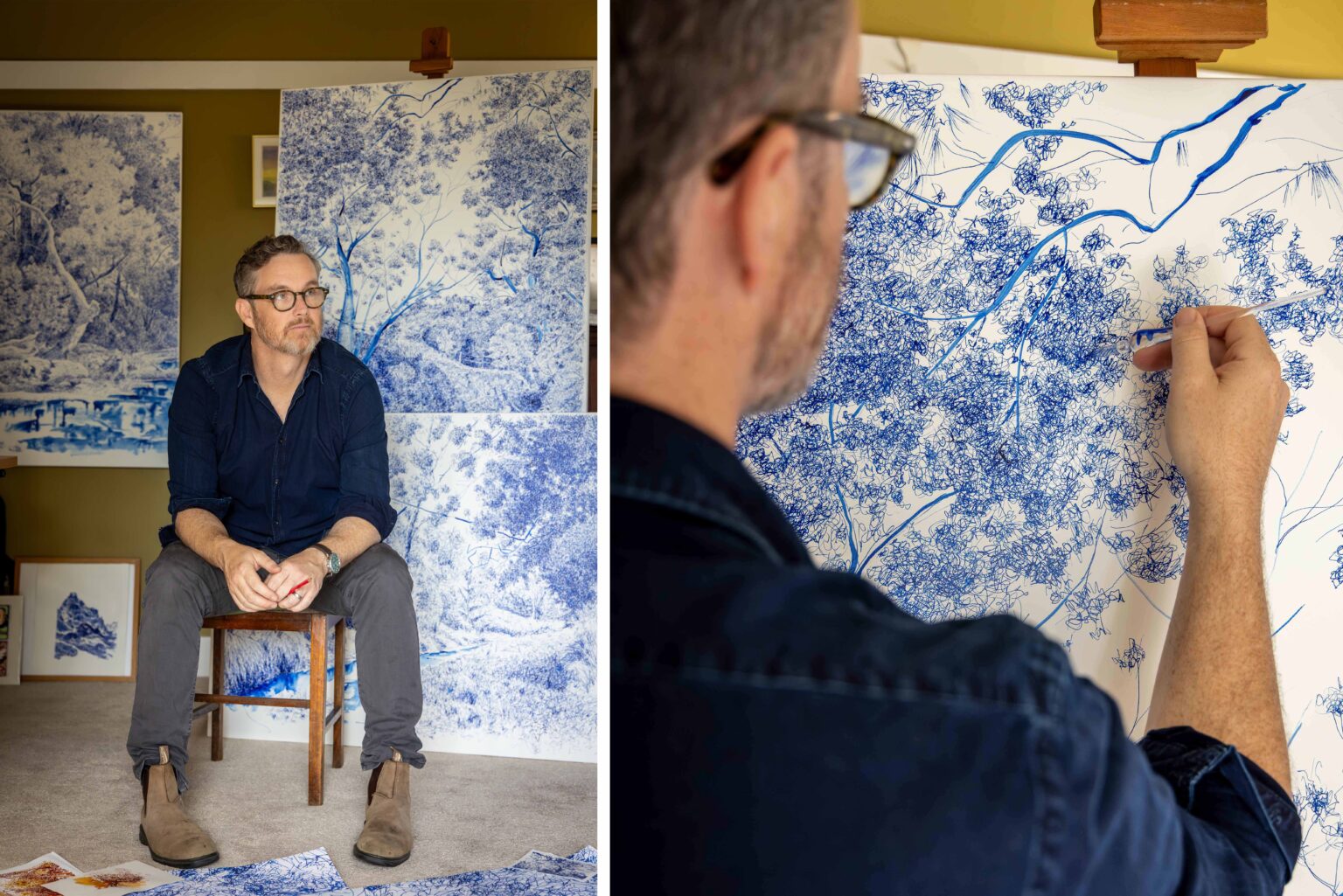
What led you down the artist path?
I’ve always drawn and painted ever since I could pick up a crayon. It’s never really got out of my system. When I was a kid, I used to get up and draw at night if I couldn’t sleep. More recently I’ve developed a style that’s a lot of fun to paint, so that certainly helped me go down this path. I like the physicality and the tangibility of painting, and the fact that there really are no rules. I love the freedom with painting – anyone can do it.
What compelled you to return to the Minnamurra River?
I tend to get obsessed with places, and that area around Minnamurra River and Jamberoo is a bit of a landscape muse for me. I love the cosiness and the immersive nature of the canopies and odd-angled trees along the river.
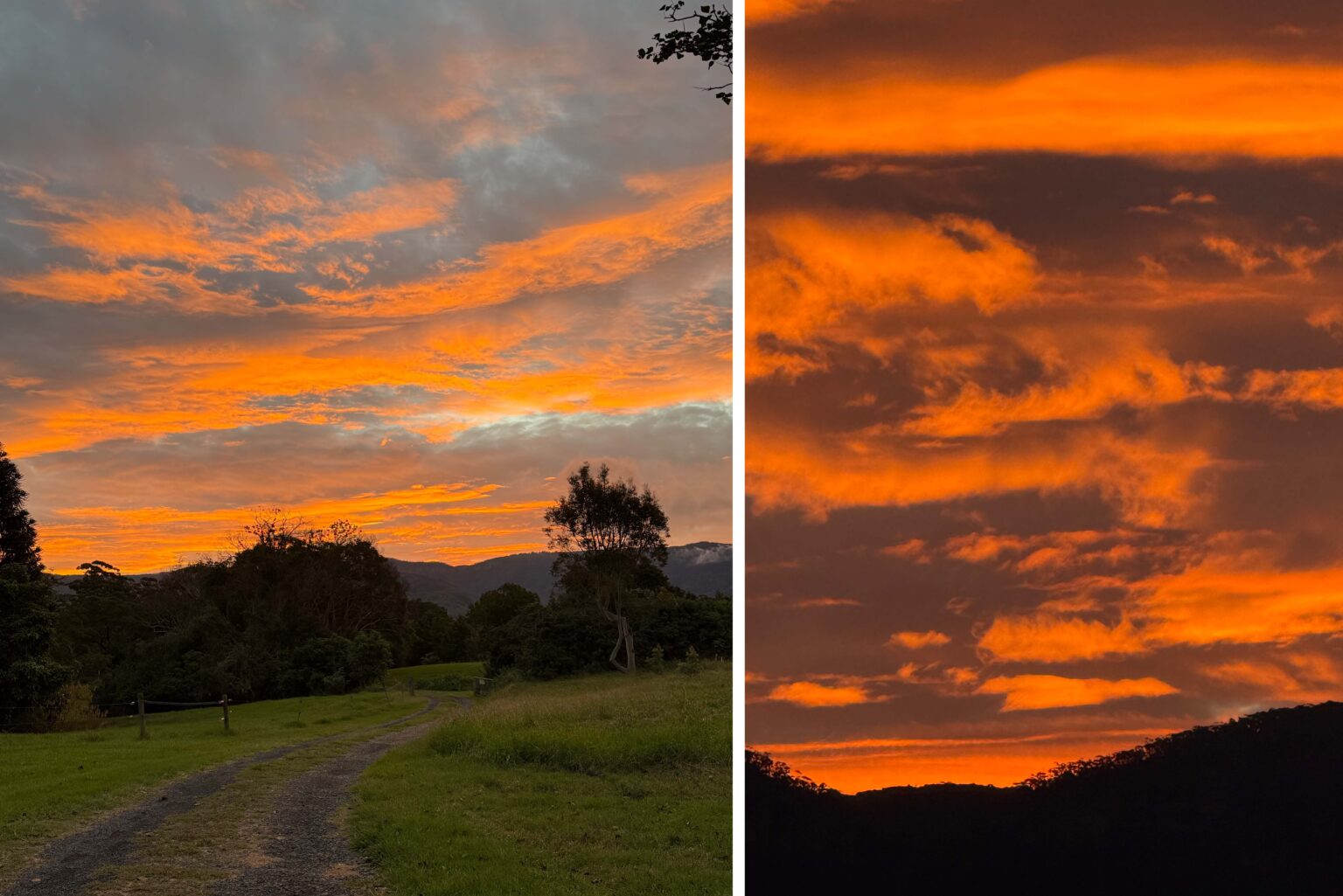
In particular, I wanted to look at the river following a sequence of floods that came through recently. They had arrived one after the other, increasing in intensity given the water didn’t have time to subside or sink into the soil. The effects were brutal. The flood didn’t care if it was picking up rocks, large trees, fences, parts of bridges, cars, anything. They were all picked up and thrown around. Afterwards there was an eerie sense of stillness. Quiet, gurgling rivers, glassy mirrors in the water, yet above this were bits of landscape, torn off and twisted and shifted around with the force of the water.
Then in the middle of that all that destruction, new life was bursting forth.
With your works, do you paint from life, from photos or from memories?
Usually from life or photos. With my smaller landscape pieces its easier to go into the paddock or sit on the riverside, so they’re mostly from life. With the larger pieces, I need to get the shapes right, then lock in the light, so photos help a lot, and it helps capture a moment. I almost never go from memories. When you see a scene you want to paint, and I think you need to pay attention to that instinct. There must be something about the composition and the ‘storytelling’ that you like, and you need to trust that.
Do you construct a scene/ vignette in your studio, or do you prefer incidental scenes that you come across?
I always go with real incidental scenes. My stuff works better when it’s a real scene.
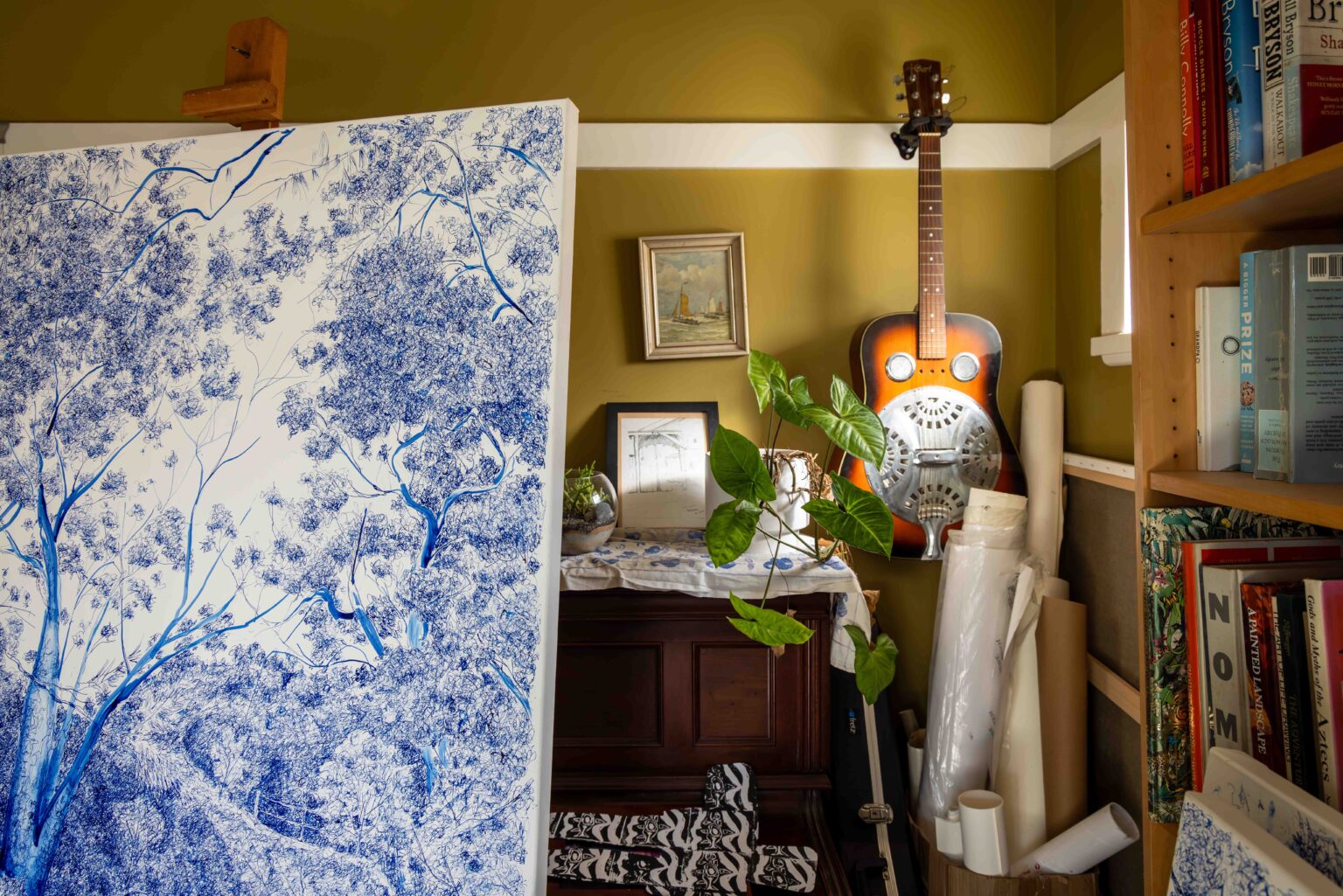
What particular techniques do you employ in your practice? Can you paint a verbal picture of your process. Do you use an easel? How long is each session? Do you prefer the light at particular times of day?
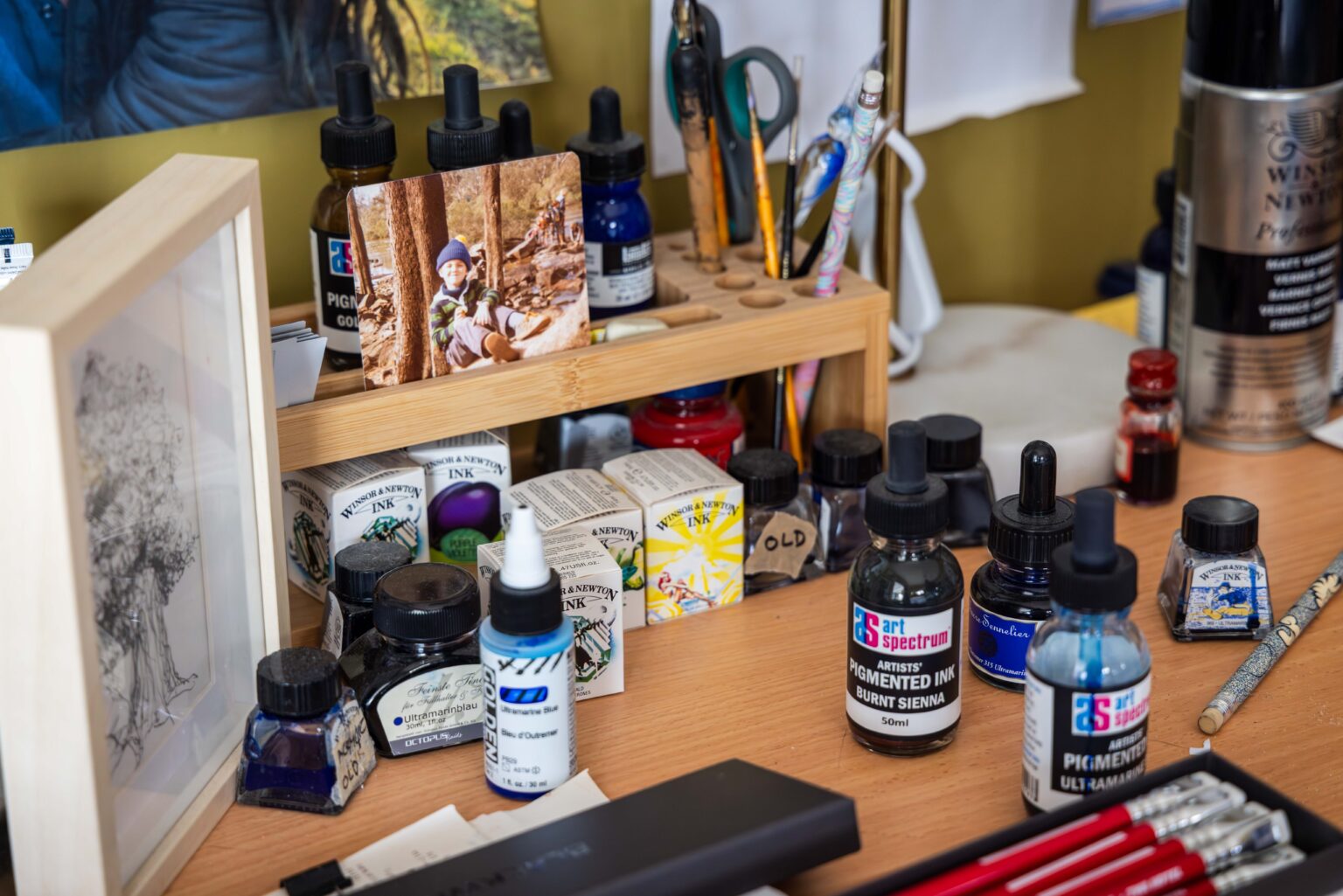
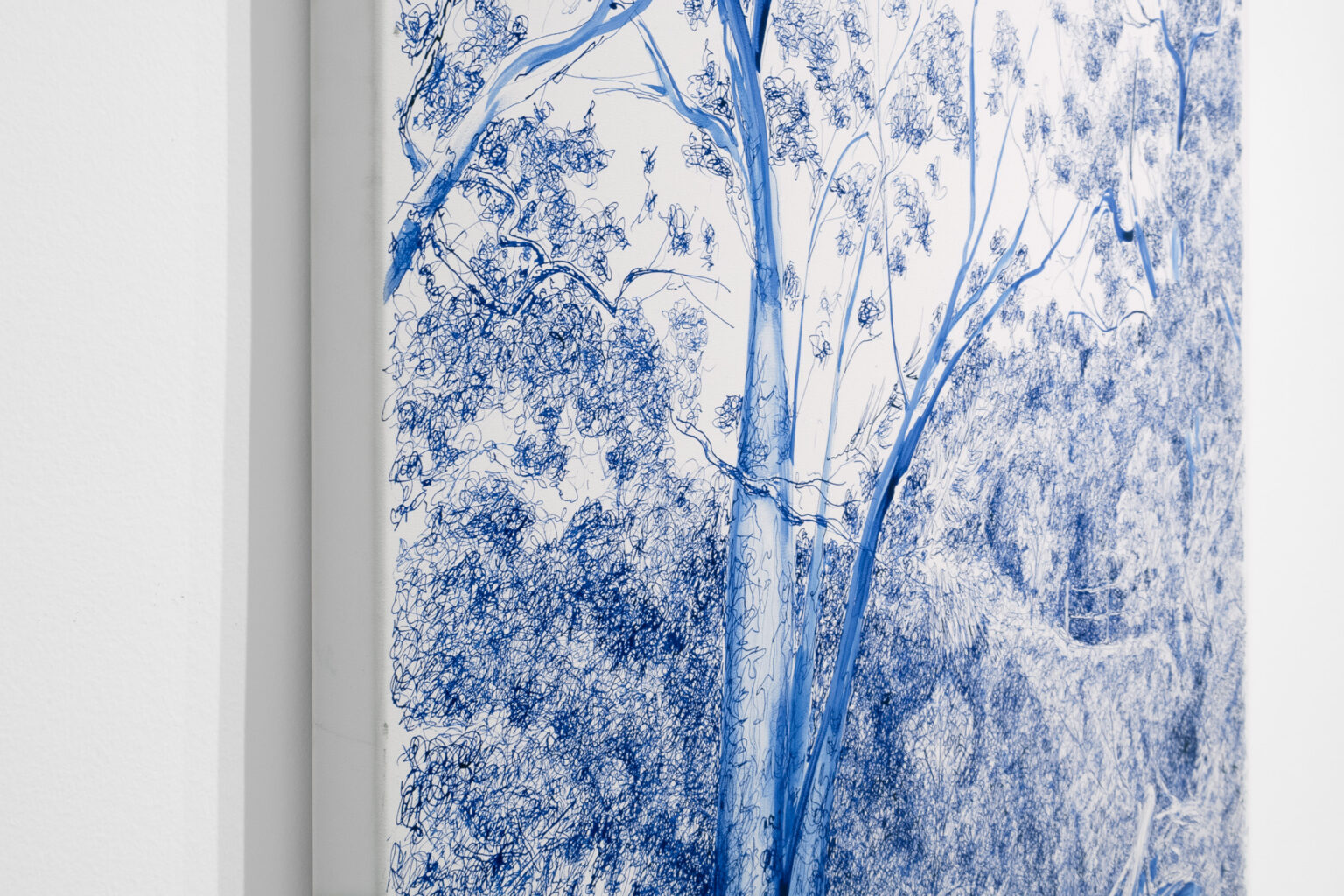
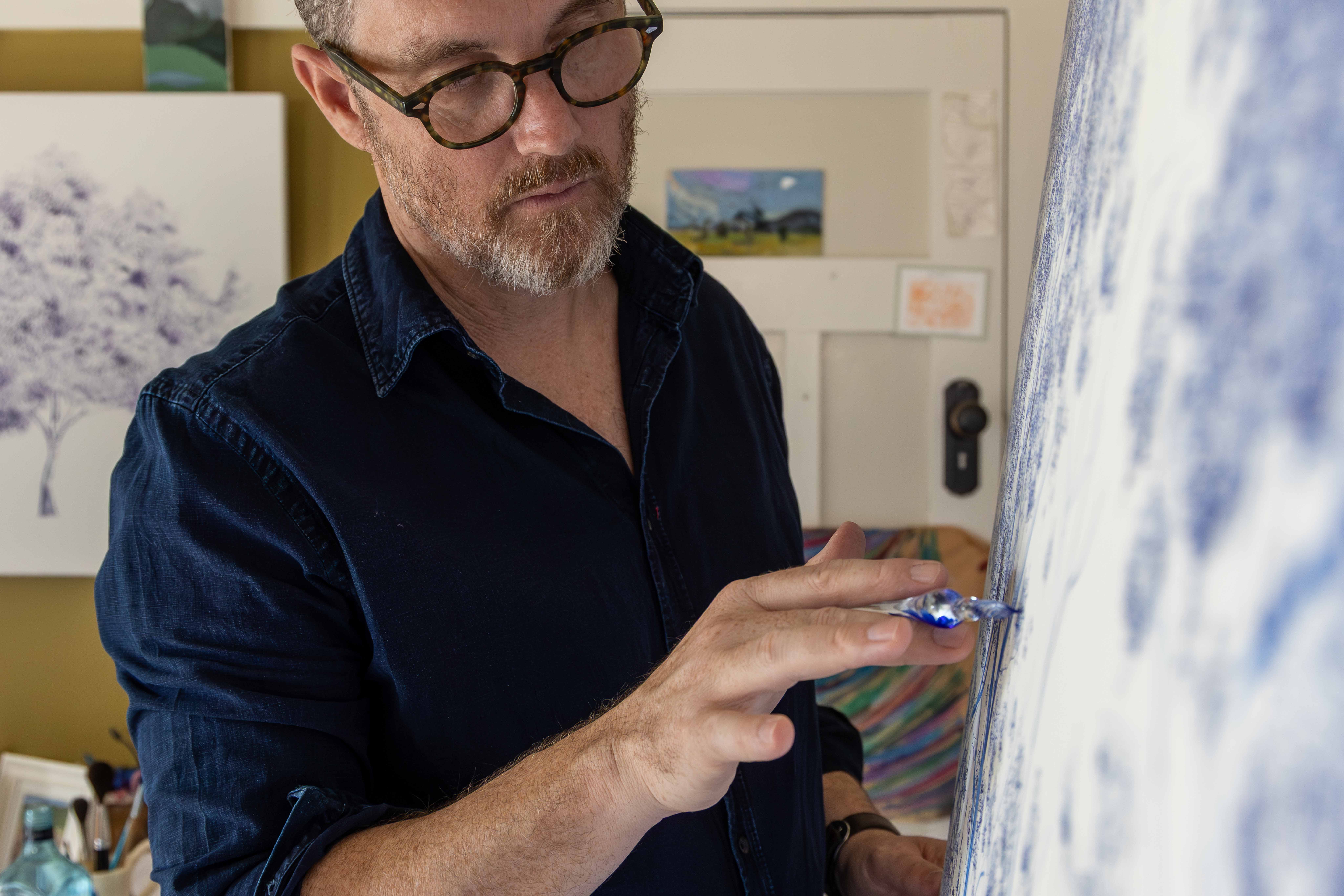
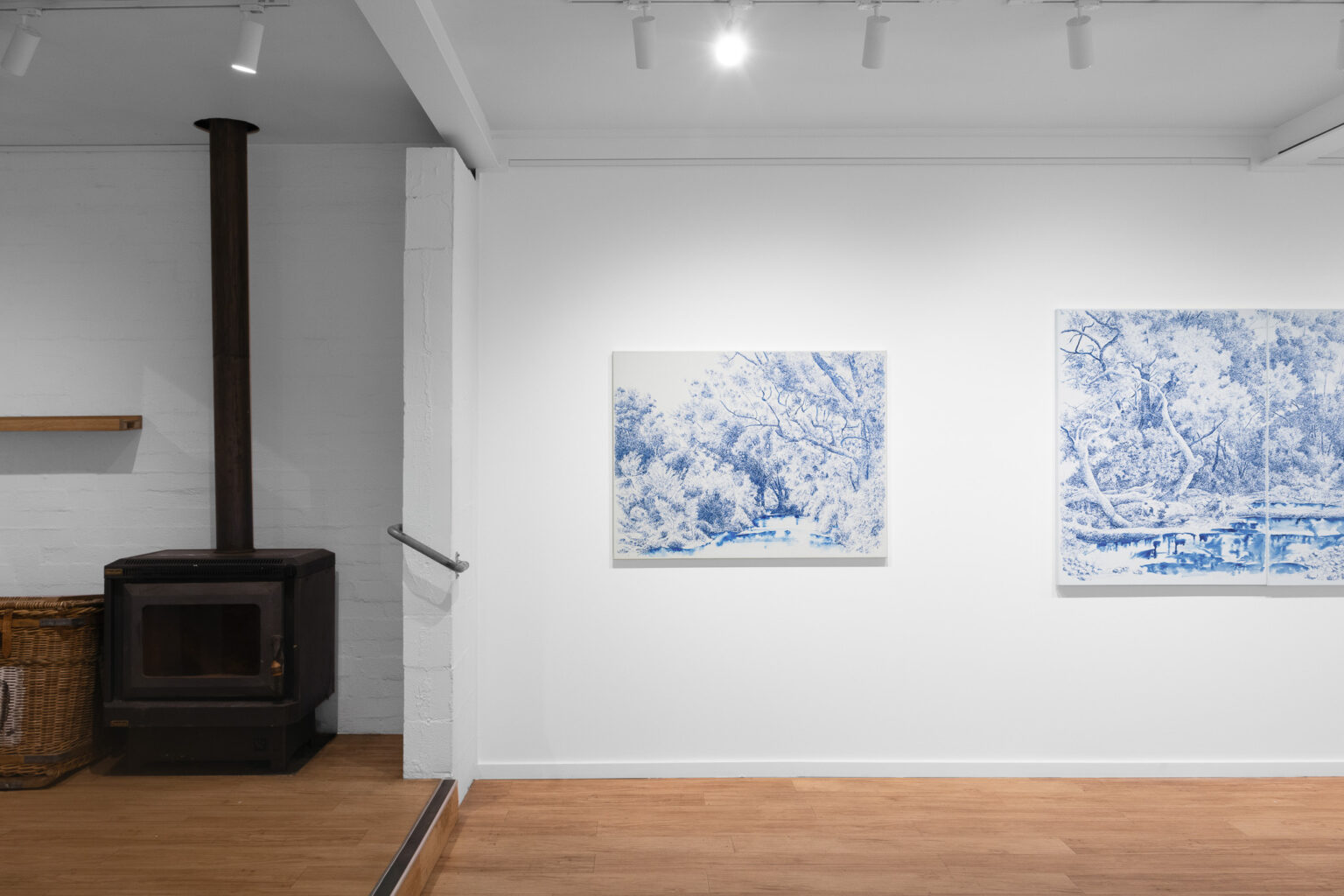
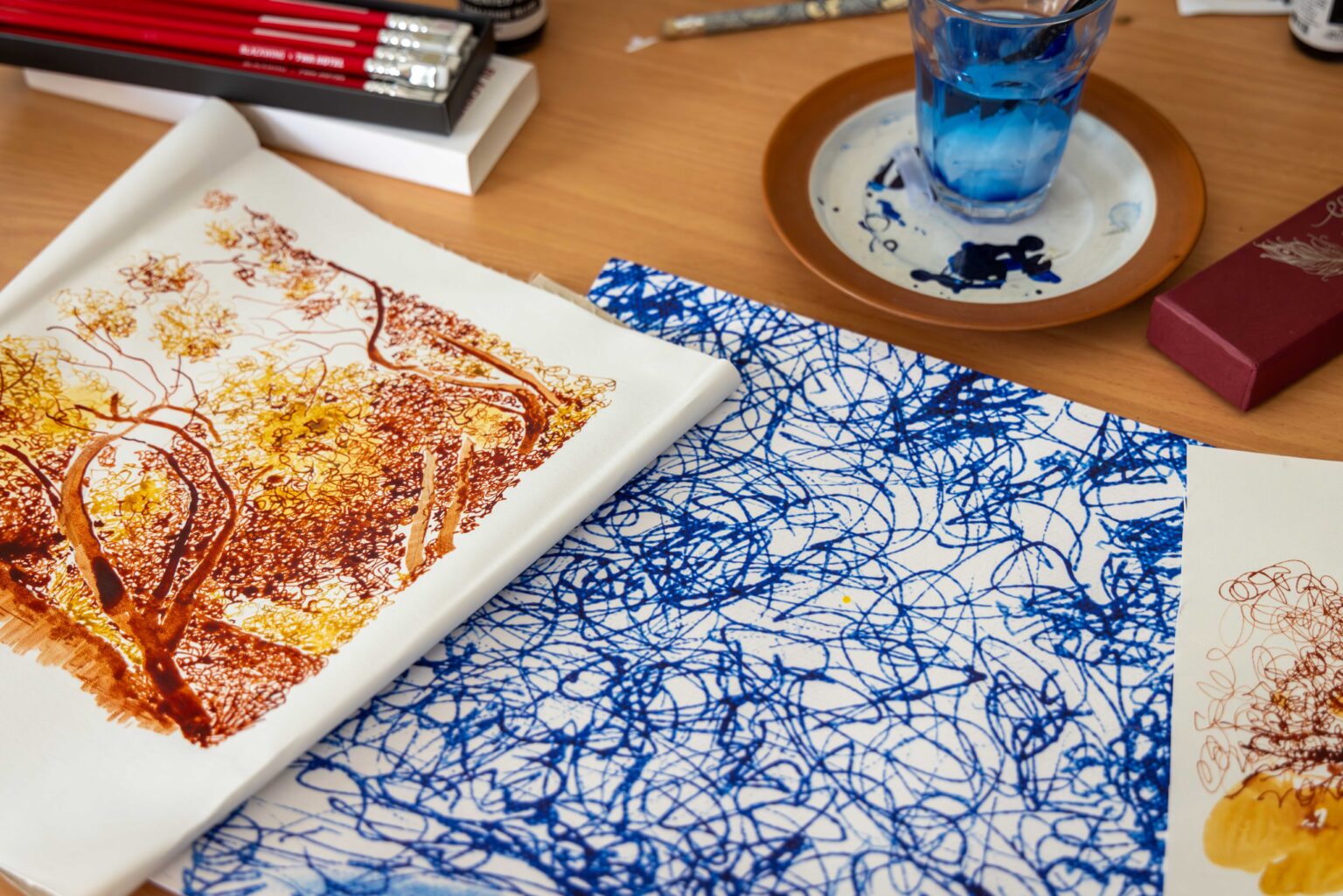
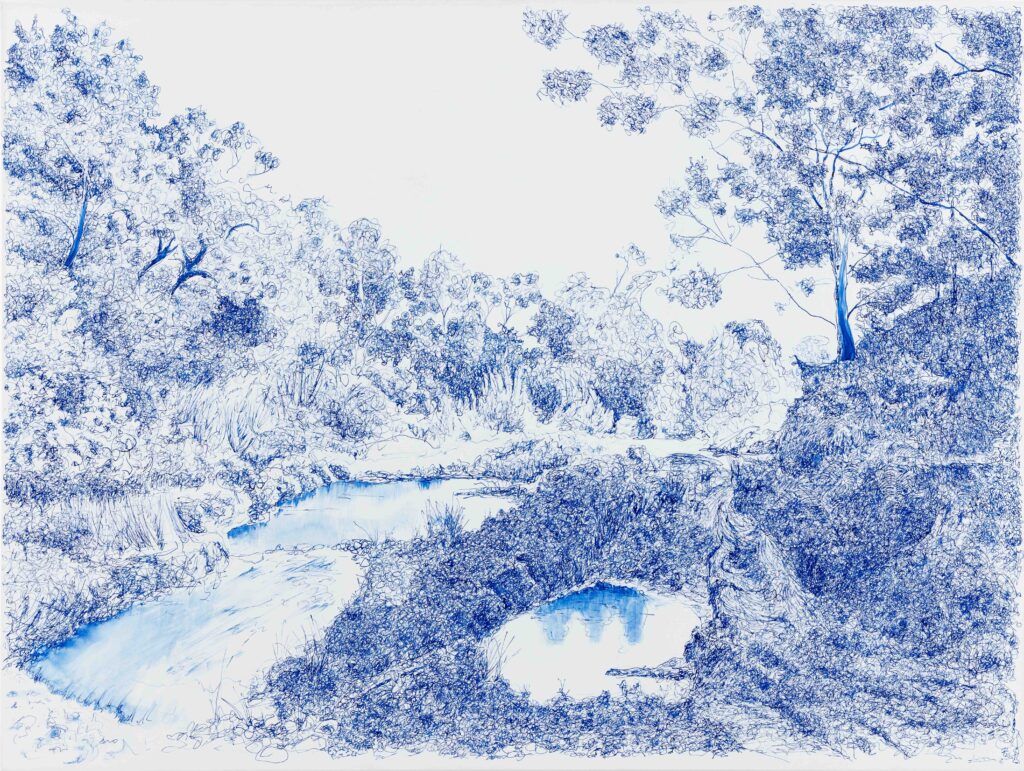
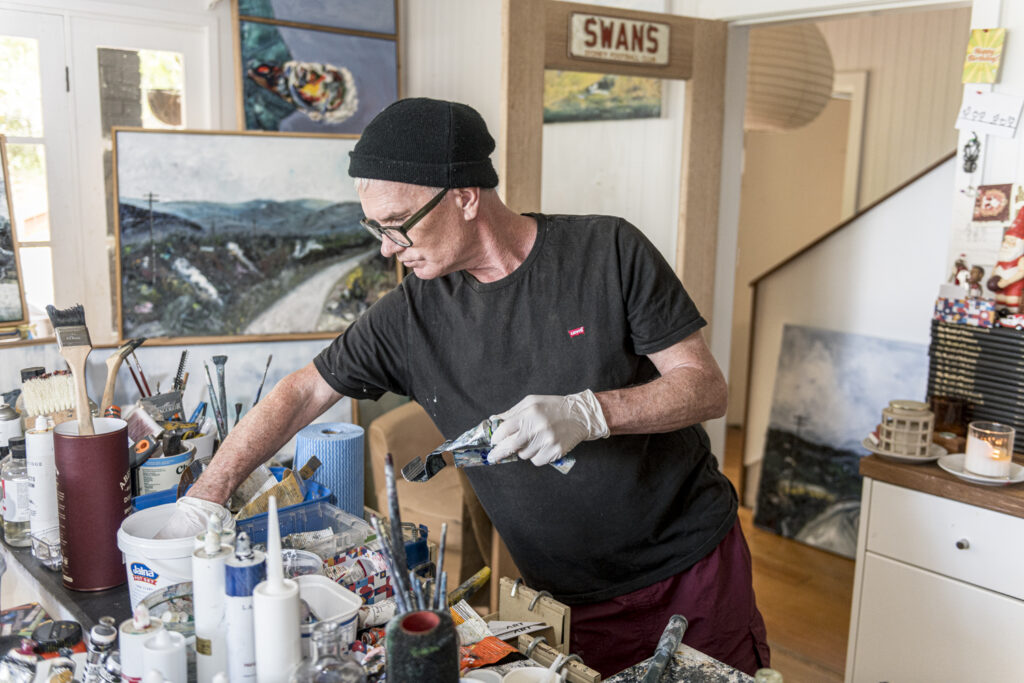
I use a dipping pen and ink. Usually I use a C5 speedball nib or a glass blown ink pen, and at the moment it’s often ultramarine blue acrylic ink.
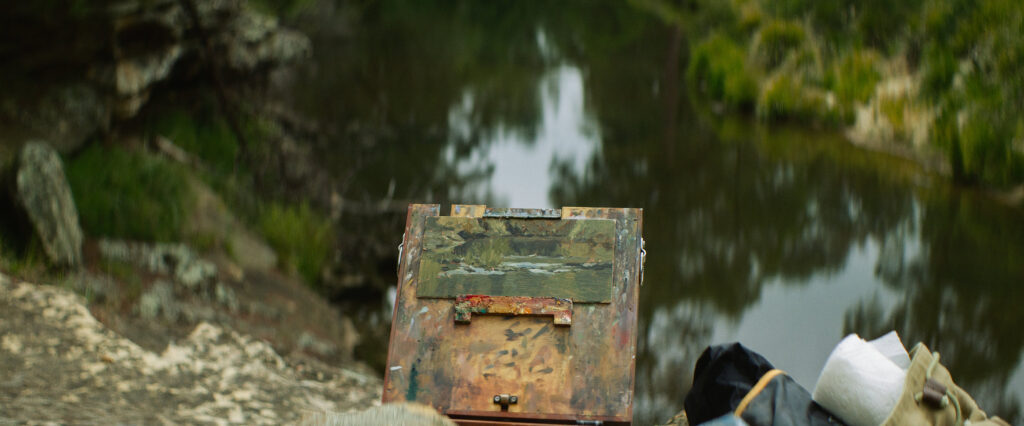
The key technique is speed – the painting movements are fast, but require a lot of stepping back and then ‘fixing’. I usually like to start with big sections to make sure that I’m getting them correct (so the more significant trees or bends in the river are accounted for) and then I start working fairly rapidly through the painting. Often I start from top left, maybe just a hangover from my old drawing days, being right handed. The dipping pen movements are usually pretty fast. This frees up the style and ensures the texture can build up at a reasonable rate. I use an easel but sometimes I need to rest it flat on a table as well given the size of the canvases.
I can go for about two hours before I need a break – the canvases are large and I’m constantly re-dipping the pen. I don’t really mind what time of day it is, although if I’m painting outside it’s usually best if I’m in the shade given the ink can react poorly to direct heat before its dry. Late afternoon is usually quite pleasant.
Its takes a while to do these pieces – but I really don’t care. It’s not laborious or ‘time consuming’ – its fun, challenging, and deeply gratifying. I don’t use painting to meditate, but I guess it is meditative – the whole time I’m thinking only about the piece, calculating, shifting, reprioritising. I don’t think about anything else. Music helps too – certain bands or types of music get me through different parts and help me with some of the problem solving. Many thanks go to the Stone Roses, Dinosaur Jr, Neil Young and War on Drugs.
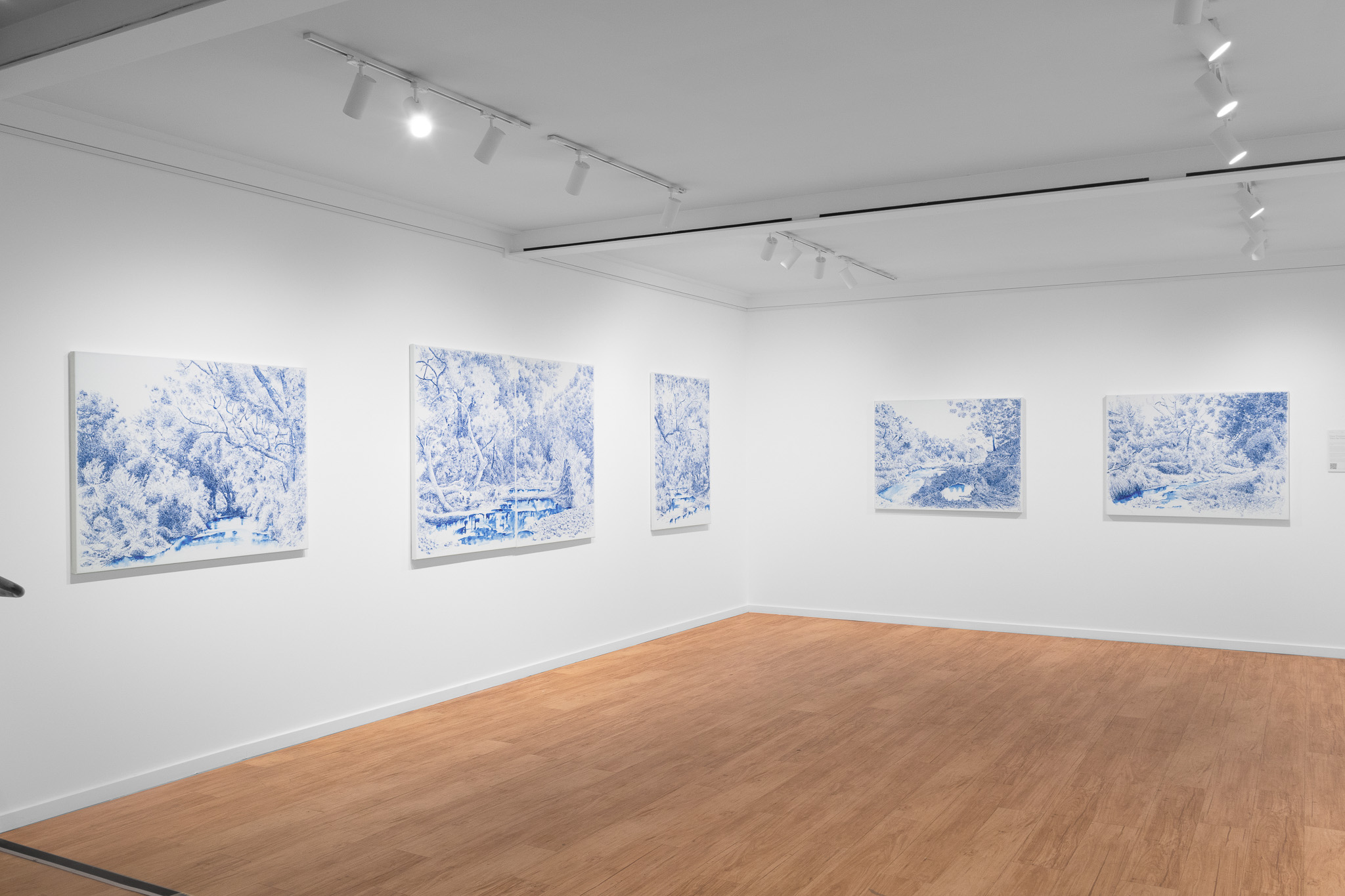
How does this series build on your previous work and/or point to a new direction for your work?
I think this is the first time I’ve looked at beauty following destruction; normally its just a spot I like the look of. I often do landscape series as a survey or point in time – it fascinates me how much a landscape can change, so I like to mark that time with a bunch of scenes taken from one spot. I try to represent as much as I see from the one area, and end up naming them in fairly straightforward or almost clinical ways.
Could you tell us about some of your favourite works from the series
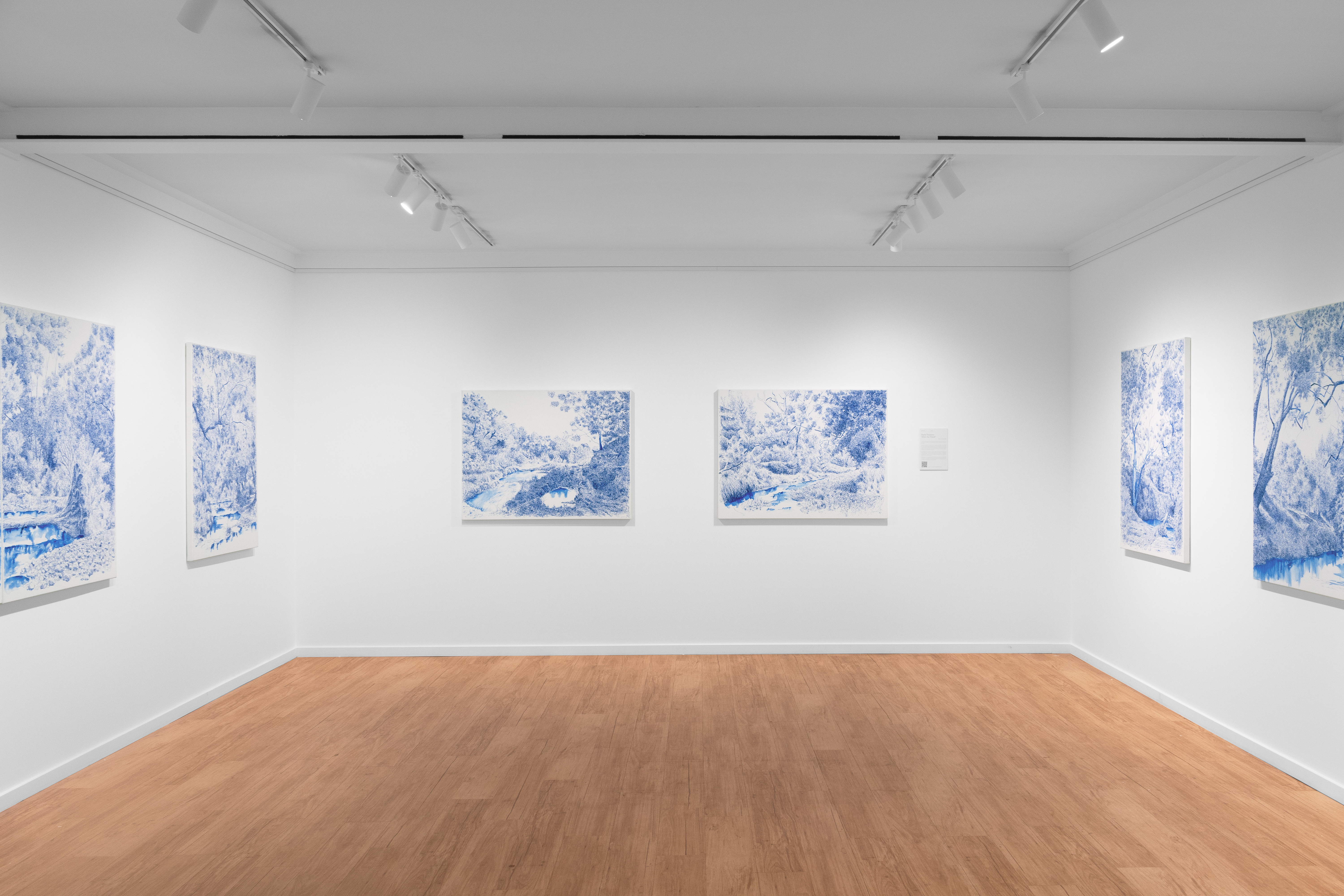
“Fourth angle” is a spot where we’ve spent a lot of time over the years, exploring with the kids, swimming (its a deep part of that stretch of river), collecting rocks, seeing wallabies, fish, eels, monitor lizards and lots of different kinds of birds. I like how the different trees on opposite sides reach over each other, and the oddness of their angles.
“Fifth angle’ is a fascinating spot that was totally ‘rezoned’ by the flood. Its a part of the river that often gets new waterholes, new banks, new rivulets, new islands after each flood. It can look completely different year on year. In this case there was a large tree uprooted from upriver, which landed in a clearing. I don’t often paint fallen trees in that ‘flat’ way across the canvas but this tree really made sense for some reason. What amazed me was that a couple of months after the floods, the upturned stump (that you can see on the right) had five different kinds of tree growing out of it. So amidst all this destruction and turmoil, life wanted to go on. Nature was almost tripping over itself to flourish and be reborn.
Can you describe the importance of the title for this show?
I named the show before starting any of the pieces, not really knowing what I was in for. The title “After the Flood” was initially marking a point in time, a literal observation of what happened post flood. What I didn’t realise, however, was that the title started to mean something more. In the end, instead of just documenting what things look like, I realised that I was painting destruction combined with regrowth, death with flourishing life. In each piece there is the history and the future of the landscape. Branches and reeds twisted and frozen in time, swept along a high floodline that has since receded. This is a special area for my family so it’s sometimes upsetting to see what the floods have done, but also comforting when things grow back.
What artists are evergreen sources of inspiration for you?
This is a hard one. Partially because I get so much inspiration (and luckily friendship and advice) from contemporary artists. Partially because its hard to put a cap on sources of inspiration.
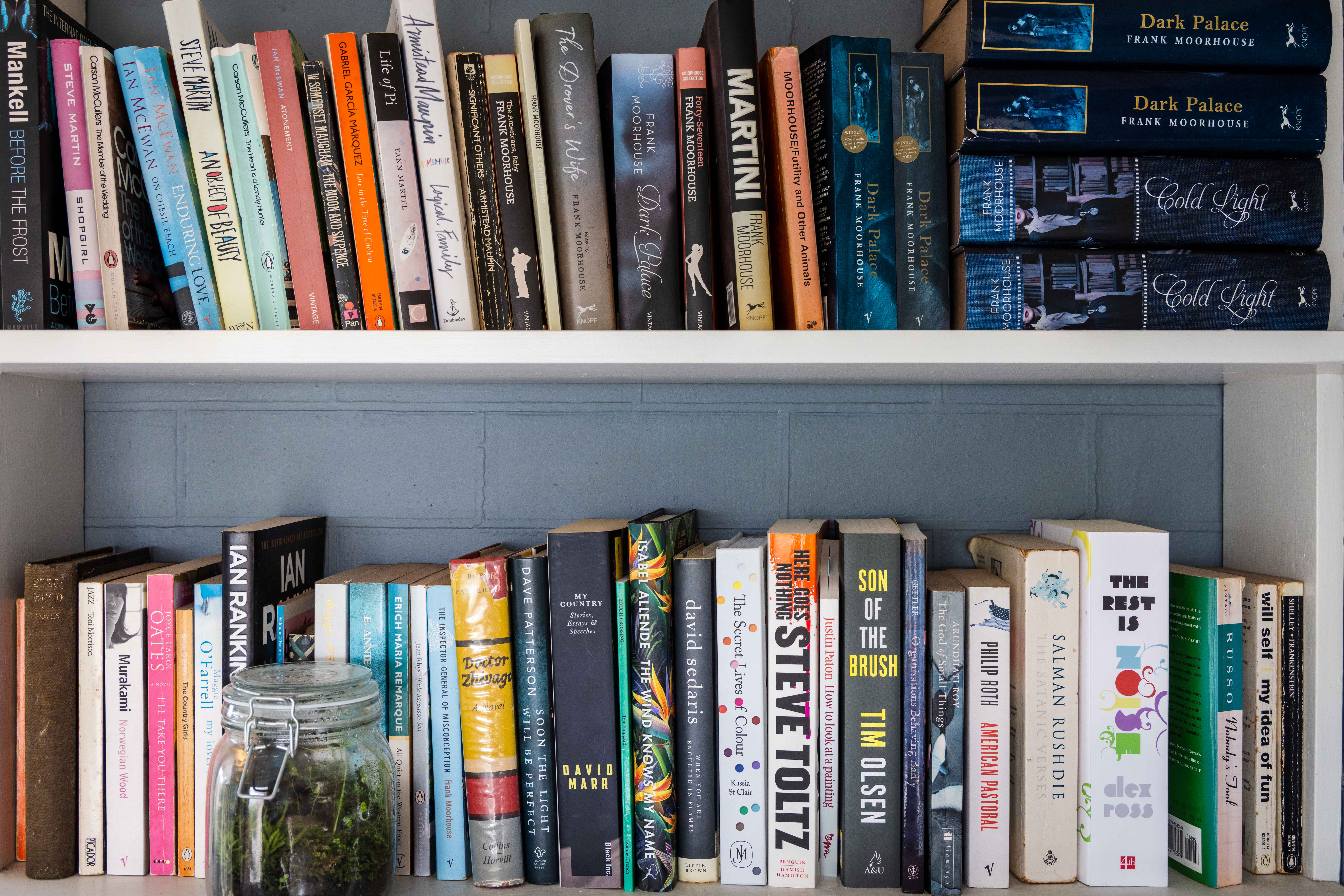
If we’re talking evergreen sources, I’ve always loved the work of Jacques-Louis David, Gericault, Caravaggio, Goya and Dali. Alongside Monet I find the work of Morisot so stunning – her paintings are an excellent lesson in composition and storytelling. Closer to home over the years I’ve loved the work of Brett Whitely (also a fan of ultramarine blue) and Mike Parr. The intensity of Parr’s self portraits is spellbinding.

- xxi Pecora Dairy June 2024
- xxxi In Conversation: Drew Truslove May 2026
- xxx In Conversation: Evan Shipard March 2026
- XXIX David King December 2025
- XXVIII Nicola Woodcock August 2025
- xxvii Marlie Draught Horse Stud May 2025
- xxvi India Mark February 2025
- xxv Mussett Holdings December 2024
- xxiv Louise Frith October 2024
- xxiii Dirty Jane August 2024
- xxii Melanie Waugh July 2024
- xx Emily Gordon May 2024
- xix Steve Hogwood March 2024
- xviii Julz Beresford February 2024
- xvii Snake Creek Cattle Company November 2023
- xvi Ben Waters September 2023
- xv The Reid Brothers August 2023
- xiv Elizabeth Beaumont July 2023
- xiii The Charlotte Project June 2023
- xii Buddhism in Bundanoon May 2023
- xi Honey Thief April 2023
- x David Ball February 2023
- ix Kate Vella January 2023
- viii The Truffle Couple December 2022
- vii Wombat Man November 2022
- vi Storybook Alpacas September 2022
- v Tamara Dean August 2022
- iv John Sharp July 2022
- iii Amanda Mackevicius June 2022
- ii Denise Faulkner May 2022
- i Joadja Distillery March 2022
